
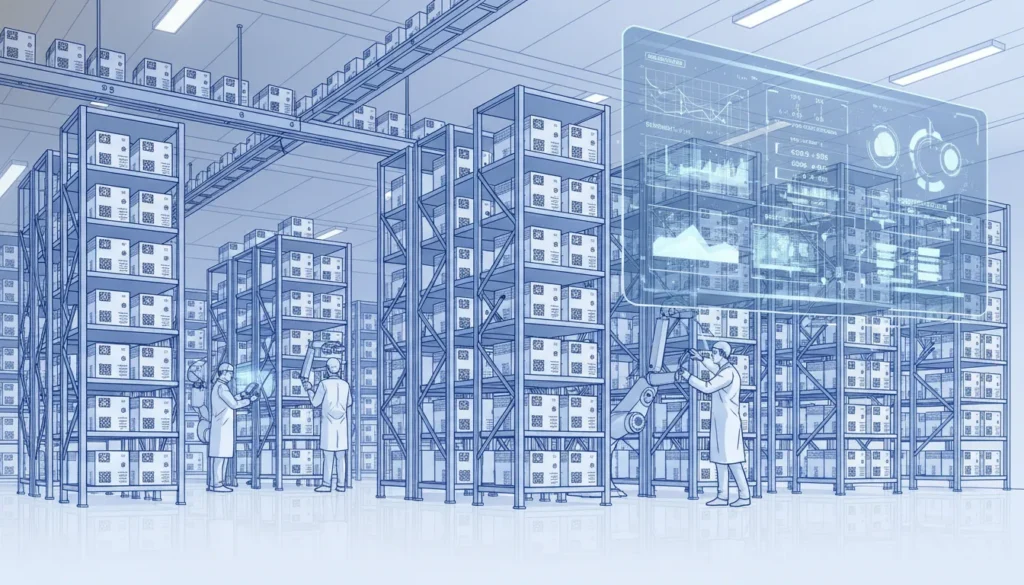
A shipment that moves fast but loses its serialized history is not ready. For pharmaceutical 3PLs, warehouse performance now includes documented proof at every handoff.
Pharmaceutical warehouse management is the controlled process of receiving, storing, tracing, picking, shipping, and documenting prescription drug inventory in an audit-ready operation. For DSCSA-ready 3PLs, that process links physical movement to package-level traceability, client inventory accuracy, controlled handling, and clear exception workflows in real time. The FDA describes enhanced drug distribution security at the package level under DSCSA, making traceable warehouse events a compliance need, not optional reporting. Operators need systems that keep serialized data, inventory status, holds, releases, and shipment records aligned across each client’s products and trading partners without manual reconciliation delays. That alignment supports investigation of suspect product, documented disposition decisions, and daily readiness for review or recall response.
The key question is how routine receiving, putaway, picking, and shipping become evidence that a 3PL can defend during verification or review in practice every day. That answer starts with What pharmaceutical warehouse management means in a DSCSA-ready operation, so the path begins with:
What pharmaceutical warehouse management means in a DSCSA-ready operation
A controlled inventory record
Pharmaceutical warehouse management is the control of medicine inventory, movement, storage, and records inside a distributor or 3PL facility. In a DSCSA-ready operation, each physical action must leave a usable data trail. The FDA describes enhanced drug distribution security at the package level under DSCSA. That requirement changes the job from stocking cartons to managing traced product.
Generic warehousing often centers on item count, bin location, and shipping speed. Pharmaceutical warehouse management must connect those tasks to lot numbers, expiration dates, serial data, and trading partner records. A unit cannot be treated as interchangeable when its identity, saleable status, or history differs. Staff need one view of what is on hand and what can move.
Controls that must work together
Inventory accuracy starts with the receipt. The receiving team must link product, lot, expiration date, quantity, and serial details to the right transaction. Picks, packs, shipments, returns, and adjustments must keep that link intact. Otherwise, a warehouse may know its count yet lack the record needed to explain a unit’s path.
Exception handling is part of daily work, not a separate compliance exercise. Damaged, expired, held, returned, or questioned stock needs a status that stops the wrong shipment. Teams also need a clear review path and a recorded decision. RxERP’s guide to pharmaceutical warehouse management compliance places those tasks in the 3PL operating context.
- Inventory accuracy ties physical stock to system stock.
- Lot and expiration control supports safe release and rotation decisions.
- Serialization connects a package identity to inbound and outbound activity.
- Client ownership keeps each 3PL customer’s inventory and activity distinct.
- Exception status prevents held stock from entering normal fulfillment.
- Records support investigation, partner responses, and audit review.
The 3PL and distributor difference
A pharmaceutical distributor owns or transfers products through its distribution flow. A pharmaceutical 3PL may handle stock for several clients while ownership remains with each client. The warehouse therefore needs separate inventory control, permissions, activity history, and billable handling data. A shared floor cannot lead to mixed records or unclear custody.
Serialization adds another level of precision. An operator may receive, aggregate, decommission, return, or ship serialized units. The connection to a client and order must stay intact. A pharma-native system supports managing pharmaceutical warehouse inventory while product and transaction data stay linked. This is the operational core of DSCSA readiness.
For US wholesalers and 3PLs, the meaning is practical: warehouse execution and trace records must agree each day. Counts alone are not enough. Compliance files built after a problem do not fix broken movement history. A DSCSA-ready operation builds evidence during receiving, storage, fulfillment, returns, quarantine, and release. Records are then usable when a partner or reviewer asks questions.
How does DSCSA compliance change warehouse workflows?
DSCSA changes a warehouse from a stock-moving site into a traceability site. Each package stays linked to its identifier and transaction data through receiving, storage, and shipment. The FDA defines package-level enhanced drug distribution security in its DSCSA guidance.
For pharmaceutical warehouse management, daily scans, holds, releases, and shipments must create one usable history. That history helps staff answer requests from trading partners, auditors, or regulators without rebuilding records by hand.
Receiving and inventory control
Receiving teams capture serialized package data and compare it with the inbound transaction record before product becomes available. When data does not match, the package needs a hold and a documented review path. Staff should not treat it as normal stock while questions remain.
Putaway preserves the link among serialized product, lot, expiration details, owner, bin, and current status. Good status controls separate released goods from quarantined, suspect, damaged, or returned goods. RxERP explains warehouse management for serialized pharmaceuticals in more detail.
- Validate serialized data before assigning available status.
- Keep held product separate in both system status and physical handling.
- Record each move with the user, time, item, location, and reason.
Fulfillment, returns, and exceptions
During pick-pack-ship, the order must match the serialized packages selected for shipment. Scans at key handoffs can stop an incorrect serial number from entering the final record. The history should show what left, for which partner, and under which transaction.
Returns need a controlled path before product moves back to sellable inventory. Staff verify identity, review traceability data, and resolve any hold or investigation requirement. FDA verification guidance addresses quarantine and investigation of suspect product.
Exception handling belongs in daily warehouse flow. Damaged labels, unreadable serials, data mismatches, and suspect product all need named hold and review steps. A defined process limits the risk of releasing an unresolved item.
Connected records and audit response
An audit response depends on records that staff can find, read, and explain. Electronic controls aligned with 21 CFR Part 11 principles can preserve user actions, time stamps, approvals, and change history. This structure supports review; it does not replace the organization’s compliance duties.
Disconnected systems make traceability questions harder to answer. A WMS may show location, while ERP, serialization, CRM, and accounting tools hold other transaction details. When records disagree, teams must reconcile them before they can explain the package journey.
A connected workflow ties receiving, inventory status, fulfillment, returns, exceptions, and billing references to serialized activity. It also gives operations and compliance teams a shared record during an audit response.
Core capabilities every pharma warehouse management system needs
A pharmaceutical warehouse management system must connect product identity, location, status, and movement in the same workflow. That connection matters when a warehouse handles serialized stock, expiring lots, temperature-sensitive goods, and inventory held for more than one client.
A generic WMS can track bins and picks. Pharma operations need controls that preserve disposition, transaction history, and financial context from receipt through shipment.
| Capability | Generic WMS focus | Pharma-native serialized ERP/WMS control |
|---|---|---|
| Serialized identity | Item and bin records | Package-level identity through warehouse events |
| Disposition controls | Basic inventory holds | Quarantine, investigation, release, and disposition trail |
| Recall readiness | Lot search and shipment history | Lot, serial, client, shipment, and status trace |
| Cold-chain handling | Location and inventory controls | Temperature events linked to holds and review |
| 3PL and finance | Shared workflow and billing export | Client rules, charges, inventory, and financial posting |
| Audit trail | Operational transaction log | Electronic record of changes and status decisions |
Serialized inventory and product status
Serialization is useful only when it stays tied to the physical stock. At receiving, picking, packing, shipping, and returns, the system should retain product identifiers, lot, expiry date, and current status. This creates an item history that staff can search during an exception or recall.
At receipt, scan checks should compare the received identity with expected product data before inventory becomes available. During fulfillment, exception rules should stop a pick when status, lot, expiry, or serial data conflicts with the order.
Verification is also a workflow, not a note in a record. The FDA’s DSCSA verification systems guidance addresses quarantine and investigation for suspect product. It also addresses quarantine and disposition for illegitimate product. Software should keep released stock apart from held stock while preserving each decision and record.
Cold chain, expiry, and recall response
Temperature control cannot sit apart from inventory control. A warehouse team needs status rules for cold-chain items, temperature events, excursions, and the release decision after a review. The CDC storage and handling guidance states that vaccine quality is shared from manufacture until administration.
Temperature records become useful when an event can place affected inventory on hold for review. Staff can then document the release or disposition decision before the next warehouse move. Use expiry-led allocation where it fits product policy, and hold damaged or expired units outside saleable stock.
Recall support should not begin after a notice arrives. It starts with searchable records at every move, clear hold locations, and proof of what was shipped or remains on hand. Teams should find affected lots, serials, clients, shipments, and disposition status without building a manual trail.
Client rules, audit trails, and finance
For a pharmaceutical 3PL, one facility may apply different client rules to shared warehouse processes. The system should separate ownership, approved workflows, service charges, and customer reporting while maintaining clear inventory visibility. This model supports managing pharmaceutical warehouse inventory while keeping each client’s rules and records distinct.
For multi-client work, billing needs the same discipline as inventory. Configured charges can align receiving, storage, handling, and outbound activity with the client record that owns the stock. Inventory movements should post to billing and finance without duplicate re-entry.
Electronic audit trails should capture what changed, who acted, when it occurred, and why a status changed. This is how warehouse data supports customer invoices, stock reporting, reconciliation, and audit-ready records in one operating flow.
A practical workflow for serialized receiving, storage, and fulfillment
A serialized receiving gate
In pharmaceutical warehouse management, the receiving dock is the first control point for serialized product. The DSCSA framework addresses distribution security at the package level. This requirement appears in FDA guidance on package-level security. Capture product identity and transaction data before available stock changes.
For a 3PL or distributor, tie each scan to the owner, order, lot, expiry, and location. A pharma-native workflow supports warehouse management for serialized pharmaceuticals. Physical handling stays tied to serial history.
Five operational steps
Use this sequence as a floor-level operating pattern. Each handoff creates a clear decision. Staff release the product, isolate it, move it, ship it, or investigate it.
-
Receive and verify. Scan serialized cases or packages at arrival and match them to inbound records. Check ownership, lot, expiry, quantity, and transaction data before releasing product for orders.
-
Quarantine or put away. Route clean receipts into approved locations with status recorded. If data fails or records are incomplete, move units to a controlled quarantine status.
-
Record internal moves. Capture transfers between receiving, storage, pick faces, cold areas, quarantine, and returns. The serial record should show location, status, time, and user for each event.
-
Pick, pack, and ship. Allocate released stock only, then scan units during picking and packing. Confirm outbound serials against the order before sending shipment records to the trading partner.
-
Manage exceptions and recalls. Use serial history to locate affected units, holds, shipped product, and client ownership. Keep investigation notes and disposition decisions with the warehouse record.
Controls for daily readiness
Managers should review released, quarantined, and exception stock as separate work queues. This prevents an unresolved unit from entering available stock. Supervisors can see receipts awaiting review, serial mismatches, returns, and orders delayed by a hold.
The exception path is part of daily control. FDA verification systems guidance covers quarantine and review of suspect product. It also covers quarantine and disposition of illegitimate product. Map these actions to status controls, access rights, records, and escalation steps.
Test the workflow with a mock affected-lot search and a shipment trace before an event occurs. A manager should see on-hand status, location, client owner, and shipped serial history without rebuilding records from separate files.
How can 3PLs improve warehouse efficiency without weakening compliance?
Controls that follow each client
A pharmaceutical 3PL can move faster without removing control points. The key is to set rules by client, product, lot, serial status, storage need, and order type. Each receipt and shipment should follow the right workflow, rather than one broad process for the whole building.
DSCSA adds a firm guardrail to this work. FDA guidance addresses enhanced drug distribution security at the package level under the DSCSA. It also places clear duties on supply chain partners. A 3PL should tie scans, holds, and release records to the transaction history required for package-level drug distribution security.
Client inventory must remain distinct even when teams share aisles, docks, and labor. Use owner-specific locations, order rules, access rights, billing codes, and audit logs. This approach keeps efficient shared operations from blending inventory, service terms, or charge records.
Fewer exceptions at the dock and bench
Efficiency gains often come from preventing rework. Define receiving and shipping SLAs for each client, then track each missed scan, hold, short shipment, or late release. A clear exception queue lets staff fix the issue once and record why it happened.
- Validate item, lot, expiration, and serial data as stock arrives.
- Route suspect, damaged, or unmatched product to a controlled hold workflow.
- Capture handling, storage, assembly, and shipping charges during the work step.
- Measure SLA results by client, workflow, and cause of delay.
This design supports both audit readiness and correct invoices. It also connects daily choices with pharmaceutical warehouse management compliance. Each exception is easier to investigate when its events are recorded during the work.
One operating record for planning
Labor plans work best when demand, inventory status, service levels, and pending exceptions appear in one view. Supervisors can assign staff to receipts, picks, verification work, or shipments based on actual workload. They do not need to reconcile separate lists before each shift.
Integrated systems reduce duplicate data entry across warehouse, serialization, compliance, and billing tasks. A 3PL serving several pharma clients needs linked records. A serialized ERP for managing pharmaceutical warehouse inventory can connect each event to its owner, charge, shipment status, and audit trail.
The goal is not to skip checks. It is to make each required check part of the same workflow that receives stock, plans labor, records service, and ships orders. That is how pharmaceutical warehouse management improves throughput while preserving client separation and audit-ready records.
What should buyers look for before selecting warehouse software?
Pharma-native compliance controls
Start with the system’s design, not its feature count. Pharmaceutical warehouse management must connect inventory movement, package identity, and shipment records in one working process. Under DSCSA, the FDA sets requirements for enhanced drug distribution security at the package level. Ask how each warehouse event creates an accurate, reviewable record.
A pharma-native platform should handle serialized product as core data, not as a late add-on. Buyers should see how the software receives, stores, picks, ships, and returns serialized units. Request proof that electronic records keep the product identifier, lot, expiration date, transaction history, user action, and timestamp together.
Audit trails also need practical depth. Ask whether records are protected from silent edits, and whether corrections retain the earlier entry and reason for change. A quality team should be able to trace a product path without gathering data from separate exports, email threads, or side spreadsheets.
Workflows that fit the operation
Warehouse software must reflect how the business works. A wholesaler may focus on order flow and distribution control. A 3PL may also need separate client inventories, client rules, service billing, and user access limits. Test receiving, allocation, picking, shipping, quarantine, returns, and exception review with real scenarios.
Serialization is most useful when it stays tied to daily work. Review how the platform supports managing pharmaceutical warehouse inventory across client and warehouse tasks. A demo should show serialized receipt through outbound shipment, including holds, reversals, and product status changes.
Suspect product handling deserves its own walk-through. The FDA describes verification systems that include quarantine and investigation of suspect product, plus quarantine and disposition of illegitimate product. Buyers should ask vendors to show these DSCSA verification workflows inside the system, with assigned work and reviewable records.
Integration, reporting, and rollout fit
A strong selection process checks data flow before contract terms. Map every needed connection: trading partner exchange, scanners, shipping, finance, client portals, and any existing serialization service. Ask which integrations are standard, which require custom work, and how failed messages are queued, corrected, and documented.
Reporting should support operations and audit readiness at the same time. Buyers need inventory by location, client, lot, expiry, serialized status, quarantine status, and transaction history. They also need exports that staff can understand during an audit or recall review, without rebuilding the record trail by hand.
Finally, match the implementation plan to the growth plan. Confirm how the system handles new clients, locations, product volume, roles, and workflow changes. Review data migration, validation testing, user training, support ownership, and launch checkpoints. The right platform should fit today’s operation while allowing controlled change as the warehouse expands.
How RxERP connects warehouse operations with serialized ERP
A single operational record
Pharmaceutical warehouse management cannot end at bin counts and shipping labels. Each receipt, pick, pack, transfer, and return touches product identity, trading partner data, and financial records. The FDA describes enhanced DSCSA security at the package level. Its package-level DSCSA guidance gives context for daily warehouse work.
In many operations, the work is split across four to seven disconnected systems. A warehouse tool may track movement, while separate tools handle serialization, compliance, orders, billing, and accounting. Staff then compare files or re-enter data when a product changes status. That gap can slow research when a question reaches the warehouse team.
The risk is practical, not just technical. A team may know a case is in the building, but still search elsewhere for its serial history or invoice status. One connected record makes it easier to follow an event from dock work to business review.
Serialized work from receipt to billing
RxERP is a pharma-native, fully serialized ERP. It keeps warehouse activity, serialized product data, compliance workflows, and financial management in one operating system. This model helps teams trace an item’s event and connect it to an order or charge.
The need differs by business model. Wholesalers manage inventory and distribution. Pharmaceutical 3PLs also need clear client inventory and billing records. Virtual manufacturers coordinate product movement without owning each warehouse step. Specialty pharmacies and government buyers need dependable product history for receiving and fulfillment. RxERP outlines these settings on its who we serve page.
In daily work, a connected workflow can support tasks such as:
- Receiving serialized product against the right order and trading partner.
- Recording inventory movement while keeping package identity tied to status.
- Holding or researching product without losing its operational history.
- Linking fulfillment activity with client billing and financial records.
Audit-ready warehouse decisions
Serialization is not a separate reporting step after warehouse work is done. It is part of the record staff use when accepting, holding, moving, or shipping prescription products. When an item is set aside for review, teams need its product data and transaction history in reach.
A serialized ERP gives operations teams a cleaner path from physical handling to review and reporting. It does not replace sound processes or staff oversight. It helps keep the same product event visible across compliance, operations, and finance. Learn how RxERP approaches this connection through its serialized ERP capabilities.
Frequently Asked Questions
How does DSCSA compliance impact pharmaceutical warehouse operations?
DSCSA-ready warehouse operations must connect receiving, storage, picking, shipping, and exception handling to serialized product records. The FDA describes enhanced drug distribution security at the package level. For a 3PL, this means maintaining traceable transaction data, confirming trading-partner workflows, and following documented steps to quarantine and investigate suspect product.
What inventory management techniques are best for pharmaceutical warehouses?
A pharmaceutical warehouse should manage stock by lot, expiration date, serialized identifier, owner, condition, and storage requirement. FEFO picking helps prioritize inventory nearing expiration, while cycle counts check physical stock against system records. For multi-client 3PLs, separate ownership, billing events, and product status controls reduce inventory confusion and support audit-ready reporting.
How can 3PLs improve pharmaceutical warehouse efficiency?
Pharmaceutical 3PLs can improve efficiency by scanning serialized inventory during each movement and directing temperature-sensitive product to approved zones. They should also integrate warehouse events with billing and order records. Automated holds for exceptions prevent affected product from moving through normal fulfillment. Dashboards should monitor pick accuracy, expiration exposure, quarantine aging, and order cycle time without weakening DSCSA-first controls.
Why is temperature control vital in pharmaceutical warehouse management?
Temperature control protects pharmaceutical quality during storage and movement through the warehouse. The CDC states that vaccine quality is a shared responsibility from manufacture until administration. Warehouse procedures should define approved storage zones, continuous monitoring, alarm response, documented excursions, and product disposition steps before affected inventory is released.
Ready to strengthen your DSCSA-ready warehouse?
Delaying a warehouse systems decision leaves operators managing critical exceptions through disconnected steps, adding friction when trading partners request clean records. The longer teams wait to align workflows, the longer they spend reconciling inventory events, client needs, and serialized product movement separately. Starting now gives your 3PL or supply chain team time to define needs, review fit, and plan a measured path forward.
Ready to reduce operational gaps before your next review cycle begins? Schedule a demo to discuss warehouse workflows and DSCSA-first priorities. RxERP can review client service requirements with your team. You can assess a pharma-native, fully serialized ERP against your requirements and timing. Bring process questions, so the conversation centers on practical next steps for your operation.