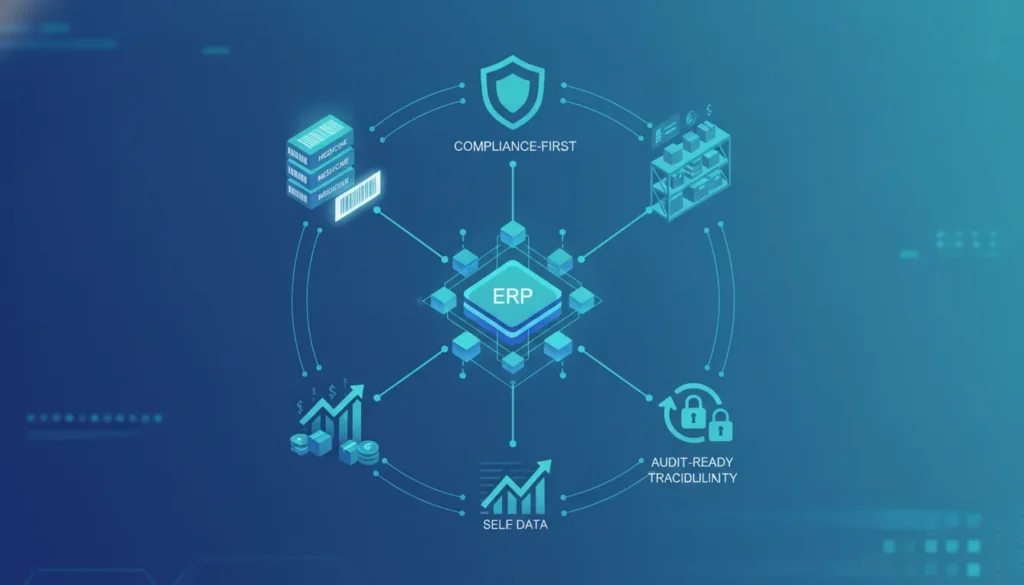
Using disconnected systems for safety and sales creates deep risks for modern pharma firms. Many companies struggle with messy data that makes it hard to pass audits. Moving to a single source of truth is the best way to protect your work.
Pharmaceutical industry software is a unified digital platform that manages drug products while following strict federal safety rules. These systems join core business tasks like inventory and sales with safety needs like unit-level serialization and electronic tracking. Instead of using separate tools for each job, a single platform helps partners share data about drug ownership. This keeps the supply chain secure and clear. The approach is vital because the Drug Supply Chain Security Act (DSCSA) requires firms to track products from the factory to the pharmacy. By building these rules into the daily work, companies reduce the risk of audit failures and costly fines. This technology helps wholesalers and pharma firms maintain safety and speed in a highly regulated market.
Choosing the right tools is the first step toward a safe and fast supply chain. To help you find the best fit, we must show what makes these systems unique. We will start by answering the core question: What is pharmaceutical industry software? The path begins with
What is pharmaceutical industry software?
Pharmaceutical industry software is a set of tools used to manage the drug supply chain. These systems help firms move life-saving goods safely from a plant to a pharmacy shelf. They also help firms follow strict rules like the Drug Supply Chain Security Act (DSCSA). This law needs a digital system to track drugs as they move through the country. Without the right tools, tracking every bottle or vial becomes a hand-task that leads to errors. The role of this software is to keep data clear and products safe. It ensures that every item in the supply chain is real and hasn’t been tampered with.
A complex web of tools
Most pharma firms use many types of software to run their daily work. An Enterprise Resource Planning (ERP) system often acts as the main hub. It handles money, taxes, and sales. Other tools help with specific tasks in the warehouse or office:
- Warehouse Management Systems (WMS) to track where goods sit on shelves.
- Quality Management Systems (QMS) to handle safety audits.
- Customer Relationship Management (CRM) tools to manage client sales.
Many firms use four to seven systems that do not talk to each other. This creates gaps in data and slows down every step. For example, a 3PL might have to type the same data into two screens. This wastes time and leads to mistakes. When data is trapped in separate spots, leaders cannot get a clear view of their business.
Why unified platforms are winning
Today, many buyers are moving away from small, separate tools. They want one platform that does everything in one place. This is known as a unified system for pharma. A serialized ERP is a great example of this shift. It joins stock, sales, and tracking into one data set. This makes it much easier to see what is happening across the supply chain at any time. Using one system also cuts the cost of handling many vendors. It removes the need for complex links that often break. This help firms stay lean and fast in a busy market.
The role of compliance and safety
Software in the drug industry must do more than just work. It must also be checked to show it is safe. Computer System Validation (CSV) is a process that proves a system meets all quality rules. It ensures that the data the system makes is correct and safe. This is vital for staying in line with GxP rules and stopping big fines. For many firms, having a system with built-in compliance is the best way to stay safe. It means the software was built with DSCSA rules in mind from day one. In the end, the right software is about more than speed. It is about trust and safety.
Why compliance cannot be an afterthought
In the pharma world, following the rules is not just a nice goal. It is the only way to stay in business. When a company picks its pharmaceutical industry software, it must look at how that tool handles rules. Many firms make the mistake of choosing a system first and trying to fix the gaps later. This “bolt-on” method leads to risks that can hurt the whole company.
The danger of split systems
Many pharma firms use four to seven separate tools to manage their work. These tools often do not talk to each other well. This split leads to gaps in data and a higher chance of human error during data handoffs. Moving data between tools by hand takes time and costs more money in the long run. The total cost of linking these old tools can be much higher than buying one all-in-one system.
When a system is not unified, tracing items becomes much harder. Gaps in your data make it hard to prove you are following the law. RxERP uses a design that puts rules first. This makes sure that every move is tracked from the moment an item arrives. Using software built around compliance helps you avoid the high cost of fixing bad systems later.
Checking your systems for safety
Computer system validation is key for any pharma firm. It proves that your software works the right way every time. If a system is not tested well, it can lead to bad data. This can put your goods and your brand at risk. Testing should be part of the plan from day one, not something you do at the end. It is much harder to check a system after it is already in use.
Failing to test your systems can lead to big legal issues. You must meet GxP and safety rules to keep your license. These rules help make sure that products are made safely. A system that has rules built-in makes it easier to pass an audit. You can show your work is safe and clear with the push of a button. Good audit trails prove that you follow the rules for every batch.
High costs for missing steps
Laws like the DSCSA require firms to track drugs as they move through the supply chain. This law makes the chain clear and helps keep people safe. The FDA says all partners must use electronic systems to trace products. This includes makers, sellers, and those who pack the drugs.
Failing to follow these rules can cost a firm a lot of money. The fines for missing a step can be very high. Beyond the money, a firm could lose its right to sell products in the U.S. market. Choosing a tool that puts the rules first is the best way to lower your risk and keep your business running.
Generic ERP vs. pharma-native software
Most firms in the pharma supply chain start with a basic ERP. These tools handle broad business tasks like sales and accounting. But generic software often lacks the tools needed for complex drug rules. This gap can lead to high risks and extra costs. Choosing the right pharma software built for compliance is a vital step for any growing business.
The gap in generic business tools
Generic ERP systems are built for many industries. They work well for simple goods but struggle with serialized drugs. In many cases, pharma teams must use many systems to bridge the gap. They might have one tool for sales and another for unit-level tracking. This creates a split path where data can get lost or misread. This split makes it hard to get a clear view of the whole supply chain.
Split systems also raise the chance of human error. When data does not flow between tools, staff must type it in by hand. This slow process wastes time and leads to mistakes. For firms dealing with life-critical products, even a small error is a big problem. The industry is now moving toward unified serialized ERP platforms to fix these issues. These platforms bring all tasks into one secure home.
Built-in vs. bolt-on compliance
Compliance is the biggest hurdle for generic software. Rules like the Drug Supply Chain Security Act (DSCSA) require deep data tracking. Under the DSCSA, partners must trace products at the unit level. Generic tools were not built with these rules in mind. To stay legal, firms often add extra software to their old ERP. This setup is often weak and hard to manage over time.
Pharma-native software takes a different path. It builds compliance into every core task. A serialized ERP built for pharmaceutical compliance provides these native controls from day one. From the first receipt to the final sale, the system checks for regulatory gaps. This is vital for Computer System Validation (CSV). Proper validation ensures that software meets strict GxP and quality standards. Native tools make this process simpler because they already follow these rules. This leads to a faster and more stable audit process.
Comparing key features
When you pick a system, you must look at how it handles daily tasks. A generic tool might need many changes to work for pharma. A native tool is ready to use from day one. Below is a look at how these two types of pharmaceutical industry software compare.
| Feature | Generic ERP | Pharma-Native (RxERP) |
|---|---|---|
| Traceability | Lot-level only; needs add-ons | Full unit-level serialization |
| DSCSA Workflows | Manual or through third-party links | Built-in electronic EPCIS exchange |
| Inventory | Basic counts and locations | Segregated and serialized tracking |
| Financials | Standard accounting tools | Automated pharma billing and rebates |
| Reporting | Basic business reports | Real-time compliance and GxP data |
| Audit Readiness | Requires slow, manual data gathering | One-click reports for fast audits |
Choosing a native tool reduces the risk of legal fines. It also makes your team work faster. Instead of fixing system gaps, they can focus on moving products safely. A unified system offers the best path for long-term growth and safety in the pharma market.
Core capabilities of compliance-first pharma software
Picking the right pharmaceutical industry software is a key move for any supply chain firm. Many firms try to link four to seven different tools to do their work. They may use one system for their money and another to track their stock. This creates gaps in data that can lead to big errors. A better way is to use a unified tool that puts rules and laws at the heart of every task. This shift helps firms handle the high pressure from state and federal groups.
Fully serialized traceability and DSCSA support
Tracking goods is the most vital task for any pharma firm now. The Drug Supply Chain Security Act (DSCSA) sets clear rules for how drugs move. Firms must use a linked system to trace every unit of a drug. This helps find and stop fake or bad products from reaching people. The FDA says firms must share and keep records of where drugs come from and who owns them. Using serialized pharmaceutical industry software makes this simple by tracking every item from the start.
This level of detail is no longer just a nice feature to have. It is a legal need that keeps your business running. Serialized systems track each bottle or box with a unique code. This lets you see the full path of any item at any time. When your software handles this by default, you spend less time on hand checks. It also lowers the risk of big fines. High quality tools make sure your data is true and ready for review.
Inventory control and financial automation
Managing stock is hard when your data lives in different places. A good tool links your warehouse tasks to your money records. This stops errors that happen when you have to type the same data twice. You can see your stock levels in real time and know exactly what you have on hand. This helps you avoid waste and keeps your cash flow healthy. For firms that help other companies, this means you can track stock for many clients in one system and bill them with ease.
Automated tools also help you manage complex pricing and sales. You can set up your system to follow specific deal rules for each buyer. This keeps your billing fair and fast. When your stock and money tools work as one, you get a clear view of your business health. You can see which items sell fast and which ones sit too long. This data helps you make better choices about what to buy and when to sell it. It also makes your tax work much faster each year.
Audit-ready records and system validation
In the pharma world, you must prove that your software works the right way every time. This process is called Computer System Validation. It makes sure that your system produces data that meets strict quality rules. Validating your computer systems is a key step to stay in line with GxP and state rules. Without this, your data may not be seen as true by state groups. Picking a tool that is built for these rules ensures you stay ready for any audit.
Audit-ready tools keep a full history of every change made in the system. You can see who made a change, when they did it, and why. This level of detail is vital for proving that you follow all safety rules. It also helps you find the root cause of any issue that may come up. When all your records are in one safe place, you can pull reports for an audit in minutes. This saves you from days of stress and searching through old files. It shows you are a pro who takes safety and rules seriously.
How should buyers evaluate pharmaceutical software?
Choosing the right software for your pharmacy or supply chain firm is a big choice. The market for pharmaceutical industry software is full of tools that claim to do it all. But many of these systems are too simple. They were not built for the strict rules of the drug trade. To find the best fit, you must look at how a tool handles data, rules, and daily tasks.
Checking the rules
The most key part of your search is how the software deals with the Drug Supply Chain Security Act (DSCSA). This law helps track drugs to keep the supply chain safe. The DSCSA requires trading partners to use online systems to track who owns the drug from the maker to the shop. If a system does not have these features built in, you may face big risks. Many old tools use bolt-on fixes for compliance. This can lead to errors and gaps in your data. It is much safer to use software built around compliance from the start.
Matching tools to your tasks
Your firm has unique needs based on your role in the supply chain. A 3PL needs other tools than a specialty pharmacy or a virtual manufacturer. Before you buy, you must map out your daily steps. Look for tools that can handle unit-level serialization and complex billing. Many firms use four to seven other systems to run their daily tasks. This makes the work slow and prone to mistakes. A single system can replace these split tools. You can find custom pharmaceutical industry software tools for each part of the trade. This helps you save time and cut down on waste.
A clear process for buyers
When you start your search, you should follow a set path. This keeps you focused on the features that matter most for your team. Use this sequence to find the best tool for your goals:
- Define your clear compliance needs. Start by listing the rules you must follow, such as DSCSA or GxP. Make sure the tool has built-in features to meet these tasks without extra work.
- Map your current workflows. Draw a map of how products and data move through your shop. Choose a system that fits these steps instead of making you change how you work.
- Verify data links. Check if the new tool can talk to your other systems. It should share data well with your trade partners and state groups.
- Review computer system validation. System validation is a key process to show that software meets quality rules. Ask the vendor for proof that their system is tested and safe.
- Test for future growth. Pick a tool that can grow as your firm adds new clients or products. It should be easy to scale up without a slow or high-cost setup.
- Check for pharma-only skill. Work with a vendor that knows the drug trade inside and out. They should understand the unique risks and needs of your firm.
A final check of the vendor is also wise. Ask them how they handle audits and updates. A good partner will be ready to help you when rules change or your firm needs new features. By following these steps, you can find a system that keeps your data safe and your firm strong.
Why a unified pharma operating system changes the equation
Most firms in the drug supply chain struggle with a web of systems. They often use four to seven separate tools to manage daily work. One tool handles sales while another tracks stock. A third tool might handle taxes or reporting. This split approach creates gaps in data and slows down speed. Using a single serialized ERP platform solves this by putting every task in one place.
End the cost of split systems
Split systems cost time and money. When data lives in different places, staff must enter the same facts many times. This raises the risk of human error. It also makes it hard to see the whole business at once. A unified inventory management tool links your stock to your sales and your books. This direct link helps you work faster and spend less on manual checks.
The shift toward one platform is now a major trend in the field. Companies need to handle more rules and higher demands. Moving away from split tools helps firms stay ready for these changes. By using pharmaceutical industry software built for this niche, you can replace many point tools with one strong system.
Compliance built into every move
The Drug Supply Chain Security Act (DSCSA) requires firms to track drugs at the unit level. Many companies try to add this on top of old tools. This “bolt-on” method often fails during audits. A true pharma operating system builds these rules into every move. This ensures that every step you take meets the law by default.
Software validation is also vital for high quality and safety. Computer systems must meet strict rules to prove their data is right. Failing to check tools can lead to big legal risks. A validated computer system ensures that your data is safe and accurate. This deep level of trust is hard to reach when using many small, loose tools that do not talk to each other.
Better data for smarter growth
A unified system gives you one source of truth for your data. You can see real-time facts about your stock, sales, and profits in one view. This helps you find ways to grow and save. You no longer have to wait for reports from different teams to get a full picture. With business intelligence analytics, you can turn raw data into clear plans for the future of your firm.
Matching software to your pharma operating model
Every role in the pharma supply chain has its own rules. Picking the right pharmaceutical industry software depends on how your firm moves goods. A wholesaler needs speed, while a specialty pharmacy needs more care for high-value drugs. Finding a system that fits your specific model helps you stay safe and run well.
Support for distributors and 3PLs
Distributors and 3PLs deal with large amounts of data and many shipments. These teams must track every unit to follow the Drug Supply Chain Security Act (DSCSA). Under DSCSA rules, trading partners must share and store data about drugs in a digital way. 3PLs also need to keep stock separate for different clients. They need pharmaceutical industry software solutions that handle billing for many owners at once.
Small wholesalers often feel stuck between simple tools and large systems. They need the same power as big firms but in a way they can manage. Using serialized pharmaceutical industry software gives them a clear view of their stock. It also makes sure they meet all legal steps for drug safety without adding too much work.
- Automated billing for 3PL clients
- Real-time tracking for unit serialization
- Fast data sharing with trading partners
- Easy audits for stock and shipments
Needs for virtual manufacturers and specialty hubs
Virtual manufacturers do not own factories or warehouses. They hire other firms to make and ship their goods. For them, software must link many third-party systems. This prevents data gaps and keeps the supply chain clear. Software built around compliance lets these firms monitor their goods as they move through outside networks.
Specialty pharmacies and micro-distributors handle drugs that cost a lot. These goods often have strict rules for storage, like cold-chain needs. These teams must manage cash flow well because of the high price of their stock. They need systems that show stock levels and money data in one place. This helps them avoid waste while serving patients.
Repackagers also have unique needs. They take bulk goods and put them into smaller packs for sale. This task needs new serial numbers for every new pack. The software must track the first number and link it to the new one. This ensures that every pill can be traced back to its start, keeping the whole chain safe.
Scaling with compliance across models
No matter your role, the goal is to keep computer systems working well. This is vital for product quality and following the law. The proper use of computer systems helps ensure that your data is reliable. Without good software, firms often use 4 to 7 different systems that do not talk to each other. This creates gaps where mistakes can happen.
Unified tools fix this by putting all tasks in one spot. This makes it easier to check your system for GxP rules. Failing to check your software can lead to big legal risks. Using a single tool helps you grow as rules change or as you add new roles. It keeps your work smooth and your products safe for the people who need them.
Frequently Asked Questions
Which software is used in the pharmaceutical industry?
The pharmaceutical industry uses many types of software to manage daily tasks and track products. These include Enterprise Resource Planning, Warehouse Management Systems, and custom serialization software for drug safety. Many firms still use four to seven other systems to handle these complex business needs. This often leads to split data and high daily costs for the whole company. Modern teams now look for unified platforms that combine these tools into one single system. This helps them track drugs and stay compliant with strict federal laws more easily.
Which ERP is best for pharma?
The best ERP for pharma is one built just for the industry’s unique legal needs and safety rules. Generic systems often lack the tools to handle drug serialization and track-and-trace rules well. A pharma-native platform like RxERP provides built-in compliance from the start of every sale. This type of software manages inventory while ensuring every product meets safety standards for patient use. Choosing a system designed for pharma reduces the risk of errors and helps companies pass audits more quickly.
How does software help with DSCSA compliance?
Software helps with DSCSA compliance by creating an electronic system to track prescription drugs across the country. According to the FDA, this system allows trading partners to trace products as they move through the supply chain. Good software maintains a digital record of drug ownership and shipment path for every single unit. This makes it easier to find and stop suspect products before they reach any patients. It also helps companies meet federal rules for data sharing and long-term storage.
What is computer system validation in pharma software?
Computer system validation is a process used to prove that software works as planned for making drugs. In the pharma world, software must produce good data that meets strict quality and safety standards. As noted in expert research, this process ensures that systems follow set rules and stay stable over time. This work is vital for maintaining product safety and following complex government rules. It helps firms show that their digital tools are fit for use in moving life-critical products.
Put compliance at the center of your pharma operations
Pharmaceutical operations should not have to choose between efficient workflows and compliance-ready control. RxERP brings serialized traceability, inventory, financial automation, reporting, and customer operations into one pharma-native system so teams can act from connected data.
Schedule a demo of RxERP to see how a unified platform can support your operating model and help reduce the risk created by disconnected systems.