
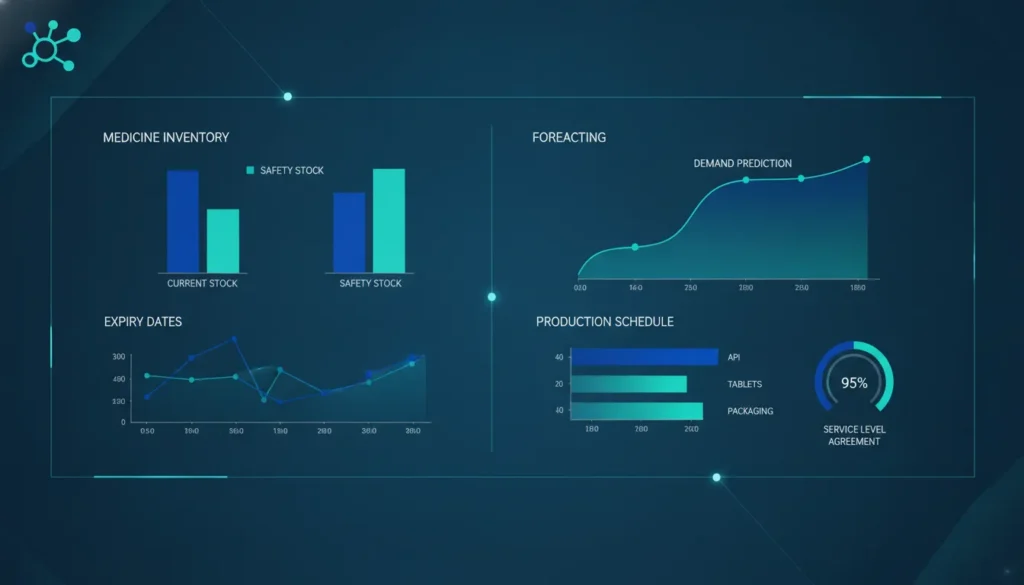
Managing a pharmaceutical supply chain without exact data often results in dangerous drug shortages. One planning error can leave patients without life-saving drugs. This risk makes precise inventory planning a clear need for every modern distributor and 3PL.
Schedule a personalized RxERP demo to connect forecasting, inventory, and compliance data.
Pharmaceutical demand forecasting software estimates which products customers will need, where they will need them, and when demand is likely to occur. It combines historical demand with operational signals to support purchasing and inventory decisions. Effective forecasting helps teams prepare for seasonal shifts and supply disruptions while balancing availability, expiry exposure, and working capital.
For operations leaders, the next step is defining the planning signals, constraints, and decisions the system must support.
What pharmaceutical demand forecasting software must account for
A pharma-ready forecast must combine demand history with lead times, supplier constraints, lot status, expiration dates, serialized inventory, service targets, and financial limits.
Effective pharmaceutical demand forecasting software must process many industry-specific data points. This process projects which health goods will be bought, where they are needed, and in what amounts. These inputs help teams maintain a steady supply of medicine. Reliable forecasts support product availability while helping planners control expiry exposure and working capital across complex supply chains.
Market drivers and history
A strong forecast starts with past demand and market trends. Modern tools use smart models to find patterns in old sales. They also track seasonal shifts and market shifts. This clear path lets pharmaceutical demand forecasting software give a firm look at future needs for vital products. By looking at these drivers, firms can lower stock levels by up to 25% while filling more orders.
Supply chain limits
Pharma-native software must also track internal limits like lead times and lot end dates. Stock control must fit with law, such as the unit-level tracking needed by the Drug Supply Chain Security Act (DSCSA). Integrated tools make sure that tracking and planning help with audits. They also stop the sale of old goods. Managing these facts helps firms fix cash flow issues and stop system splits.
Data quality and teamwork
The truth of any forecast rests on good data from all partners. Incomplete or late reports often lead to data issues. These issues can cause slow buys or empty shelves. Using pharma supply chain visibility software helps teams work together. They can share quick signals from buyers and sales paths. This teamwork is key to keep a steady supply of vital medicines in a global market.
How do lot and expiration constraints change the forecast?
Drug products are not like common goods. They have a set shelf life. Most companies use the first-in, first-out method. But the drug supply chain needs first-expired, first-out rules. This means you must track every lot by its date. If a lot is near its end date, you must move it fast. Smart pharmaceutical demand forecasting software helps with this task. It looks at the dates of your current stock. Then it tells you what to ship first to keep stock fresh and safe.
The shift from FIFO to FEFO
Using lot dates changes how you plan your supply. You cannot just look at total stock levels. You must look at the age of each batch. If you ignore these dates, you might ship old stock too late. This leads to big losses and risk. Proper modern pharma inventory management uses lot data to find these risks early. It helps you see which lots are slow to move. Then you can make a plan to sell them before they go bad. This keeps your warehouse lean and your buyers happy.
When lot dates are part of the plan, the system can spot trends. For instance, some lots might move slower in certain months. You can see how long it takes to sell a whole batch. This helps you decide how much to buy next time. It also helps you set the right safety stock levels. You want enough stock to meet demand, but not so much that it expires on the shelf. Meeting both needs is the key to a good supply chain.
Solving the short dated stock problem
Short-dated stock is a major hurdle for suppliers. These are items that will expire in a few months. Most buyers will not take them. Good planning helps you spot these items while you still have time to act. Handling these dates well helps you stay safe. It is vital to ensure an uninterrupted supply of essential medicines. When you track lots, you can see if you have too much stock for the demand. You can then stop new orders to let the current stock sell first.
- Track lot-level data to see which batches will expire soon.
- Adjust your buy orders based on the age of current stock.
- Work with sales teams to move short-dated items to high-demand spots.
- Use data to find which products are at high risk for waste.
Planning for slow moving lots
Slow-moving drugs are a high risk for waste. If demand drops, a large lot can sit in the warehouse too long. A good system will flag these lots before they become a problem. You can use data to see if you should lower the price or move the stock to a new spot. This keeps your cash flow healthy. It also makes sure that no medicine goes to waste. Tracking every lot helps you stay ready for audits. It also keeps your entire supply chain safe and smooth.
You can also run cases to see what happens if demand changes. For example, what if a new drug hits the market? Or what if a big buyer leaves? These events can make your current lots sit longer. A smart system helps you plan for these shifts. It can show you which lots are most at risk in each case. This lets you act before the stock expires. Being ready helps you avoid the high cost of write-offs. It also ensures that life-saving drugs get to the people who need them on time.
See how RxERP helps pharma teams optimize inventory without losing serialized traceability.
Reduce stockout risk without creating excess inventory
The practical goal is not maximum inventory. It is the right service level by item, location, and lot, with replenishment decisions that account for lead-time variability and expiration risk.
Stockout risks can halt pharma work. But holding too much stock ties up cash. You must find a middle ground. Many firms use old tools that do not talk to each other. This leads to bad data and missed trends. Using pharmaceutical demand forecasting software helps you see what is coming. It links your sales data with your stock levels in real time. This keeps your supply chain moving without waste.
The trap of safety stock
Holding extra stock is a common way to avoid empty shelves. This stock acts as a buffer. But it costs money and takes up space. In the pharma world, goods can expire. Too much stock leads to waste. Research shows that good models are key to a steady supply of medicines. You need to know which items to buy and when. Without clear data, you might buy too much of the wrong thing. This ties up funds that you could use for growth.
Moving past broken data
Many teams still use spreadsheets to plan. They pull data from many places. This is slow and has many errors. It also makes it hard to react to market shifts. By using modern pharma inventory management, you can link your data. This lets you see the whole supply chain in one place. You can spot a risk before it becomes a crisis. Smart planning can lead to 85% fewer stockouts while keeping stock levels lean. It gives you the clear view you need to make fast choices.
The power of smart planning
Smart tools use math to find patterns in your data. They look at past sales and seasonal shifts. This is much faster than doing it by hand. In fact, these tools can cut planning time by 70%. They help you see demand drivers you might miss. This leads to 30% leaner stock while keeping your service high. You can trust the data to tell you when to restock. This removes the guesswork from your daily work. It also helps you stay ready for any audits.
| Feature | Manual Spreadsheets | Unified Pharma Planning |
|---|---|---|
| Data Source | Broken files | Single source of truth |
| Risk Level | High risk of human error | Auto and accurate |
| Speed | Hours or days to update | Real-time updates |
| Data View | Limited to one desk | Full company view |
| Compliance | Hard to track lots | Linked DSCSA data |
A unified tool uses real data to make choices. It looks at past sales and new trends. This helps you avoid the high cost of holding too much stock. It also keeps your service levels high for vital goods. Linked data makes your team faster and more agile. You can meet demand without the waste of excess safety stock. It is the best way to keep your business lean and ready for the future.
How should teams use scenario planning?
Scenario planning helps pharma teams prepare for market shifts before they happen. It allows leaders to test how their supply chain reacts to spikes in demand, supplier delays, or new product launches. By running these tests in pharmaceutical demand forecasting software, companies can protect their cash flow and keep life-saving drugs in stock. This methodical approach ensures a steady supply of essential medicines by projecting which goods people will need and when they will need them.
Manage supply chain risks
Pharma supply chains face many risks, from factory halts to shipping delays. Scenario planning lets teams model these events to find the best way to respond. For example, if a key supplier has a delay, a team can use their pharma supply chain visibility software to find other sources. This keeps stock levels stable and avoids costly stockouts. According to research from the NIH, forecasting is a vital part of ensuring medicine is always available for patients.
Plan for product launches
Launching a new drug requires precise timing and enough stock to meet initial orders. Teams use scenario planning to model different uptake rates, such as slow growth or a sudden boom. This helps them set the right stock levels without tying up too much cash in products that might not sell fast. New tools use modern pharma inventory management steps to keep stock lean while meeting high service goals. Using AI in these models can lead to 50% more accurate forecasts than old ways.
Operating process for scenario planning
To get the best results, teams should follow a clear path when running scenarios. This process helps them turn data into action while staying compliant with rules like the Drug Supply Chain Security Act (DSCSA).
- Define the goal of the scenario, such as planning for a recall or a sudden rise in demand.
- Gather good data from your unified ERP system to ensure your starting point is correct.
- Run multiple models to see how different factors like price or shipping speed change the outcome.
- Review the results with leaders to decide on the best plan for each possible future.
- Set up automated alerts so your team can act fast if a real-world event matches a scenario.
Using these steps helps 3PLs and wholesalers reduce the risk of relying on loose tools or spreadsheets. Integrated software also supports DSCSA audit readiness by keeping all tracking and planning in one safe place. This coordination helps teams manage change and improve how they deliver care to the people who need it most.

Connect BI, inventory, and financial planning
Connected planning gives operations and finance one view of demand, on-hand inventory, purchase commitments, expiry exposure, and cash requirements.
Pharma firms often use separate tools for sales, stock, and finance. This split data makes it hard to see the big picture. When you use pharmaceutical demand forecasting software as part of one system, all your data works together. This link helps you predict future needs with more precision.
Unify operations and finance
In many firms, the finance team and the warehouse team do not talk enough. This leads to cash flow gaps or missing stock. High-value drugs need tight control to avoid waste. By linking your inventory management tools with financial data, you can see how stock affects your budget in real time. This view helps you make better choices about when to buy and how much to keep on hand.
Research shows that demand planning in health supply chains is a complex task. It involves predicting which drugs people will need and where they will need them (PMC11207870). When your sales data flows directly into your planning tools, you reduce the risk of human error. This data flow is vital to keep an uninterrupted supply of life-saving medicines (PMC11207870).
Drive accuracy with live data
Modern pharma teams need tools that handle more than just simple sales trends. You need to track data by region, customer, and date. Using pharma supply chain visibility software lets you see every move your products make. This is critical to meet rules like the Drug Supply Chain Security Act. This law requires unit-level tracking, which adds more data to your system (RxERP).
A single system ensures that your business intelligence tools use the same facts as your warehouse team. This prevents data gaps that lead to stock-outs or overstock. Accurate plans help your team spend less time fixing errors and more time moving products. When every group sees the same live data, your whole supply chain becomes more reliable.
What should you evaluate in pharmaceutical demand forecasting software?
Choosing the right pharmaceutical demand forecasting software requires a deep look at how a system handles complex data and rules. For wholesalers and 3PLs, the software must do more than just guess at future sales. It needs to support an uninterrupted supply of essential medicines while keeping your operations lean. You should check if the tool can unify your data, compliance, and finances in one place.
Check for data quality and integration
Poor data quality often stems from late or incomplete reports, which can lead to stockouts. Your new system should connect directly to your inventory and sales data to give you a clear view of the market. Robust pharma supply chain visibility software helps you see demand drivers in real time. This link between data and planning is vital for managing high-value products that have strict storage and handling needs.
The software should also handle unit-level serialization as required by the DSCSA. When forecasting is part of a serialized ERP, you can track every item from the factory to the pharmacy. This integration makes it much easier to stay ready for audits while you plan your stock levels. Systems that lack this native link often force you to use separate tools, which increases the risk of data errors.
Verify forecast accuracy and AI features
Modern tools use machine learning and AI to improve accuracy. In some cases, AI-powered planning can make forecasts up to 50% more accurate than older methods. You should ask if the software can account for seasonality, market disruptions, and regional trends. This level of detail helps you methodically assess future demand for critical health products. Better accuracy directly impacts your bottom line by reducing the cash you have tied up in extra stock.
Look for features that allow your team to work together on forecasts. Collaborative workflows let sales, finance, and operations teams share insights before you finalize a plan. This coordination is key to overcoming financial challenges and funding gaps that can delay your procurement. When everyone sees the same data, you can make better choices about which products to buy and when to buy them.
Assess scalability and ease of use
Your software must be able to grow with your business. It should handle a rising number of SKUs and complex time-series data without slowing down. A system that is too hard to use will lead to low adoption and more manual work in spreadsheets. Instead, choose a tool that gives you clear charts and reports so you can quickly see which factors are moving your numbers. This clarity helps you stay agile in a fast-moving market.
Explore RxERP business intelligence for faster, evidence-based supply planning.
Build a measurable demand planning process
A measurable demand planning process assigns owners, reviews exceptions on a set cadence, and tracks forecast accuracy, service levels, stockouts, expiry write-offs, and working capital.
A strong demand plan needs clear data to work well. You should start by setting up a flow where data moves from sales and supply teams into one system. This helps your team see the same numbers and make fast choices. Using pharmaceutical demand forecasting software can help you find trends before they become problems. This shift from guessing to using real data is key for 3PLs and wholesalers who handle high-value goods.
Track key metrics for success
You must know if your plan is working. Forecast accuracy is a top goal. This shows how close your guesses are to real sales. AI tools can help here. They can lead to 50% more accurate forecasts than old ways (PMC9540101). You should also check for bias. Bias happens when your team always predicts too high or too low. Fixing this helps you keep just enough stock without spending too much.
Other vital signs include your fill rate and stockout rate. A high fill rate means you meet orders on time. A high stockout rate means you lose sales and fail patients. You can track these through pharma supply chain visibility software to find where gaps exist. This data lets you fix weak spots in your supply chain fast.
Focus on cash and waste
Inventory turns and expiry dates are major financial markers. For pharma firms, holding too much stock for too long risks waste from expired drugs. Tracking expiry write-offs is a must for any firm that wants to stay lean. Good forecasting can reduce your stock levels by up to 25% while keeping supply safe (PMC9540101). This helps your working capital.
Better planning also helps with rules. When you know where every unit is, you can meet DSCSA rules more easily. This reduces the risk of audit issues and keeps your site running well. A serialized ERP helps link these forecasts with unit-level data for full control. Clear metrics turn demand planning from a task into a win for your business.
Frequently Asked Questions
How does demand forecasting software reduce stockouts?
Pharma teams use these tools to predict future needs for key products based on past sales and market trends. According to RELEX Solutions, robust planning software can lead to 85 percent fewer stockouts. This helps wholesalers and 3PLs ensure a steady supply of vital medicines. By using smart alerts and data trends, teams can buy products earlier. This helps them avoid empty shelves during high demand peaks.
What role does AI play in pharma demand planning?
Artificial intelligence helps planners find patterns in complex data that humans might miss. Netstock reports that AI-powered planning can make forecasts 50 percent more accurate. These models look at seasons and market shifts to pick the best math for each item. This cuts manual work by up to 70 percent, letting teams focus on high-value goods. It also helps reduce stock levels by about 25 percent without hurting service.
How does serialization help with demand forecasting?
The DSCSA mandates unit-level tracking for all pharma products in the supply chain. This serialization creates a massive amount of data that teams can use to track items as they move. When you link this unit data to your forecasting tools, you get a clear view of your stock levels. This helps prevent audit issues. It also ensures you have the right amount of product at every point in your network.
What are the benefits of automated forecasting for distributors?
Distributors use automation to keep their stock lean while meeting buyer needs. Modern tools help teams reduce waste and improve sustainability by matching supply more closely to real demand. According to RELEX Solutions, this approach can create 30 percent leaner inventory. It also unifies compliance and finance in one platform. This reduces the risk of using separate systems that do not talk to each other.
Ready to improve your pharmaceutical inventory and supply planning?
Manual planning leads to costly waste and stockouts that hurt your profit and make it hard for you to stay on top of strict industry rules. Fixing these gaps today allows your team to stop guessing and start using real time data to keep your supply chain moving without any delays. You can gain full control of your stock movement and reach your goals faster with our inventory management tools built specifically for the pharma industry.