
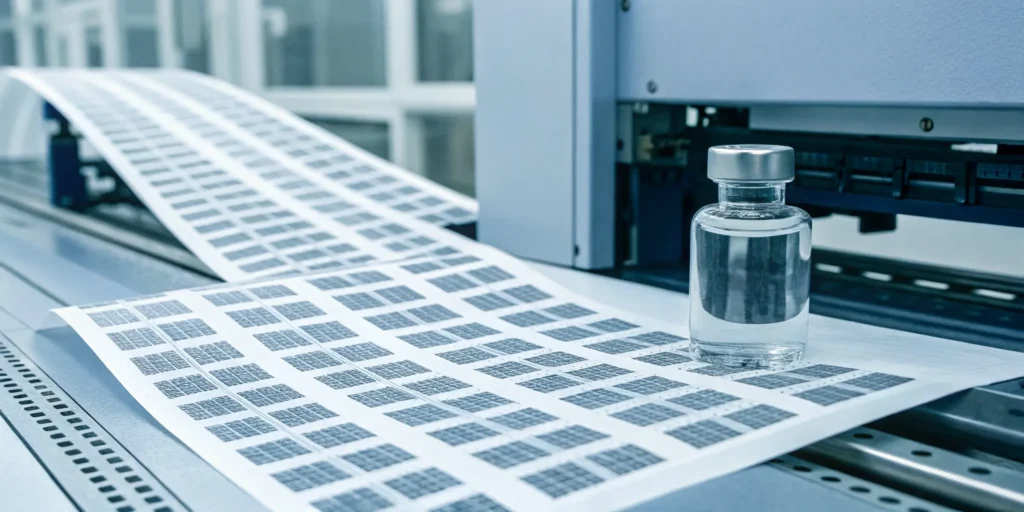
Manual data entry is slow, scanning failures are frustrating, and inventory discrepancies are costly. These daily operational headaches can grind a pharmaceutical warehouse to a halt. The solution lies in automating data capture with a technology built for accuracy and speed: the GS1 DataMatrix. With its high data capacity and built-in error correction, this 2D barcode ensures a successful scan even if a label is scuffed. It captures multiple data points instantly, eliminating keying errors and streamlining workflows from receiving to shipping. This article explains how implementing this standard can reduce operational friction, lower costs, and create a more efficient and reliable distribution process.
Key Takeaways
- It’s more than a generic barcode: Unlike standard 2D codes, a GS1 DataMatrix uses a globally recognized format to structure critical data like a product’s GTIN, serial number, and lot number, ensuring universal readability across the supply chain.
- It enables precise, unit-level control: By giving each product a unique scannable identity, these barcodes allow for real-time inventory accuracy, targeted recalls, and a verifiable product history that helps prevent counterfeit drugs from entering the supply chain.
- It is the foundation of DSCSA compliance: The GS1 DataMatrix is the federally approved standard for pharmaceutical serialization, providing the essential tool for tracking every product unit from the manufacturer to the dispenser to meet regulatory demands.
What Is a GS1 DataMatrix?
If you’ve handled a prescription drug package recently, you’ve likely seen a GS1 DataMatrix code. It looks like a small, pixelated square, but this compact barcode is a powerhouse of information. Think of it as a major upgrade from the traditional one-dimensional (1D) barcodes you see on most consumer goods. While those line-based barcodes typically hold just one piece of data, like a product number, a GS1 DataMatrix is a two-dimensional (2D) code that can store a wealth of information in a tiny footprint.
This capability is exactly why it has become the standard in regulated industries, especially pharmaceuticals. For companies managing complex supply chains, the GS1 DataMatrix is the key to unlocking unit-level traceability, ensuring regulatory compliance, and protecting patient safety. It’s not just a barcode; it’s a gateway to a smarter, more transparent supply chain.
How It Works
At its core, the GS1 DataMatrix is a specific type of 2D barcode that operates within the global GS1 System of Standards. Unlike a simple barcode that just holds a product number, a single GS1 DataMatrix can securely store multiple pieces of information at once. For a pharmaceutical product, this could include its Global Trade Item Number (GTIN), lot number, serial number, and expiration date, all in one compact symbol.
When you scan the code, the scanner reads the data and can instantly provide detailed product information. This makes it incredibly useful for everything from verifying a product’s authenticity to managing inventory and handling recalls. The ability of 2D barcodes to hold so much data is what makes them essential for modern supply chain management.
The Role of the FNC1 Character
What makes a GS1 DataMatrix different from a generic DataMatrix code? The secret lies in a special, non-data character called the Function 1 or FNC1. This character appears at the very beginning of the data string and acts as a flag, signaling to the scanner that the code conforms to the GS1 standard.
Think of the FNC1 as a secret handshake. It tells the scanning system, “Pay attention, the data that follows is structured according to GS1 rules.” This ensures the information is interpreted correctly and consistently across different systems and organizations worldwide. Without the FNC1 character, a scanner would just see a random string of data, but with it, the system knows exactly how to parse the information that follows.
What Are GS1 Application Identifiers (AIs)?
Once the FNC1 character signals that a code is a GS1 DataMatrix, the system looks for GS1 Application Identifiers (AIs) to understand the data. AIs are two-to-four-digit prefixes in parentheses that label each piece of information within the barcode. For example, (01) indicates the product’s GTIN, (17) marks the expiration date, (10) identifies the lot number, and (21) specifies the unique serial number.
This standardized structure is what makes the barcode so powerful. It allows a single scan to capture and organize multiple data points automatically. For pharmaceutical companies, this is critical for meeting DSCSA regulations, which require this specific information for product traceability. AIs ensure that every partner in the supply chain can read and understand the data, making true interoperability and compliance possible.
Why Choose GS1 DataMatrix?
When you’re managing a pharmaceutical supply chain, every detail matters. The barcodes you use are more than just labels; they are the foundation of your tracking, compliance, and safety protocols. The GS1 DataMatrix stands out because it was designed to handle the complex demands of regulated industries. Its unique features provide practical advantages that directly address the challenges of moving life-critical products efficiently and securely. Let’s look at exactly why this 2D barcode is the industry standard.
Store More Data in Less Space
One of the biggest advantages of the GS1 DataMatrix is its ability to hold a large amount of information in a very small space. Unlike a traditional barcode that might only store a product number, a GS1 DataMatrix can encode extensive data, including the GTIN, batch or lot number, and expiration date. This is possible through the use of GS1 Application Identifiers. For pharmaceutical products, where packaging space on vials and cartons is often limited, this high data density is essential. It allows you to capture all the necessary information for robust tracking within a single, compact symbol, forming the backbone of a modern serialized ERP system.
Scan Reliably, Even When Damaged
The pharmaceutical supply chain can be a rough environment. Labels get scuffed, packages get bumped, and printing can sometimes be imperfect. The GS1 DataMatrix is built for this reality. It has impressive error correction capabilities, maintaining high readability even if up to 30% of the code is damaged or obscured. This durability ensures that a product remains scannable throughout its journey, from the manufacturing line to the pharmacy shelf. For ultimate permanence, these codes can even be laser-etched directly onto products. This reliability minimizes scanning failures, which helps maintain accurate inventory management and prevents costly operational delays caused by unreadable labels.
Scan from Any Angle
Speed and efficiency are critical in any distribution or pharmacy setting. A key feature of the GS1 DataMatrix is that it can be read from any angle. This is known as omnidirectional scanning. Your team doesn’t need to waste time perfectly aligning the scanner with the barcode to get a successful read. While it may seem like a small detail, those saved seconds add up quickly across thousands of scans per day. This feature streamlines receiving, picking, and packing processes, reducing labor costs and getting products where they need to go faster. It’s a simple yet powerful way to reduce friction in your daily operations.
Flexible Sizing for Any Product
Pharmaceutical products come in all shapes and sizes, from tiny vials to large shipping cases. The GS1 DataMatrix is designed with this variability in mind. The barcodes are available in a range of sizes, from a tiny 10×10 matrix to a large 144×144 matrix. Smaller sizes are perfect for individual units where space is at a premium, while larger codes can hold more data on secondary or tertiary packaging. This flexibility allows you to apply a consistent serialization strategy across your entire packaging hierarchy. It ensures that every item, bundle, and case can be uniquely identified and tracked, which is a fundamental requirement for DSCSA compliance.
How GS1 DataMatrix Compares to Other Barcodes
With so many barcodes out there, it’s easy to get them mixed up. The GS1 DataMatrix isn’t just another square code; it has specific features that set it apart from standard DataMatrix codes, QR codes, and the traditional 1D barcodes you see on most consumer products. Understanding these differences is key to seeing why it’s the go-to choice for regulated industries like pharmaceuticals, where data accuracy and global standards are non-negotiable. Let’s break down how it stacks up against the others.
GS1 vs. Standard Data Matrix
At first glance, a GS1 DataMatrix and a standard DataMatrix look identical. They’re both small, square, and made of tiny black and white cells. The real difference is on the inside. A GS1 DataMatrix is structured to encode data using GS1 Application Identifiers (AIs), which is a globally recognized system for formatting information. This structure is what ensures global interoperability, meaning that a product scanned in a warehouse in one country can be instantly understood by a system in another. A standard DataMatrix doesn’t have this built-in grammar, so while it can hold data, it can’t guarantee universal interpretation. For supply chains that depend on seamless data exchange, that GS1 standard is everything.
GS1 DataMatrix vs. QR Codes
Many people confuse the GS1 DataMatrix with the more familiar QR code. While both are 2D barcodes, you can spot the difference by looking at their corners. A QR code has three distinct squares in its corners that help scanners orient the code. A GS1 DataMatrix, on the other hand, uses a solid L-shaped border as its “finder pattern.” Both codes have built-in error correction, which means they can still be read even if a part of the code is scratched or damaged. However, the GS1 DataMatrix is often preferred for product packaging because its compact size and high data density are perfect for fitting critical information onto small items, a common need in healthcare.
2D vs. 1D Barcodes
The jump from 1D to 2D barcodes was a massive leap in data capability. Think of the classic 1D barcode as a simple license plate, holding just one piece of information like the product number. In contrast, 2D barcodes are like a full digital passport for a product. They can store a wealth of information, including the product’s origin, batch or lot number, expiration date, and serial number. This ability to hold multiple data points in one small symbol is exactly why 2D barcodes like the GS1 DataMatrix are essential for meeting complex regulations like the DSCSA. They provide the detailed, unit-level traceability that older 1D barcodes simply can’t offer.
Who Uses GS1 DataMatrix?
While the GS1 DataMatrix is a cornerstone of the pharmaceutical supply chain, its utility doesn’t stop there. Its influence extends across several major industries where precision and data are critical. You can find these compact, powerful 2D barcodes on a surprising range of products, from medical devices and fresh produce to everyday consumer goods. The primary reason for its widespread adoption is its ability to store a significant amount of information in a very small space, a feature that is invaluable for tracking, safety, and operational efficiency.
Think of it as a tiny digital fingerprint for a physical product. This fingerprint can be read quickly and accurately, providing instant access to a wealth of data. For any business dealing with complex supply chains, regulatory demands, or the need for detailed product histories, the GS1 DataMatrix is a game-changer. It helps companies move beyond simple identification and into true, unit-level traceability. This shift is not just about compliance; it’s about building more resilient, transparent, and intelligent supply chains. As we’ll see, different industries leverage this capability for unique reasons, from ensuring patient safety to guaranteeing food freshness. Let’s take a closer look at the key sectors that rely on this technology to keep their operations running smoothly and their customers safe.
Healthcare and Pharmaceuticals
In healthcare, the GS1 DataMatrix is non-negotiable. It’s the only 2D barcode approved for regulated healthcare products, making it the backbone of supply chain security. This barcode helps track and identify individual pharmaceutical products from the factory to the pharmacy, which is critical for preventing counterfeit drugs from reaching patients. By encoding vital information like a product identifier, serial number, lot number, and expiration date, it provides the detailed data needed to meet strict regulatory standards, including the DSCSA. This level of traceability is fundamental to ensuring patient safety and maintaining compliance.
Food and Beverage
The food and beverage industry uses GS1 DataMatrix codes to ensure freshness and safety. You might see them on fresh foods like meat and produce, where they help track items from the farm to the grocery store. This detailed tracking allows for quicker, more precise recalls if a problem is discovered, protecting consumers from potential health risks. The industry is also preparing for a major shift called “Sunrise 2027,” an initiative to replace traditional 1D barcodes at checkout with 2D barcodes like the GS1 DataMatrix. This change will provide more product information and improve inventory management for retailers.
Retail and Consumer Goods
Across retail, 2D barcodes are becoming a game-changer. Compared to traditional barcodes, they hold significantly more data and can even connect to the internet, opening up new ways for brands to interact with customers. Many industries, especially retail and logistics, are adopting 2D barcodes to improve their operations and meet modern consumer demands. For businesses that manage their own sales channels, this technology can streamline everything from inventory management to the point of sale. As more retailers upgrade their systems, the GS1 DataMatrix is set to become a familiar sight on all kinds of consumer products.
How GS1 DataMatrix Supports Pharma Compliance
Meet DSCSA Serialization Requirements
If you work in the pharmaceutical supply chain, you know that compliance with the DSCSA is non-negotiable. The GS1 DataMatrix is a cornerstone of meeting these federal requirements. The DSCSA mandates serialization, which means every single saleable unit of a prescription drug needs a unique identifier. Think of it like a fingerprint for each product package. This capability is crucial for tracking products after they are sold, including during recalls. The GS1 DataMatrix is the perfect carrier for this unique identity, allowing you and your trading partners to track and trace products from the moment they’re made until they reach the dispenser. This end-to-end visibility is exactly what the law requires.
What Pharmaceutical Data Is Encoded?
So, what information is packed into that small square? A GS1 DataMatrix can hold several key pieces of data at once, all of which are essential for traceability. For DSCSA compliance, this includes four critical elements: the product’s Global Trade Item Number (GTIN), a unique serial number, the lot number, and the expiration date. The barcode uses special prefixes called Application Identifiers (AIs) to label each piece of data, so a scanner instantly knows what it’s reading. This standardized format ensures that a serialized ERP system can easily capture and process the information, creating a reliable digital record for every item that moves through your operations.
Why It’s the Standard for Regulated Healthcare
The healthcare industry adopted the GS1 DataMatrix as the standard for a simple reason: it works. Having a single, globally recognized barcode system creates a common language for all supply chain partners, from manufacturers to distributors. This uniformity is a powerful tool in the fight against counterfeit drugs, as it makes it much harder for fraudulent products to enter the legitimate supply chain. By ensuring every product can be verified, the standard enhances the integrity of our medicine supply. Ultimately, this commitment to a unified compliance framework protects businesses from risk and, most importantly, improves patient safety by ensuring people receive authentic and safe medications.
How Does GS1 DataMatrix Improve Traceability?
Traceability isn’t just a buzzword; it’s the backbone of a secure and efficient pharmaceutical supply chain. It’s about knowing the complete journey of a product, from the manufacturing line to the pharmacy shelf. GS1 DataMatrix codes are the key to unlocking this level of detail. By enabling every stakeholder to see and verify a product’s path, these small squares do a big job: they help you meet regulatory demands, protect patients, and run a smarter operation. A robust serialized ERP system uses these codes to create a transparent and trustworthy supply chain from end to end.
Gain Real-Time Visibility
Imagine knowing exactly where every single unit of your product is at any given moment. That’s the power of GS1 DataMatrix. Because each code can be scanned at the individual item level, you get a granular, real-time view of your entire supply chain. This isn’t just about tracking shipments; it’s about seeing the full picture. This visibility helps you anticipate demand, prevent stockouts, and manage expiration dates with precision. With better data, you can make smarter decisions, streamline logistics, and improve your overall inventory management for a more responsive and efficient operation.
Track Products at the Unit Level
So, how does a tiny square hold so much power? A GS1 DataMatrix can store a massive amount of information, far more than a traditional barcode. Using GS1 Application Identifiers (AIs), it neatly organizes critical data points like the product’s unique serial number, lot number, and expiration date. This means each product package has its own digital passport. This unit-level serialization is the foundation of modern traceability and a core requirement for regulations like the DSCSA. It transforms a simple package into a trackable asset, giving you a detailed history for every item that leaves your facility.
Simplify Recalls and Returns
No one wants to deal with a product recall, but being prepared is essential. GS1 DataMatrix codes make this process faster, more precise, and less costly. Instead of issuing a broad recall for an entire product line, you can use the unique serial number to identify and isolate only the affected units. This surgical approach minimizes disruption, reduces financial losses, and protects your brand’s reputation. It allows you to act quickly and confidently, demonstrating a commitment to safety and compliance. This level of control turns a potential crisis into a manageable event, showing your partners and customers that you have the systems in place to protect them.
Fight Counterfeit Products
In the pharmaceutical industry, counterfeit products are a direct threat to patient safety. GS1 DataMatrix is one of our most effective tools in this fight. Because every product has a unique, verifiable serial number, it becomes incredibly difficult for fake items to enter the legitimate supply chain. Any partner at any point can scan the code to confirm a product’s authenticity. This creates a powerful barrier against diversion and fraud. By ensuring the integrity of every product, you not only protect patients but also help combat public health crises, like the devastating opioid crisis, which is often fueled by illicit drugs.
What Healthcare Challenges Does GS1 DataMatrix Solve?
The pharmaceutical supply chain is notoriously complex, presenting daily challenges that can affect your bottom line and, more importantly, patient health. At every step of a product’s journey, there’s a risk of error, delay, or even fraud. This is where GS1 DataMatrix codes become so much more than just a compliance checkbox. They are a practical, powerful solution to some of the industry’s most persistent problems. By embedding detailed, unit-level data into a single, compact symbol, these barcodes help create a more transparent, efficient, and secure supply chain for everyone involved.
They directly address critical issues in inventory management, patient safety, and operational workflow. For any pharmaceutical distributor or manufacturer, using this technology turns a regulatory requirement into a significant business advantage. It’s about moving from simply tracking products to truly understanding and controlling their journey. This level of control is essential for preventing stockouts, managing recalls effectively, and fighting the influx of counterfeit drugs. Ultimately, it helps you protect your business and the patients who depend on your products, ensuring integrity from the factory to the pharmacy.
Improve Inventory Accuracy
Manual counts and batch-level tracking often lead to discrepancies, causing stockouts of essential medicines or costly overstock situations. GS1 DataMatrix solves this by enabling scanning at the individual unit level. Each scan provides a real-time, accurate data point, giving you a precise picture of what you have and where it is. This granular visibility transforms your inventory management from a reactive process into a proactive strategy. You can make smarter purchasing decisions, reduce waste from expired products, and ensure critical medications are always available for the patients who need them.
Enhance Patient Safety
Nothing is more important than patient safety. GS1 DataMatrix codes are a powerful tool in this mission, creating a verifiable chain of custody for every single product. This detailed tracking is essential for managing recalls with speed and precision, allowing you to isolate specific affected units rather than pulling entire batches from circulation. Furthermore, this traceability is a frontline defense against counterfeit drugs entering the legitimate supply chain. By verifying a product’s journey, you help ensure its authenticity, which is a critical part of addressing public health issues like the opioid crisis.
Reduce Errors and Operational Costs
Manual data entry is slow and notoriously prone to human error, leading to costly mistakes in receiving, picking, and shipping. A single scan of a GS1 DataMatrix instantly and accurately captures multiple data points, like the product identifier, lot number, and expiration date, eliminating manual keying errors. The barcode’s built-in error correction also means it remains readable even if partially damaged, preventing workflow disruptions. This reliability and automation streamline operations, reduce labor costs, and lead to significant improvements in your company’s financial automation and overall efficiency.
Common Myths About GS1 DataMatrix
When a technology becomes as essential as the GS1 DataMatrix, a few myths are bound to pop up. It’s easy to get wires crossed, especially with so many different barcodes out there. Let’s clear the air and tackle some of the most common misconceptions so you can move forward with confidence in your supply chain strategy. Understanding the truth behind these codes is the first step to leveraging their full power for compliance and efficiency.
Myth: It’s Only for Small Items
It’s true that one of the biggest strengths of the GS1 DataMatrix is its ability to hold a lot of information in a tiny space. This makes it the perfect choice for small pharmaceutical items, where label real estate is precious. But thinking it’s only for tiny products is a big misunderstanding. Its high data capacity and robust design make it just as valuable on larger shipping cases and pallets as it is on a single vial. The focus isn’t on the size of the item, but on the need for reliable, detailed data tracking throughout the supply chain.
Myth: It’s Only for Healthcare
Given its critical role in meeting pharmaceutical regulations like the DSCSA, it’s no wonder many people associate the GS1 DataMatrix exclusively with healthcare. However, its reach extends far beyond the pharmacy. Other industries rely on it for complex tracking, too. For example, the retail sector uses it for tracing fresh foods, and logistics companies use it for efficient inventory management. This widespread adoption is a testament to its versatility and reliability, making it one of the most trusted 2D barcodes across multiple sectors.
Myth: All DataMatrix Codes Are the Same
At a glance, a generic DataMatrix and a GS1 DataMatrix look identical. They’re both square, pixelated codes, but what’s inside makes all the difference. A GS1 DataMatrix is structured according to global standards, using special data qualifiers to format the information. This ensures that the product code, lot number, and expiration date are universally readable by any compliant system, anywhere in the world. A generic code lacks this global language, making it unsuitable for regulated supply chains where interoperability is non-negotiable.
Myth: QR Codes Are Replacing It
With QR codes popping up everywhere from restaurant menus to marketing campaigns, some wonder if they’re making the GS1 DataMatrix obsolete. The short answer is no. Both are powerful tools, but they’re designed for different jobs. QR codes are fantastic for consumer engagement, easily linking a user’s smartphone to a website. A GS1 DataMatrix, on the other hand, is built for the rigors of the supply chain. It offers higher data density at smaller sizes and superior error correction, which is essential for industrial scanning environments where labels might get scuffed or damaged.
How to Implement GS1 DataMatrix
Getting started with GS1 DataMatrix involves a few key steps. By focusing on the right hardware, software, and formatting rules, you can set your team up for a smooth and successful implementation. Breaking down the process makes it much more manageable.
Hardware and Scanner Requirements
To read GS1 DataMatrix codes, your first step is to ensure you have the right equipment. You’ll need a 2D barcode scanner capable of decoding the DataMatrix format. Most modern handheld and fixed-position scanners already support this, so you may be able to use your existing hardware. For added flexibility, especially in warehouse or receiving environments, smartphones equipped with specialized scanning apps can also do the job. This can be a cost-effective way to get your entire team involved without a major investment in new devices. The key is to choose hardware that is reliable, fast, and easy for your staff to use in their daily workflows.
Software and Integration Needs
Beyond the scanner itself, you need software that can both generate and interpret the data within the GS1 DataMatrix codes. This starts with label design software that can create codes according to strict GS1 specifications. However, the real power comes from integrating this data with your core business systems. For pharmaceutical companies, this means connecting scan data directly to a serialized ERP. This integration ensures that every scan automatically updates your inventory, financial, and compliance records in real time. It closes the loop between physical product movement and digital tracking, which is essential for DSCSA compliance and efficient operations.
Following GS1 Formatting Rules
Creating a compliant GS1 DataMatrix isn’t just about putting data into a square; it requires following specific formatting rules. The most important of these are the GS1 Application Identifiers (AIs). Think of AIs as prefixes that tell the scanning system what kind of data follows, like a product identifier, lot number, or expiration date. Using the correct AIs ensures the data is universally understood. You also need to pay close attention to the physical characteristics of the barcode, such as its size and print quality. The code must be printed clearly with enough contrast to be easily read by scanners, ensuring reliability throughout the supply chain.
Overcome Common Implementation Challenges
Making the switch to a new system always comes with a few hurdles, and implementing GS1 DataMatrix is no exception. While the benefits for traceability and compliance are clear, the path to adoption requires careful planning. Thinking through these common challenges ahead of time will help you create a smoother transition for your team and your operations. From hardware upgrades to team training, addressing these points proactively ensures you get the most out of your new system without unnecessary disruption. The key is to see these steps not as obstacles, but as part of a strategic upgrade to a more efficient and secure supply chain. Let’s walk through what to expect and how to prepare.
Integrating with Legacy Systems
One of the first practical challenges you might face is hardware compatibility. Your existing warehouse scanners may not be up to the task. GS1 DataMatrix codes are 2D, and they require camera-based imagers to be read correctly, not the traditional laser scanners used for 1D barcodes. According to the official GS1 DataMatrix Guideline, this upgrade is essential. This means you’ll need to audit your current equipment, from handheld scanners to fixed-position imagers on your line, and budget for necessary replacements. While this is an upfront investment, it’s a foundational step for building a modern, compliant, and efficient system that can handle the detailed data your products require.
Training Your Team for Adoption
New technology is only effective when your team knows how to use it confidently. Rolling out GS1 DataMatrix isn’t just a hardware swap; it’s a process change that requires thorough training. Your staff will need to learn how to operate the new scanners and understand the data they are capturing. As GS1 US points out, a successful transition to 2D barcodes depends on educating your team on the new technology and data management practices. Go beyond the basics of “point and shoot.” Explain why the change is happening, how the data improves traceability and patient safety, and how it makes their jobs easier in the long run. A well-informed team is more likely to adopt the new workflow quickly and accurately.
Ensuring Data Privacy and Security
A GS1 DataMatrix can pack a lot of information into a tiny square, which is great for traceability but also raises important security questions. Each code can contain a product’s GTIN, batch number, expiration date, and a unique serial number. Protecting this sensitive information is critical. You need to implement robust data management practices to prevent unauthorized access and ensure the integrity of your supply chain. A secure, centralized platform is essential for managing this data, controlling who can access it, and creating an audit trail. This isn’t just good practice; it’s a core part of maintaining product safety and regulatory compliance in the pharmaceutical industry.
Preparing for Sunrise 2027
While the pharmaceutical industry is already deep into serialization, it’s important to be aware of broader supply chain trends. GS1 is spearheading an initiative called Sunrise 2027, which aims to have retail point-of-sale systems worldwide capable of scanning 2D barcodes. While this might seem focused on retail, it signals a massive, industry-wide shift away from traditional UPC barcodes. For pharmaceutical manufacturers and distributors, this reinforces that investing in 2D barcode technology is the right move for long-term interoperability. Getting your systems and processes aligned now not only ensures DSCSA compliance but also positions you to operate seamlessly within the supply chain of the future.
Related Articles
- What Is a GS1 DataMatrix Barcode? A Complete Guide – RxERP
- How to Generate SSCC Labels: A 4-Step Guide – RxERP
- Data Matrix vs. QR Code: What’s the Difference? – RxERP
Frequently Asked Questions
What’s the real difference between a GS1 DataMatrix and a QR code? While they both look like pixelated squares, they are designed for different jobs. You can spot a QR code by the three squares in its corners, whereas a GS1 DataMatrix has a solid L-shaped border. More importantly, QR codes are typically used for marketing to link a consumer’s phone to a website. The GS1 DataMatrix is built for the supply chain, offering higher data density in smaller sizes and superior error correction, which is essential in industrial settings where labels can get damaged.
Do I need to replace all my current scanners to use these barcodes? It’s very likely you will need to upgrade some of your hardware. Traditional laser scanners, which read 1D line-based barcodes, cannot read 2D codes like the GS1 DataMatrix. You will need to use camera-based imagers that can see the entire square symbol. The good news is that many modern scanners are already equipped for this, but it’s a good idea to audit your current equipment to see what needs to be replaced for a smooth transition.
Beyond meeting regulations, how does this actually improve my day-to-day operations? The biggest improvement you’ll see is in efficiency and accuracy. A single scan of a GS1 DataMatrix instantly captures multiple data points, such as the product ID, lot number, and expiration date, which eliminates slow and error-prone manual data entry. This speeds up your receiving, picking, and shipping processes, reduces labor costs, and gives you a precise, real-time view of your inventory, helping you prevent stockouts and reduce waste from expired products.
What makes a DataMatrix a “GS1” DataMatrix? Can’t I just create my own? The key is the global standard. A GS1 DataMatrix is structured using a specific data language, including Application Identifiers (AIs), that labels each piece of information within the code. This ensures that any compliant system, anywhere in the world, can read and understand the data correctly. While you could technically create a generic DataMatrix, it wouldn’t have this universal grammar, making it useless for the interoperability required in a regulated supply chain.
How does this barcode help with something like a product recall? It makes recalls much faster and more precise. Because every single product package has a unique serial number encoded in its GS1 DataMatrix, you can identify and track individual units. In the event of a recall, you can isolate only the specific, affected items instead of pulling an entire lot or product line. This surgical approach saves money, minimizes business disruption, and demonstrates a strong commitment to patient safety.