
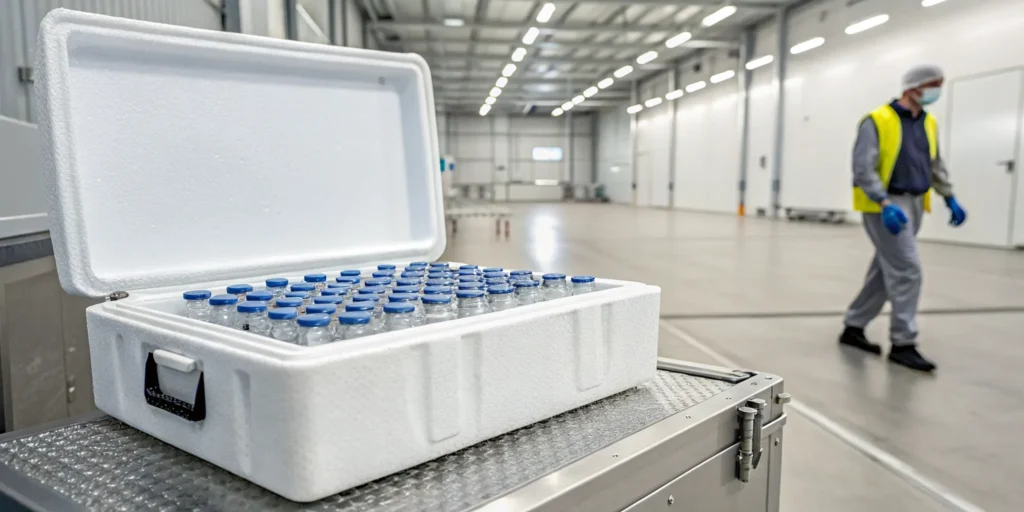
Think of your pharmaceutical supply chain as a high-stakes relay race. Each handoff, from the manufacturer to the distributor and finally to the pharmacy, must be perfect. If the baton is dropped at any point, the entire race is lost. For temperature-sensitive products, that baton is a consistent, controlled environment. The entire system of maintaining this environment is known as cold chain logistics. It’s a complex series of storage, transportation, and monitoring activities that must work in perfect harmony. This article will explore the essential components of an effective cold chain, from specialized infrastructure to the real-time data that proves your products are safe and effective.
Key Takeaways
- Preserve Product Integrity and Safety: A secure cold chain is essential for protecting temperature-sensitive pharmaceuticals, which directly ensures patient safety and prevents significant financial losses from spoiled products or regulatory penalties.
- Combine Smart Tech with Solid Procedures: An effective cold chain relies on integrating real-time monitoring technology with well-defined Standard Operating Procedures (SOPs) and thorough team training to manage risks proactively.
- Maintain an Auditable Trail for Compliance: To meet strict regulations like DSCSA, you must maintain complete traceability and detailed documentation, creating a verifiable record that proves products remained safe and stable at every stage of the supply chain.
What Is Cold Chain Logistics?
Cold chain logistics is the system for managing temperature-sensitive products throughout the entire supply chain. For the pharmaceutical industry, this means creating an uninterrupted series of refrigerated production, storage, and distribution activities. It’s a highly specialized field that ensures drugs and biologics, like vaccines and insulin, stay within their required temperature range from the moment they are manufactured until they reach the patient. A single break in this chain can render a life-saving medication ineffective or even harmful. That’s why having a robust, traceable system isn’t just good business practice; it’s a critical part of public health and safety.
The Cold Chain Process Explained
Think of the cold chain as a carefully controlled journey. It’s a complete distribution network where temperature is monitored and maintained every step of the way. This process involves a seamless integration of equipment and procedures designed to protect a product’s integrity. From specialized freezers at the manufacturing plant to refrigerated trucks and warehouse cold rooms, every link in the chain is vital. The goal is to create a closed loop where the product never experiences a temperature deviation. A modern serialized ERP system is essential for this, providing the end-to-end traceability needed to verify that the chain has remained unbroken and the product is safe for use.
Key Temperature Ranges
Not all cold products are created equal. Different pharmaceuticals require different temperature ranges to remain stable. The most common ranges include refrigerated (2°C to 8°C), frozen (around -20°C), and cryogenic (below -150°C) for specialized cell and gene therapies. Adhering to these specific ranges is a strict regulatory requirement. Guidelines like the EU’s Good Distribution Practice (GDP) set clear standards for temperature control during storage and transport. Maintaining these temperatures is a cornerstone of pharmaceutical compliance, ensuring that every product meets the safety and efficacy standards regulators and patients expect.
From Storage to Delivery: The Main Stages
The cold chain journey has several key stages, each with its own set of challenges. It begins with storage at the manufacturing facility, moves to temperature-controlled transportation, and continues through distribution centers before the final delivery to a pharmacy or hospital. Each stage requires validated equipment, including refrigerators, cold rooms, temperature probes, and alarm systems that can alert staff to any issues. Proper inventory management is crucial for tracking expiration dates and ensuring that older stock is used first, all while maintaining precise temperature logs. This meticulous process guarantees that the product arriving at its destination is just as effective as when it left the production line.
Why Cold Chain Logistics Is Crucial for Pharma
For temperature-sensitive pharmaceuticals, cold chain logistics isn’t just a best practice; it’s a fundamental requirement. This specialized supply chain is the backbone that supports product quality, patient safety, and your company’s financial health. The stakes are incredibly high, as a single break in the chain can trigger severe consequences, from spoiled products to regulatory penalties. Getting it right protects your business and, most importantly, the patients who depend on your products. A well-managed cold chain ensures that life-saving medications maintain their efficacy from the moment they are manufactured until they reach the people who need them most. It involves a complex series of storage and transport activities that must be carefully orchestrated and monitored. From refrigerated warehouses to temperature-controlled shipping containers, every link in the chain must perform flawlessly. Failure at any point jeopardizes not only the product itself but also the trust placed in your brand by healthcare providers and patients. That’s why understanding its importance is the first step toward building a resilient and compliant supply chain that can withstand the pressures of a global market while meeting stringent regulatory demands.
Preserve Product Integrity and Efficacy
Many modern medicines, particularly biologics, vaccines, and specialty drugs, are highly sensitive to temperature fluctuations. If these products get too warm or too cold, their complex chemical structures can break down, rendering them ineffective or even harmful. The primary purpose of a pharmaceutical cold chain is to maintain a consistent, controlled environment from the manufacturing line to the final point of delivery. This unbroken chain of custody protects the drug’s integrity, ensuring the medicine a patient receives is exactly as potent and safe as the day it was made.
Ensure Patient Safety and Regulatory Compliance
Regulatory bodies like the FDA have strict guidelines for a reason: to protect public health. Adhering to standards like Good Distribution Practices (GDP) is essential for proving that products were stored and transported correctly. This isn’t just about ticking boxes; it’s about creating a verifiable audit trail for every single item. Having robust compliance tools in place is critical for generating the documentation that regulators demand. This meticulous record-keeping directly ensures patient safety and builds trust across the entire pharmaceutical supply chain.
Avoid the Financial Hit of Temperature Changes
A single temperature excursion can result in the loss of an entire shipment, a devastating financial blow that can easily run into millions of dollars. Beyond the direct cost of the spoiled product, you also face the expenses of recalls, investigations, and potential regulatory fines. A failure in the cold chain can also cause lasting damage to your company’s reputation. Investing in a reliable system with precise inventory management is a critical risk-management strategy that protects your valuable assets and shields your business from significant financial and operational disruption.
Essential Parts of an Effective Cold Chain System
A strong cold chain is a lot like a relay race. If even one runner drops the baton, the whole team is at risk. It’s an end-to-end system where every component must work flawlessly to protect sensitive products. From the moment a vaccine or biologic leaves the manufacturing line to its final destination, a combination of specialized infrastructure, transportation, technology, and packaging works in concert to maintain the required temperature. This isn’t just about keeping things cold; it’s about precision, control, and creating an unbroken chain of custody that guarantees product safety and efficacy. Each part of the system has a specific job, and they all rely on each other to succeed. Let’s break down the four essential parts that make up a modern, effective cold chain.
Refrigeration and Storage Infrastructure
The foundation of any cold chain is its physical infrastructure. This includes everything from large, climate-controlled warehouses and walk-in cold rooms to medical-grade refrigerators and freezers. These aren’t your standard appliances; they are precision instruments designed to hold specific temperature ranges with minimal fluctuation. The goal is to create a stable environment where products can be safely stored before and after transit. Proper inventory management within these facilities is just as critical, ensuring products are organized, accessible, and monitored correctly until they are ready to move to the next stage.
Temperature-Controlled Transportation
Moving products from a controlled warehouse onto a truck, plane, or ship is often the most vulnerable part of the journey. This is where temperature-controlled transportation comes in. This involves using refrigerated shipping containers and vehicles equipped with cooling systems to maintain the product’s required environment while in transit. The entire logistics process becomes a regulated cold chain, where federal law and enforcement agencies have strict oversight. A serialized ERP system can help track these sensitive products as they move, providing a clear line of sight from one end of the supply chain to the other.
Real-Time Monitoring and Tracking Tech
How do you prove a product stayed at the right temperature for its entire journey? That’s where real-time monitoring and tracking technology becomes indispensable. Modern cold chains rely on a network of sensors and data loggers that stream live temperature, humidity, and location data. This gives you constant visibility and provides the documentation needed to meet regulatory demands. If a temperature deviation occurs, you get an immediate alert, allowing you to intervene before the product is compromised. This level of oversight is essential for maintaining compliance and providing auditable proof that your products are safe and effective.
Specialized Packaging
The final piece of the puzzle is the packaging itself. This is your product’s first line of defense against temperature fluctuations. Specialized packaging solutions range from simple insulated boxes with gel packs to advanced containers using passive cooling systems like dry ice or phase change materials. The packaging is designed to create a stable micro-environment that protects its contents for a specific duration. It often works hand-in-hand with monitoring tech, incorporating temperature probes and alarm systems that must also meet strict pharmaceutical validation requirements. This ensures data integrity from the inside out.
Common Challenges in Cold Chain Management
Keeping temperature-sensitive pharmaceuticals safe from manufacturing to delivery is a complex job. While the goal is simple, maintaining an unbroken cold chain involves overcoming several significant hurdles. From equipment malfunctions to ever-changing regulations, supply chain managers face daily pressures that can impact product integrity and patient safety. Successfully handling these challenges requires a combination of the right technology, well-defined processes, and a knowledgeable team. Let’s look at some of the most common obstacles and how you can prepare for them.
Equipment Failures and Maintenance
Your cold chain is only as strong as its weakest link, and that often comes down to equipment. Refrigerators, freezers, temperature probes, and alarm systems must perform flawlessly around the clock. A single mechanical failure can lead to millions of dollars in lost product. The challenge isn’t just preventing breakdowns; it’s also ensuring all your equipment meets strict pharmaceutical compliance requirements for data integrity and validation. Proactive maintenance schedules, regular equipment validation, and having redundant systems in place are critical. This approach helps you move from a reactive “fix-it-when-it-breaks” model to a preventive strategy that protects your assets and ensures product stability.
Complex Regulatory Demands
The pharmaceutical industry operates under a microscope of regulatory oversight. Guidelines from bodies like the FDA and international standards like Good Distribution Practice (GDP) set strict rules for how temperature-sensitive products are stored, handled, and transported. These regulations aren’t just suggestions; they are legal requirements designed to ensure product quality and patient safety. A key challenge is maintaining the detailed documentation needed to prove that your products stayed within the correct temperature range at every step. A robust system that helps you meet DSCSA and other requirements is essential for providing this proof and operating with confidence in a tightly regulated environment.
Managing Costs and Resources
Specialized equipment, validated storage facilities, refrigerated transport, and advanced monitoring technology all add up. The cost of maintaining a compliant cold chain can be substantial, and businesses are always looking for ways to operate more efficiently without cutting corners. The key is to find a balance between cost and quality. Investing in modern, energy-efficient equipment can lower operational expenses over time. Similarly, using a unified ERP system can streamline processes and reduce the administrative burden. Leveraging business intelligence analytics helps identify inefficiencies, allowing you to make data-driven decisions that optimize spending while strengthening your supply chain.
Staff Training and Expertise
Even with the best technology, human error remains a significant risk in cold chain management. Your team is your first line of defense against temperature excursions and compliance issues. Every person involved, from warehouse staff to delivery drivers, needs to understand the importance of their role and be trained on specific handling procedures. This includes knowing how to react to temperature alarms, understanding packaging protocols, and following standard operating procedures (SOPs) correctly. Continuous training and clear communication are vital. Providing your team with intuitive tools and features that simplify complex tasks can also reduce the chance of mistakes and empower them to maintain the integrity of the cold chain.
Regulations and Standards for Cold Chain Operations
Navigating the world of cold chain logistics means keeping up with a complex web of rules and standards. When you’re handling temperature-sensitive pharmaceuticals, the supply chain becomes a “regulated cold chain,” where every step is under scrutiny. These regulations aren’t just suggestions; they are strict requirements designed to protect product integrity and patient safety. For any pharmaceutical manufacturer, distributor, or 3PL, understanding and adhering to these standards is fundamental to operating successfully and avoiding costly compliance issues. From federal laws to international guidelines, each layer of regulation adds to the responsibility of maintaining a secure and effective cold chain.
FDA Requirements and DSCSA Compliance
In the United States, the Food and Drug Administration (FDA) sets the primary rules for handling pharmaceutical products. A key piece of legislation that impacts the entire supply chain is the Drug Supply Chain Security Act (DSCSA). This act was created to build a more secure and traceable system for prescription drugs as they move through the country. For cold chain products, this means you not only have to track the product’s journey but also prove it remained at the correct temperature throughout. This requires robust systems that can capture and store serialized data alongside temperature logs, ensuring you have a complete, verifiable record for every single item.
Good Distribution Practice (GDP) Standards
While the DSCSA is a US law, many pharmaceutical companies operate globally and must follow international standards. The European Union’s Good Distribution Practice (GDP) guidelines are a benchmark for quality across the industry. These guidelines set very specific requirements for distributing medicinal products, with a strong focus on temperature control and monitoring during both transportation and storage. Compliance with GDP is essential for maintaining product integrity and is often a requirement for doing business with partners in Europe and other regions that have adopted similar standards. It ensures a consistent level of quality and safety, no matter where the products are headed.
ICH Guidelines and Environmental Monitoring
Maintaining compliance in the cold chain is about more than just keeping products cold. The International Council for Harmonisation (ICH) provides guidelines that highlight the importance of comprehensive environmental monitoring. This means your entire infrastructure, including refrigerators, cold rooms, temperature probes, and alarm systems, must meet strict requirements for data integrity and validation. It’s not enough to have the equipment; you need to prove it’s working correctly and that the data it generates is accurate and secure. This focus on validated systems ensures that every component of your cold chain is reliable and capable of protecting the products it holds.
Documentation and Validation Protocols
Ultimately, compliance comes down to proof. You need meticulous documentation and clear validation protocols to show that you are meeting all regulatory standards. This involves creating detailed records of temperature monitoring, equipment calibration, staff training, and shipping procedures. For pharmaceutical manufacturers, distributors, and other stakeholders, this documentation is critical for passing audits and demonstrating the integrity of your operations. Having a centralized system that automates record-keeping and simplifies reporting can make a huge difference, turning a potential compliance headache into a streamlined, manageable process.
New Tech Transforming Cold Chain Logistics
Managing a temperature-controlled supply chain used to rely heavily on manual checks and reactive problem-solving. If a refrigeration unit failed, you might not know for hours, putting entire shipments at risk. Today, new technologies are bringing incredible precision and foresight to cold chain logistics. These tools help you protect product integrity, meet strict regulatory standards, and operate more efficiently. From sensors that provide live updates to AI that predicts issues before they happen, technology is making the pharmaceutical supply chain safer and smarter.
Innovations like the Internet of Things (IoT) provide a constant stream of data on temperature and location, giving you a live view of your products at every stage. Artificial intelligence takes this a step further, analyzing data to forecast potential disruptions before they impact your operations. This proactive approach is a significant shift from the old way of doing things. Meanwhile, technologies like RFID and blockchain are creating an unbreakable chain of custody, which is essential for traceability and compliance in a highly regulated industry. And with automated inventory systems, you can reduce human error and ensure your warehouse runs smoothly. Let’s look at how these key innovations are changing the game for pharmaceutical distributors, manufacturers, and 3PLs.
IoT Sensors and Continuous Monitoring
Internet of Things (IoT) sensors are small, powerful devices that attach to shipments or storage units to provide a constant stream of data. Instead of relying on periodic temperature checks, these sensors offer real-time monitoring of temperature, humidity, and location throughout a product’s entire journey. This continuous oversight means you can catch a temperature deviation the moment it happens, not hours later when it’s too late. With live alerts, your team can intervene immediately, protecting valuable inventory and ensuring patient safety. This level of visibility turns your supply chain from a series of disconnected steps into a fully transparent, manageable process.
AI-Powered Analytics and Predictive Reporting
All that data from IoT sensors is valuable, but artificial intelligence makes it powerful. AI-powered analytics platforms can process massive amounts of information to identify patterns and predict potential problems. For example, an AI system might detect subtle performance dips in a refrigeration unit and flag it for maintenance before it fails completely. This shifts your strategy from reactive to proactive. Instead of just responding to alarms, you can use business intelligence analytics to forecast risks, optimize routes, and ensure your equipment and processes consistently meet pharmaceutical compliance requirements for data integrity.
RFID and Blockchain for Traceability
Traceability is non-negotiable in the pharmaceutical industry, and new technologies are making it more secure than ever. Radio-Frequency Identification (RFID) tags allow for quick, accurate tracking of products without needing a direct line of sight, streamlining receiving and inventory counts. When you pair this with blockchain, you get an unchangeable, transparent record of every transaction and handoff in the supply chain. This creates a secure digital ledger that is essential for DSCSA compliance and fighting counterfeit drugs. It gives every partner in the supply chain, from manufacturer to distributor, confidence in the product’s history and integrity.
Automated Inventory Management
Manual inventory counts in a cold storage facility are not only time-consuming but also introduce risks like human error and temperature exposure. Automated systems solve this by integrating with your warehouse technology to provide a real-time view of your stock. These platforms can manage expiration dates, handle complex recall processes, and ensure proper product rotation automatically. By connecting your inventory data directly to a central ERP, you can streamline order fulfillment and reduce waste. An effective inventory management system designed for cold chain logistics ensures that your operations are as efficient and accurate as possible, from receiving to final delivery.
How to Build a Compliant Cold Chain Strategy
Creating a cold chain strategy that stands up to scrutiny is about more than just buying the right equipment. It’s about building a resilient, proactive system that protects your products from the moment they’re made until they reach their destination. A truly compliant strategy integrates technology, processes, and people to create a seamless and secure supply chain. By focusing on a few key areas, you can build a framework that not only meets regulatory demands but also safeguards product integrity and your bottom line. Let’s walk through the essential steps for developing a cold chain strategy you can count on.
Implement a Real-Time Monitoring System
Waiting for a shipment to arrive to find out if a temperature excursion occurred is a recipe for disaster. Instead, you need visibility into your products’ journey as it happens. Real-time monitoring systems use IoT sensors to stream live temperature, humidity, and location data directly to your dashboard. This constant flow of information allows you to catch small issues before they become expensive failures. With access to AI-powered reporting, your team can identify trends and potential risks, making it possible to act immediately to protect a shipment. This proactive approach is fundamental to modern cold chain management and a non-negotiable for maintaining product quality.
Develop Standard Operating Procedures (SOPs)
Consistency is the backbone of a compliant cold chain. Standard Operating Procedures (SOPs) are detailed, written instructions that ensure every team member handles temperature-sensitive products the same way, every single time. These guidelines should cover every stage of the process, from receiving and unpacking to storage, handling, and transportation. Your SOPs should mandate specific conditions to prevent temperature deviations and maintain product integrity throughout the supply chain. Think of them as your playbook for quality control. Clear, well-documented SOPs are essential for training staff and demonstrating regulatory compliance during audits.
Invest in Staff Training and Certification
Your technology and procedures are only as effective as the people using them. Proper training ensures your entire team understands the importance of the cold chain and their specific role in maintaining it. This goes beyond simply knowing how to operate a refrigerator. Training should cover your SOPs, the proper use of monitoring equipment, data integrity protocols, and what to do in an emergency. When your staff is well-versed in these areas, they become your first line of defense against product loss. An integrated platform can simplify these complex workflows, but it’s the hands-on training that empowers your team to manage them effectively.
Create a Plan for Contingencies and Risks
Even the most carefully planned shipment can face unexpected challenges like equipment failures, traffic delays, or extreme weather. That’s why a robust contingency plan is so important. Start by identifying potential risks at every point in your supply chain. What happens if a refrigerated truck breaks down? What’s the protocol for a power outage at a storage facility? Your plan should outline clear, actionable steps for each scenario to minimize disruption and protect your inventory. Having end-to-end traceability is critical here, as it allows you to quickly locate affected products and manage any necessary recalls or interventions with precision.
Related Articles
- The Essentials of Pharma Cold Chain Monitoring – RxERP
- Pharma Manufacturing Inventory Control: A Guide – RxERP
Frequently Asked Questions
What’s the difference between cold chain logistics and regular logistics? Think of regular logistics as moving a box from point A to point B. Cold chain logistics is about moving a very specific, controlled environment from point A to point B, with the product just happening to be inside. The focus shifts from just tracking a package to continuously monitoring and protecting its temperature, which requires specialized equipment, validated processes, and a much higher level of documentation to prove the environment was never compromised.
How can I prove my products stayed at the right temperature during shipment? Proof comes from data. Modern cold chains use real-time monitoring systems with sensors that track temperature throughout the entire journey. This creates a detailed, unbroken data log for each shipment. This log serves as your verifiable record during an audit, showing regulators that you maintained the required temperature from the warehouse to the final delivery point. A centralized system that captures this information alongside serialized tracking data provides the strongest proof of compliance.
Are equipment failures the biggest risk in the cold chain? Equipment failure is a huge risk, but it’s not the only one. Human error can be just as damaging. A team member who doesn’t follow handling procedures or a driver who takes an unapproved route can easily cause a temperature excursion. This is why comprehensive staff training and clear, standardized operating procedures (SOPs) are just as critical as maintaining your refrigerators and freezers. A strong strategy addresses technology, processes, and people equally.
My business is small. Do I really need such a complex system? Patient safety and regulatory compliance are just as important for a small distributor as they are for a large manufacturer. While your operation might be smaller, the standards you have to meet are the same. The key is finding a scalable solution. You don’t need to build the same infrastructure as a global corporation, but you do need a reliable system for temperature monitoring, inventory management, and record-keeping that can grow with you and satisfy regulatory requirements.
What is the first step to building a better cold chain strategy? The best place to start is by conducting a thorough risk assessment of your current process. Walk through every single step, from the moment a product enters your facility to the moment it leaves. Identify potential weak points where a temperature deviation could occur. This could be a loading dock, a specific transport route, or a gap in your documentation. Understanding where your vulnerabilities are will help you prioritize your efforts and make targeted improvements.