
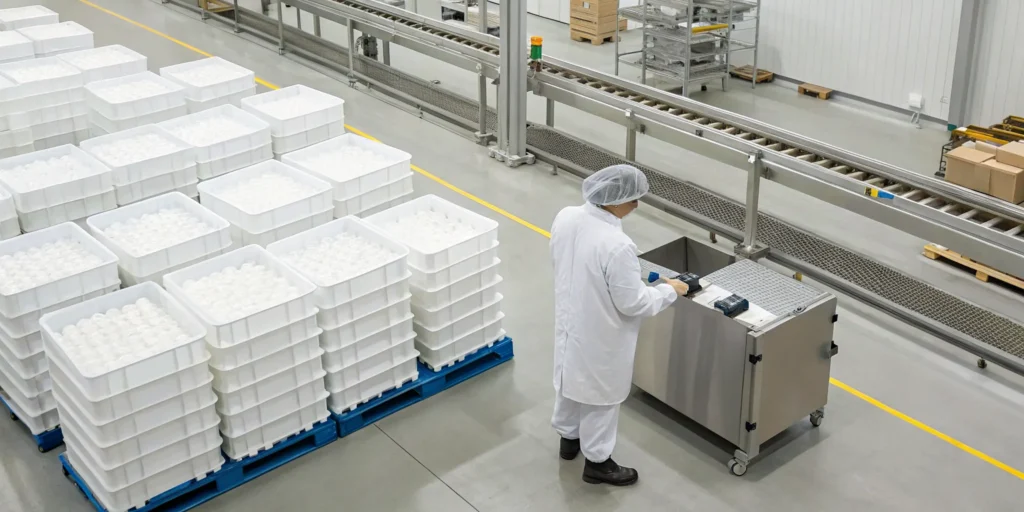
Fulfilling an order for a standard consumer good is one thing, but shipping a temperature-sensitive biologic is another entirely. In the pharmaceutical world, the standard rules of logistics simply don’t apply. The pick, pack, and ship process is a specialized discipline governed by strict regulations, complex cold chain requirements, and unit-level serialization mandates. Every step demands a level of precision and documentation that is unheard of in other industries. This article is designed for pharma professionals who understand these unique challenges and are looking for specific, actionable advice on how to build a fulfillment operation that is both efficient and flawlessly compliant.
Key Takeaways
- Treat fulfillment as a compliance function: Every step, from picking serialized units to packing for the cold chain and managing returns, is a critical control point. Maintaining a precise, auditable record is essential for meeting regulatory demands and ensuring patient safety.
- Unify your systems to eliminate risk: Connecting your ERP, WMS, and compliance tools creates a single source of truth for your operation. This integration automates documentation, prevents manual errors, and provides the real-time visibility needed to manage inventory, track shipments, and monitor product stability.
- Track performance beyond delivery speed: Your success depends on precision and quality, not just how fast you ship. Monitor key metrics like order accuracy, DSCSA compliance rates, and cold chain adherence to identify operational weaknesses, control costs, and maintain constant audit readiness.
What is the Pick, Pack, and Ship Process?
Pick, pack, and ship is the heart of your warehouse fulfillment operation. It’s the three-step process that gets your products from the shelf to your customer’s doorstep. While it sounds simple, each stage has its own complexities, especially in the pharmaceutical industry. Mastering this process is essential for efficiency, compliance, and ultimately, patient safety. Let’s break down what each step involves and why getting it right is non-negotiable for pharma distributors, 3PLs, and manufacturers.
The Three Stages of Fulfillment
First up is picking, where items are retrieved from storage to fulfill an order. This single step can account for over half of your warehouse operating costs, so strategies like batch and zone picking are crucial for efficiency. Next is packing, where products are prepared for transit. For pharmaceuticals, this means using packaging that prevents contamination and helps maintain temperature stability. Finally, shipping gets the package on its way. This stage requires careful coordination to ensure timely, compliant delivery, especially for temperature-sensitive medications that can’t afford delays.
Why This Process is Critical in Pharma
In the pharmaceutical world, the stakes are incredibly high. You’re not just moving boxes; you’re handling life-critical products. The pick, pack, and ship process is governed by stringent regulatory requirements that demand precision at every turn. A single mistake can compromise a product’s integrity, leading to waste or, worse, patient harm. An efficient and accurate fulfillment process ensures medications are delivered safely and on time, which is fundamental to both patient care and maintaining the integrity of the entire supply chain.
How Does Picking Work in a Pharma Warehouse?
Picking in a pharmaceutical warehouse is far more than just grabbing an item from a shelf. It’s the first critical, hands-on step in the fulfillment process, where accuracy and compliance are non-negotiable. Every action is guided by strict regulations and the need to maintain product integrity from storage to shipment. A single mistake here can lead to significant consequences, including compliance failures, patient safety risks, and financial losses. That’s why a well-defined picking process, supported by the right technology, is essential. It sets the stage for successful packing and shipping by ensuring the correct product is selected, verified, and documented every single time. Let’s break down what this looks like in practice.
Locating and Processing Orders
Once an order is received, the system immediately identifies the precise location of the required products. This isn’t just about finding the right aisle; it’s about pinpointing the exact bin holding a specific lot number, especially for items requiring strict temperature controls. Your inventory management system acts as your map, guiding pickers with precision to prevent any mix-ups. The system confirms that the product has been stored under the correct conditions throughout its time in the warehouse. This initial step ensures that the product selected is not only the right one for the order but has also maintained its quality and efficacy, laying a compliant foundation for the rest of the fulfillment cycle.
Choosing Picking Methods and Verifying Compliance
With the product located, the next step is the physical pick. Warehouses use various methods like single-order picking or batch picking to improve efficiency, but the core of this stage is verification. This is where technology becomes a critical partner. As pickers select items, they use scanners to confirm that the product, lot number, and expiration date match the order perfectly. An integrated system provides real-time validation, flagging any potential errors before they can proceed. This automated check is a key part of your compliance strategy, creating a digital record that proves the right item was picked and helps maintain a clear, auditable trail from shelf to shipment.
Meeting Quality and Serialization Requirements
The final part of the picking process involves serialization and quality checks. For pharmaceuticals, this means capturing the unique serial number of each unit being picked. This step is fundamental to meeting the track-and-trace mandates of the Drug Supply Chain Security Act (DSCSA). A serialized ERP system logs this data, linking the specific unit to the order and creating the documentation needed for a complete audit trail. At the same time, the picker performs a visual inspection to ensure the product’s packaging is intact and free from any damage. This dual focus on digital tracking and physical quality ensures that only compliant, high-quality products move on to the packing station.
What Are the Key Steps for Packing Pharmaceuticals?
Once an order is picked, the packing stage begins. In the pharmaceutical world, this is far more than just putting products in a box. Packing is a critical control point where product integrity, safety, and regulatory compliance are either secured or compromised. A single mistake can lead to damaged products, failed audits, or worse, patient harm. Mastering this stage requires a meticulous approach that covers everything from product verification and climate control to documentation and security. Let’s walk through the essential steps to ensure your packing process is efficient, accurate, and fully compliant.
Verifying Products and Using Climate-Controlled Packaging
Before any item goes into a shipping container, it must be verified. This means confirming the product, lot number, and quantity match the order exactly. This step prevents costly mix-ups and ensures the right medication reaches its destination. Once verified, the focus shifts to packaging. As industry regulations state, “Medications must be packed securely to prevent damage and contamination.” For temperature-sensitive drugs, this also means using climate-controlled packaging like insulated shippers and cold packs to maintain the cold chain. Proper inventory management helps you track not only the drugs but also these specialized packing materials, ensuring you always have what you need on hand.
Preparing Regulatory Documents and Labels
Accurate documentation is the backbone of a compliant supply chain. Every shipment must be accompanied by the right paperwork, creating a clear audit trail. As experts at Sensitech note, “Documenting the entire process of transporting pharmaceutical products is critical to ensure compliance with regulatory requirements.” This includes packing lists, shipping manifests, and the transaction data required by law. Your labels must also be perfect. Beyond the standard shipping address, you’ll need labels for special handling instructions, lot numbers, and expiration dates. An integrated system that automates the generation of these compliance documents and labels is your best defense against human error.
Adhering to DSCSA and Safety Standards
The Drug Supply Chain Security Act (DSCSA) has transformed pharmaceutical handling, and the packing station is where much of this compliance takes shape. This is where you aggregate serialized product identifiers from individual units into cases and onto pallets, capturing the parent-child relationships essential for traceability. Understanding what DSCSA is and how it impacts your workflow is non-negotiable. Furthermore, “Pharmaceutical manufacturers must use specific packaging and shipping practices to ensure the integrity of drugs,” which includes using tamper-evident seals and secure containers. These measures protect products from diversion, theft, and contamination, safeguarding both your inventory and public health.
How Does Shipping Complete the Fulfillment Cycle?
Once your products are picked and packed, the final step is getting them safely into the hands of your customers. In the pharmaceutical world, shipping is far more than just logistics; it’s a critical extension of your quality control and compliance efforts. This last mile of the fulfillment cycle involves careful carrier selection, constant monitoring, and a solid plan for handling any returns. This ensures product integrity from your warehouse to its final destination.
Selecting Carriers and Specialized Shipping
Shipping pharmaceuticals, especially temperature-sensitive products, requires more than a standard carrier. You need partners who understand the stakes. This often means using specialized packaging and choosing carriers with proven cold chain capabilities. It’s a balancing act between cost and risk. While premium shipping services come at a higher price, you have to weigh that against the potential for product spoilage if a shipment is delayed or mishandled. Choosing the right partners is a foundational part of maintaining your operational and compliance standards throughout the supply chain.
Tracking Shipments and Monitoring the Cold Chain
Once a shipment leaves your facility, visibility is everything. You need to track its journey in real time, but location is only half the story. For many pharmaceuticals, monitoring the cold chain is non-negotiable. Modern systems allow you to track temperature and other environmental factors throughout transit, giving you the data to prove product integrity upon arrival. An integrated serialized ERP provides this level of detailed visibility, helping you manage logistics, track expenses, and ensure every package meets regulatory requirements from start to finish.
Managing Returns and Reverse Logistics
The fulfillment cycle doesn’t always end with a successful delivery. You also need a robust process for managing returns, a practice known as reverse logistics. Whether due to overstock, damage, or a product recall, returned items must be handled with the same care and documentation as outbound shipments. This process is governed by strict regulations to ensure returned products are properly assessed, stored, or disposed of. Understanding the Drug Supply Chain Security Act (DSCSA) is essential, as its traceability requirements apply to the entire product lifecycle, including returns.
What Are Common Pick, Pack, and Ship Challenges in Pharma?
The pick, pack, and ship process in the pharmaceutical industry is far more complex than in a typical warehouse. Fulfilling an order isn’t just about getting a product from shelf to truck; it’s a high-stakes operation where a single mistake can compromise product integrity, violate federal law, and put patient safety at risk. Unlike standard consumer goods, pharmaceuticals are sensitive, regulated, and often life-critical. This transforms your fulfillment center from a simple logistics hub into a critical control point in the healthcare system. Every step, from the moment an order is received to the final delivery confirmation, is under intense scrutiny. From maintaining precise temperatures to tracking every single unit, pharma companies face a unique set of hurdles that demand precision, robust systems, and a deep understanding of regulatory requirements. Getting it right requires a combination of well-trained staff, airtight procedures, and the right technology. These challenges aren’t just operational headaches; they represent significant business risks, including financial loss from spoiled inventory, legal penalties for non-compliance, and damage to your company’s reputation. Let’s look at some of the most significant challenges you’ll encounter.
Temperature Control and Regulatory Hurdles
Shipping temperature-sensitive products is a constant logistical puzzle. Many pharmaceuticals, especially biologics and vaccines, must be kept within a strict temperature range throughout their journey. This requires a validated cold chain, complete with specialized packaging, refrigerated vehicles, and real-time monitoring. A minor deviation can render an entire shipment worthless. On top of this, you have a mountain of regulations to follow. Every stage of transport must adhere to strict guidelines, making compliance a moving target. It’s not just about keeping things cold; it’s about proving you did it correctly every step of the way.
Complex Inventory and Expiration Date Tracking
Pharmaceutical inventory is not a simple numbers game. Your warehouse team can’t just grab the nearest box. They need to manage products based on lot numbers, batch records, and, most importantly, expiration dates. Implementing a “First-Expired, First-Out” (FEFO) system is critical to prevent waste and ensure patient safety. The introduction of serialization under the DSCSA adds another layer of complexity. Now, you must track individual, saleable units from the moment they enter your facility until they leave. This requires a sophisticated inventory management system that can handle immense amounts of data without error.
Managing Costs and Delivery Pressures
While safety and compliance are non-negotiable, you still have to run a profitable business. The costs associated with pharma logistics are steep. Specialized packaging, temperature-controlled shipping, and expedited delivery all add up. At the same time, customers and patients expect fast, reliable delivery. Balancing these demands is a constant challenge. A delayed shipment isn’t just an inconvenience; it can lead to spoiled products and significant financial losses. Optimizing routes and managing carrier relationships are key, but you also need strong financial automation to keep a clear eye on your operational spending and profitability.
Meeting Documentation and Traceability Demands
In the pharmaceutical world, if you didn’t document it, it didn’t happen. Every action taken during the pick, pack, and ship process must be meticulously recorded to create a clear audit trail. This documentation is essential for proving compliance and ensuring product integrity. With regulations like the Drug Supply Chain Security Act (DSCSA), traceability is no longer optional. You must be able to track and trace every product at the individual unit level throughout the supply chain. This requires systems that can capture, store, and share serialized data seamlessly with your trading partners, ensuring you are prepared for any inquiry or audit.
How to Optimize Your Pick, Pack, and Ship Operations
Fine-tuning your fulfillment process goes beyond simply moving products faster. In the pharmaceutical world, optimization is a delicate balance of precision, compliance, and efficiency. A streamlined pick, pack, and ship operation not only reduces costs but also protects product integrity and patient safety. Focusing on a few key areas can make a significant impact on your entire supply chain. By improving your warehouse environment, standardizing your procedures, strengthening partner relationships, and planning for the unexpected, you can build a fulfillment process that is both resilient and reliable.
Improve Warehouse Layout and Staff Training
An efficient fulfillment process starts with an organized warehouse. Arrange your storage to create a logical flow from receiving to shipping, minimizing travel time for your pickers. Consider slotting high-volume products in easily accessible locations. Just as important is your team. Proper training ensures everyone understands their role and the importance of accuracy, especially when handling serialized products. Equipping your staff with tools like barcode scanners can drastically reduce manual errors and provide real-time updates to your inventory management system. When your layout is intuitive and your team is confident, your entire operation runs more smoothly.
Develop Clear SOPs and Quality Systems
Consistency is the bedrock of pharmaceutical fulfillment. Developing clear Standard Operating Procedures (SOPs) for every stage of the pick, pack, and ship process is non-negotiable. These documents should detail everything from how to verify an order to which packaging materials to use for specific products. Well-defined SOPs not only guide your team but also create a complete audit trail, which is essential for regulatory reviews. Your quality system should reinforce these procedures, ensuring that every package leaving your facility meets strict standards for product integrity and safety. This commitment to documentation is a core part of a strong compliance strategy.
Integrate Seamlessly with 3PL Partners
For many distributors and manufacturers, third-party logistics providers are critical extensions of their own teams. The key to a successful partnership is seamless integration. Your systems and your 3PL’s systems must communicate effectively to provide a single source of truth for inventory levels, order statuses, and shipment tracking. This shared visibility ensures that everyone, from your customer service team to the 3PL warehouse staff, is working with the same real-time data. A unified platform eliminates information silos, reduces the risk of compliance gaps, and allows you to manage your outsourced operations as if they were happening under your own roof.
Plan for Risks and Unexpected Events
In logistics, it’s not a matter of if something will go wrong, but when. A robust fulfillment operation includes contingency plans for common risks like shipping delays, customs issues, or temperature excursions. What is your protocol if a cold chain shipment is held up? How do you handle a damaged product? Use product stability data to determine acceptable shipping conditions and durations for different items. Leveraging business intelligence analytics can help you identify patterns and potential vulnerabilities in your supply chain, allowing you to proactively address risks before they become critical problems. Planning ahead protects your products, your partners, and your reputation.
How Technology Can Transform Your Fulfillment Process
Relying on manual processes for fulfillment is like trying to navigate a highway on a bicycle. You might get there, but it’s slow, risky, and inefficient. Technology offers a better way. By adopting the right tools, you can transform your pick, pack, and ship operations from a source of stress into a strategic advantage. These systems don’t just make things faster; they make them smarter, safer, and more compliant. Let’s look at four key areas where technology can make a significant impact on your fulfillment process.
Integrate Your ERP and Warehouse Management Systems
Disconnected systems create fulfillment errors and rely on risky manual data entry. Integrating your sales, warehouse (WMS), and planning systems creates a single source of truth. A modern serialized ERP acts as the central hub, flowing order information seamlessly to the warehouse for picking. This eliminates data silos and manual work, ensuring everyone uses the same accurate information for a faster, more reliable fulfillment cycle that keeps products moving.
Use Automation and AI-Powered Analytics
Manual picking is slow and limits your ability to scale. Automation and AI can reshape warehouse efficiency by linking your WMS and order systems to automate workflows and reduce human error. Beyond physical tools, you can use business intelligence analytics to make smarter decisions. AI-powered tools analyze order patterns to suggest better warehouse layouts, predict labor needs, and identify bottlenecks before they cause delays, helping you run a proactive facility.
Implement Real-Time Monitoring and Compliance Tools
In pharma, you need a product’s status and history, not just its location. Real-time monitoring provides this visibility, tracking inventory and shipments at every stage. This constant tracking is essential for regulatory adherence. Integrated compliance tools automatically verify product serialization, manage DSCSA requirements, and generate documentation for each shipment. This simplifies audits, optimizes routes, and builds trust and safety into your supply chain.
Adopt Advanced Temperature and Environmental Controls
A cold chain deviation can ruin a life-saving treatment. Advanced technology is critical for managing these fragile supply chains. Modern inventory management systems integrate with IoT sensors for continuous temperature monitoring in shipments and storage. These sensors send instant alerts if conditions drift outside the acceptable range, allowing you to intervene before a product is compromised. This creates a digital record of stability required for regulatory compliance and patient safety.
What Metrics Define Pick, Pack, and Ship Success?
You can’t improve what you don’t measure. In pharmaceutical fulfillment, success goes far beyond just speed. It’s a careful balance of accuracy, regulatory adherence, cost control, and customer satisfaction. Tracking the right key performance indicators (KPIs) gives you a clear picture of how your pick, pack, and ship process is performing and shows you exactly where to make improvements. These metrics are your guide to creating a more resilient, efficient, and compliant supply chain.
Measure Accuracy and Efficiency
Accuracy is non-negotiable when a patient’s health is on the line. The single most important metric here is order picking accuracy, which measures the percentage of orders fulfilled without any errors. Even small mistakes can have big consequences. Beyond that, you should track efficiency KPIs like order cycle time (from placement to shipment) and units processed per hour. Improving these metrics helps you manage inventory more effectively and optimize labor. Automated systems can help you track expenses and optimize routes, which cuts unnecessary costs and improves how you allocate resources without sacrificing service quality.
Track Compliance and Quality
In the pharmaceutical industry, compliance isn’t optional; it’s the foundation of your entire operation. Your metrics must reflect this. A critical KPI is your DSCSA compliance rate, which confirms that your products are properly serialized and traceable. You should also meticulously track cold chain adherence to ensure temperature-sensitive products remain stable. Documenting the entire transport process is essential for providing a clear audit trail. A low documentation error rate and a high quality control pass rate before shipping are strong indicators that your processes are sound and your team is meeting the highest standards.
Monitor Costs and Delivery Performance
While quality and compliance are paramount, you still need to run a financially healthy operation. Key metrics here include cost per order and on-time delivery rate. Cost per order helps you understand your operational spending, while on-time delivery is a major factor in customer satisfaction. Pharmaceutical companies need to know where their products are at all times to ensure they stay compliant with regulations. A robust ERP with tools for financial automation can help you monitor these costs in real time, compare estimated versus actual shipping expenses, and ensure your delivery performance meets both customer expectations and regulatory demands.
Gauge Customer Satisfaction and Audit Readiness
Ultimately, your fulfillment process serves two main audiences: your customers and regulatory auditors. To measure customer satisfaction, track your order fill rate (the percentage of an order shipped in the first delivery) and the number of customer complaints related to shipping. For audit readiness, you can create an internal score to assess how quickly your team can produce complete traceability reports. Having specific packaging and shipping practices is essential to ensure the integrity of drugs. A system that provides instant access to this data not only keeps customers happy but also ensures you’re always prepared for an audit.
Related Articles
- A Guide to Warehouse Slotting Optimization Software – RxERP
- Top 5 Pharmaceutical 3PL Software Tools Compared – RxERP
- How to Choose Pharma Wholesale Distribution Software – RxERP
- Pharma 3PL Software 2025 Guide | Compliance & Scalability
Frequently Asked Questions
How does serialization specifically change the pick, pack, and ship process? Serialization transforms fulfillment from handling products in batches to tracking every single unit individually. During picking, you are no longer just grabbing a product; you are scanning and verifying a unique serial number. In the packing stage, you must digitally associate each unit’s serial number with the case it goes into, and then that case to a pallet. This creates a parent-child data relationship that is essential for DSCSA compliance. This level of detail makes a serialized ERP system necessary, as manual tracking is simply not feasible.
My team struggles with picking errors. What’s the best way to improve accuracy? The most effective approach combines process with technology. Start by creating clear Standard Operating Procedures (SOPs) and organizing your warehouse for a logical picking path. However, the biggest gains come from technology. Equipping your team with barcode scanners that are integrated with your ERP system provides real-time validation. This means the system can instantly confirm if the correct product, lot, and serial number have been picked, stopping a potential error before the item even makes it into the tote.
Which part of the process has the biggest impact on compliance? It’s tempting to point to one stage, but compliance is a chain that runs through the entire process. A mistake at any point can break it. Picking the wrong lot number creates a compliance failure. Packing without generating the correct transaction data for DSCSA makes the shipment non-compliant. Shipping without a complete, auditable record of the product’s journey, including temperature logs, puts you at risk during an audit. True compliance is achieved when every step is connected and documented within a single, unified system.
We use a 3PL for fulfillment. How can we ensure they are meeting our standards? The key to managing a 3PL partnership effectively is system integration. You can’t afford to have information silos between your company and your logistics partner. A shared, integrated platform gives you a real-time window into their operations. You can see inventory levels, track order progress, and access compliance data as if it were your own warehouse. This shared visibility is the only way to truly verify that your 3PL is adhering to your quality procedures and DSCSA requirements.
Is it better to focus on speed or accuracy in pharmaceutical fulfillment? This is a false choice, because in pharma, accuracy is the priority. Patient safety depends on it. The good news is that you don’t have to sacrifice speed to achieve it. Relying on manual processes to go faster almost always leads to more errors and compliance risks. The right technology, however, streamlines workflows to make them inherently faster while building in automated checks that guarantee accuracy. This allows you to fulfill orders both quickly and correctly.