
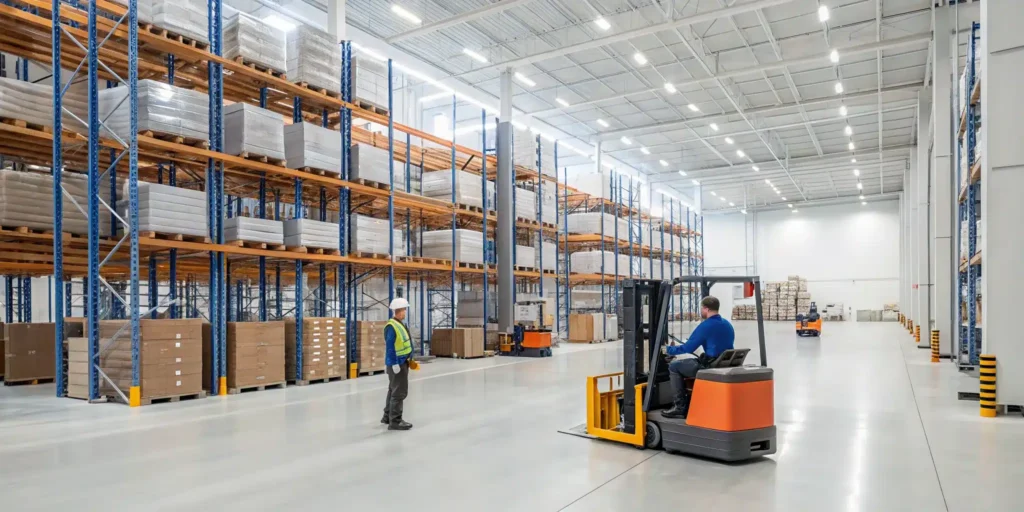
Warehouse slotting is often mistaken for a simple tidying-up exercise. But in a pharmaceutical environment, it’s a high-level, data-driven strategy that underpins your entire operation. It’s about using information—product velocity, expiration dates, and handling requirements—to create an intelligent system that improves speed and safety. Instead of relying on guesswork, you can build a workflow that minimizes errors and gets critical medications out the door faster. The right warehouse slotting optimization software is the engine that powers this strategy. We’ll walk through how this technology works, why it’s essential for the unique demands of pharma, and what to look for in a truly intelligent solution.
Key Takeaways
- Treat Slotting as a Core Business Strategy: Effective warehouse slotting is more than organization; it’s a critical tool for strengthening DSCSA compliance, reducing operational costs, and ensuring product integrity in the pharmaceutical supply chain.
- Select Software Built for Pharma’s Reality: Your slotting solution must handle the industry’s unique demands, from seamless ERP integration and serialization to temperature-controlled storage and real-time analytics. Generic tools won’t suffice.
- Plan for People and Data, Not Just Technology: A successful implementation depends on clean data and team buy-in. Prioritize a clear training plan and open communication to ensure your team can leverage the new system for continuous improvement.
What is Warehouse Slotting Optimization?
Think of warehouse slotting as the ultimate organizational strategy for your inventory. It’s the process of arranging products in the most efficient storage spots to make them easy to find, pick, and ship. Instead of placing items wherever there’s an open shelf, slotting uses data to determine the perfect home for every product based on factors like its size, weight, and how often it’s sold. For pharmaceutical warehouses, this isn’t just about speed; it’s about precision and safety. Getting the right medication out the door quickly and accurately is non-negotiable.
The goal is to create a logical flow that minimizes travel time for your pickers, reduces the risk of errors, and makes the entire fulfillment process smoother. A well-slotted warehouse means your team isn’t wasting time crisscrossing the floor to find items for a single order. Instead, everything is placed to support a streamlined workflow, from receiving to shipping. This level of organization is a fundamental part of modern inventory management, turning your warehouse from a simple storage space into a high-performance distribution hub. By strategically placing your fastest-moving products in the most accessible locations, you can significantly cut down on order fulfillment times and improve overall productivity.
How Slotting Streamlines Your Warehouse
Effective warehouse slotting is one of the most powerful ways to improve efficiency without needing to invest in more space or staff. It directly impacts your bottom line by reducing labor costs associated with picking and replenishment. When products are placed logically, pickers can fulfill orders faster and with greater accuracy, which means happier customers and fewer costly returns. Dynamic slotting takes this a step further, allowing your warehouse to adapt to changes in demand, seasonal trends, or new product introductions in real time. This ensures your layout always reflects current business needs, preventing inefficiencies from creeping back in.
Key Features and Functionality
Modern slotting software relies on robust data analysis to make smart placement decisions. It pulls information about product velocity, order history, and physical characteristics to recommend the optimal location for each item. Many systems include simulation tools that let you test different slotting strategies virtually before you move a single box, preventing disruptions to your daily operations. The software can also generate optimized pick paths, guiding your team through the warehouse in the most efficient sequence. A key function is its ability to balance competing priorities—like pick speed, travel distance, ergonomics, and equipment constraints—to create a truly optimized workflow powered by strong business intelligence analytics.
Why Your Pharma Warehouse Needs Slotting Optimization
Warehouse slotting isn’t just about tidying up your shelves; it’s a strategic approach to inventory placement that directly impacts your entire operation. For any business, this means a more efficient warehouse. But in the pharmaceutical industry, where every product can affect a person’s health, strategic slotting becomes a critical component of your safety, compliance, and financial stability.
Think of it as organizing your warehouse based on the unique characteristics of your products. You wouldn’t store a fast-moving, room-temperature tablet in the same way you’d handle a temperature-sensitive biologic that requires cold storage and ships less frequently. Effective slotting considers an item’s size, velocity (how often it’s picked), and special handling requirements. By placing the right products in the right locations, you create a more logical and streamlined workflow that reduces errors, speeds up fulfillment, and makes your entire supply chain more resilient. This isn’t just good practice—it’s essential for meeting the rigorous demands of the pharma industry.
Speed Up Picking and Improve Accuracy
In a pharmaceutical warehouse, speed and accuracy are not mutually exclusive—they’re partners. Slotting optimization is the process that brings them together. By strategically organizing inventory, you can place your highest-velocity products in the most accessible locations, drastically cutting down the time your team spends walking, searching, and retrieving items. This simple change can significantly accelerate your picking process, allowing you to fulfill more orders in less time.
More importantly, a well-slotted warehouse is an accurate one. When items are logically organized and easy to find, the likelihood of picking errors plummets. This is crucial in an industry where sending the wrong dosage or product can have severe consequences. Better organization simplifies the entire inventory management process, from put-away to picking, ensuring the right product gets to the right place every time.
Strengthen Compliance and Traceability
Meeting regulatory standards is a non-negotiable part of running a pharmaceutical business. Warehouse slotting plays a surprisingly large role in strengthening your compliance framework, especially when it comes to traceability. When every item has a designated and logical home, tracking serialized products throughout the supply chain becomes much simpler. This level of organization is fundamental to maintaining DSCSA compliance.
In the event of a recall or an audit, you need to be able to locate specific lots or serial numbers instantly. A disorganized warehouse turns this into a nightmare, costing you valuable time and putting you at risk of non-compliance. With optimized slotting, your team can quickly find and isolate affected products, demonstrating control over your inventory and ensuring you can respond to regulatory demands with confidence and speed.
Lower Your Operational Costs
Inefficiency is expensive. Every extra step a picker takes, every minute spent searching for a misplaced item, and every error that requires a return adds to your operational costs. Warehouse slotting directly tackles these inefficiencies. By speeding up the picking process, you reduce labor costs per order. By improving accuracy, you minimize the expensive fallout from shipping errors, including returns, reshipments, and customer service hours.
Beyond labor, slotting helps you maximize your existing space. By analyzing product dimensions and turnover, slotting software can help you use your vertical and horizontal space more effectively, potentially delaying or eliminating the need for a costly warehouse expansion. This smarter use of resources flows directly to your bottom line, turning your warehouse from a cost center into a streamlined, efficient asset that supports your company’s financial automation goals.
Manage Inventory Turnover More Effectively
For pharmaceuticals, inventory isn’t just about quantity—it’s about viability. Products with expiration dates require careful management to prevent waste and financial loss. Slotting optimization is key to implementing a First-Expired, First-Out (FEFO) or First-In, First-Out (FIFO) inventory strategy. By organizing products based on their expiration or arrival dates, you ensure that older stock is picked first, reducing the risk of spoilage.
This level of control also improves your overall inventory health. Clear organization provides better visibility into stock levels, helping you avoid stockouts of critical medications while preventing the overstocking of slow-moving items. This balance ensures you can meet patient and customer demand without tying up unnecessary capital in excess inventory, making your entire inventory management system more responsive and cost-effective.
Choosing the Right Slotting Software for Pharma
Selecting the right slotting software for a pharmaceutical warehouse isn’t like choosing a tool for a standard retail operation. The stakes are incredibly high, with patient safety, regulatory compliance, and product integrity on the line. Your operation needs more than just a system that tells you where to put things; it needs an intelligent partner that understands the unique complexities of the pharma supply chain.
When you’re evaluating options, you’re looking for a solution that can handle everything from serialized tracking and temperature controls to seamless integration with your core systems. The right software won’t just make your warehouse more efficient—it will make it safer, more compliant, and more resilient. Think of the following points as your non-negotiable checklist for finding a slotting solution that truly fits the pharmaceutical industry.
Ensure Seamless ERP and WMS Integration
Your slotting software can’t be an island. For it to be effective, it must communicate flawlessly with your other business systems, especially your Enterprise Resource Planning (ERP) and Warehouse Management System (WMS). When these systems are disconnected, you end up with data silos, which lead to manual workarounds, costly errors, and a distorted view of your inventory. A truly integrated system ensures that data flows freely, providing a single source of truth for every product in your facility.
This seamless connection is what enables dynamic, real-time slotting decisions. Look for a solution that offers deep, native integration. A purpose-built serialized ERP for pharma often has these capabilities built-in, eliminating the risky and expensive process of stitching together generic systems.
Prioritize DSCSA Compliance and Serialization
In the pharmaceutical world, slotting is about more than just pick paths and travel time—it’s a critical component of your compliance strategy. The Drug Supply Chain Security Act (DSCSA) requires meticulous tracking and tracing of products. Your slotting software must support this by using serialization data to inform its logic. It should help you manage quarantined products, facilitate first-in, first-out (FIFO) or first-expiry, first-out (FEFO) picking, and simplify the process of locating specific batches during a recall.
The system needs to be built on a foundation of comprehensive and accurate data to make informed placement decisions. This ensures that your warehouse layout not only maximizes efficiency but also strengthens your compliance posture, protecting your business and your customers.
Demand Real-Time Analytics and Reporting
Making decisions based on gut feelings or outdated reports won’t cut it. Your slotting software should provide powerful, real-time analytics that give you clear visibility into your warehouse operations. You need to see what’s working and what isn’t, from picker productivity to inventory velocity. The best systems offer simulation tools that let you model the impact of potential changes—like a new layout or picking strategy—before you commit to them.
This data-driven approach reduces the risk of disrupting your operations and allows for continuous improvement. By leveraging strong business intelligence analytics, you can fine-tune your slotting strategy over time, adapting to new products, changing demand patterns, and evolving business goals.
Look for Smart Automation and Error Prevention
The human element will always be vital in the warehouse, but smart automation can significantly reduce the risk of error and take the guesswork out of complex decisions. Look for software that supports dynamic slotting, which automatically adjusts product placement based on real-time data like sales velocity, seasonality, and current inventory levels. This ensures your layout is always optimized without constant manual intervention.
Automation can direct put-away tasks to the most logical location, preventing dangerous product mix-ups and ensuring similar-looking products are stored apart. Advanced systems even use AI to learn from your operations and suggest smarter slotting strategies over time. These intelligent features are key to building a more efficient and error-proof warehouse.
Confirm Support for Temperature-Controlled Storage
Many pharmaceutical products are sensitive to their environment and require strict temperature controls to maintain their efficacy. Your slotting software must be able to manage these requirements without fail. It needs to recognize different temperature zones within your warehouse—from ambient to refrigerated to frozen—and ensure products are always stored in the correct environment.
This functionality is a core part of proper inventory management in the pharma space. The system should be able to enforce these rules automatically, preventing a picker from accidentally placing a temperature-sensitive biologic in a room-temperature aisle. This isn’t just a feature; it’s a fundamental requirement for protecting product integrity and ensuring patient safety.
How to Evaluate Your Top Software Choice
You’ve done the research and narrowed your list down to a few promising candidates. Now comes the most critical part: a deep-dive evaluation to find the perfect fit. This is where you move beyond the sales pitch and look at how the software will actually function within your daily operations. Asking the right questions at this stage will help you make a confident decision that supports your team and your business goals for the long haul.
Analyze the Total Cost of Ownership
The price tag on a piece of software is only one part of the financial picture. To get a true sense of the investment, you need to analyze the total cost of ownership. This includes the initial subscription or license fee, but also costs for implementation, data migration, and any necessary hardware upgrades. Don’t forget to factor in the price of training your team and any ongoing fees for support and maintenance. Quality customer support is a non-negotiable, especially during the setup phase. A clear understanding of all associated costs will help you manage your budget and see how the software’s features, like financial automation, can deliver a strong return on investment.
Understand the Implementation Timeline
A smooth and timely implementation is key to minimizing disruption to your warehouse operations. Ask each potential vendor for a detailed project plan that outlines every step, from data migration to going live. What are the key milestones? How much time will your team need to dedicate to the process? A vendor should be transparent about their timeline and what they need from you to stay on track. Always request a live demo to see the software in action and ask specific questions about their implementation process. Looking at real-world use cases can also give you a better sense of what to expect and how other companies have managed the transition.
Assess Ease of Use for Your Team
The most powerful software in the world won’t help you if your team finds it difficult to use. The system should be intuitive for the people on the warehouse floor who will interact with it every day. A user-friendly interface reduces the learning curve, minimizes errors, and encourages adoption. When you’re in the demo phase, bring in a few of your key team members to get their hands-on feedback. Advanced systems can make slotting easier and more accurate by automating tasks. Features like an integrated AI Chat can further simplify complex workflows, allowing your team to get answers and solve problems quickly without needing extensive technical knowledge.
Plan for Future Growth and Scalability
The software you choose today should be able to grow with you tomorrow. Consider your five-year plan. Will this system be able to handle an increase in SKUs, higher order volumes, or even an expansion to new facilities? Scalability is crucial. It’s also vital that the software integrates smoothly with the other systems your business relies on. A purpose-built serialized ERP for pharma eliminates the risk of stitching together separate, generic systems. By connecting warehouse information with sales, compliance, and financials on a single platform, you create a solid foundation that can easily adapt to your company’s future needs.
Overcoming Common Implementation Hurdles
Bringing new software into your warehouse is a big step, but it doesn’t have to be a painful one. Like any major operational shift, a successful rollout comes down to smart preparation and clear communication. When you anticipate the common challenges, you can create a plan to address them head-on, ensuring your team and your systems are ready for the change. A smooth transition isn’t just about getting the software up and running; it’s about making sure it delivers on its promise to make your operations more efficient and accurate from day one.
The key is to focus on three core areas: your data, your team, and your training. Getting these right will pave the way for a seamless implementation. By cleaning up your data beforehand, you give the software the accurate information it needs to work its magic. By leading your team through the change with transparency, you build the buy-in needed for everyone to adopt the new system. And with a solid training plan, you empower your staff to use the new tools confidently and effectively. Let’s walk through how to handle each of these steps.
Prepare Your Data for a Smooth Transition
Your new slotting software is only as good as the data you feed it. Before you even begin implementation, take the time to audit and clean your existing data. This means verifying product dimensions, sales velocity, pick frequency, and inventory levels. Inaccurate or incomplete information will lead to flawed slotting recommendations, undermining the entire project. A successful rollout depends on comprehensive, accurate data to make informed placement decisions. A platform with strong Business Intelligence Analytics can help you simulate different slotting scenarios, allowing you to predict the impact of changes before you move a single box and reducing the risk of disrupting your operations.
Lead Your Team Through the Change
Change can be unsettling, so it’s crucial to get your warehouse team on board early. Communicate openly about why you’re implementing slotting optimization software and how it will benefit them directly—less walking, faster picking, and fewer errors. Frame the new system as a tool that empowers them to work smarter, not harder. When your team understands the purpose behind the change and feels involved in the process, they are far more likely to embrace it. Sharing real-world use cases can also help illustrate the positive impact the software will have on their daily routines and the company’s success.
Establish a Clear Training Plan
Even the most intuitive software requires proper training. A one-and-done demo session isn’t enough to ensure your team feels confident using the new system. Develop a comprehensive training plan that includes hands-on practice, clear documentation, and opportunities for follow-up questions. Your software provider should be a partner in this process, offering robust training materials and ongoing support. Investing in thorough training ensures you get the full value from your new software, as a well-equipped team can use its advanced features to continuously refine your slotting strategy and adapt to new challenges. Make sure you have access to helpful resources to support your team long after the initial launch.
Setting Your Team Up for Success
Implementing new software is about more than just technology; it’s about empowering your people. Even the most advanced warehouse slotting system won’t deliver results if your team isn’t prepared to use it effectively. A successful rollout hinges on clear goals, comprehensive training, and a commitment to ongoing improvement. By investing in your team from the start, you ensure the new system becomes a powerful tool that drives efficiency and accuracy across your operations. This isn’t just about moving boxes faster; it’s about creating a smarter, more resilient workflow that can handle the unique pressures of the pharmaceutical industry.
Think of it as giving your team a new map and a faster car. You still need to show them how to read the map and drive the car to get the most out of the upgrade. Setting clear expectations and providing the right support will help everyone feel confident and capable as they adapt to new workflows. This proactive approach transforms a potentially disruptive change into a smooth transition that your entire team can get behind. It’s the difference between simply installing a tool and truly integrating a solution that strengthens your entire pharmaceutical supply chain from the ground up.
Define Your Key Performance Indicators
Before you flip the switch on your new software, you need to know what success looks like. How will you measure the impact of your new slotting strategy? This is where Key Performance Indicators (KPIs) come in. By establishing a baseline before implementation, you can clearly track your progress and demonstrate the value of your investment. You can’t improve what you don’t measure, and solid data is your best friend here.
Start by tracking metrics like improvements in picking efficiency, reduction in order fulfillment times, better space utilization, and decreased labor costs. For a pharmaceutical warehouse, faster fulfillment isn’t just a nice-to-have—it’s critical for getting temperature-sensitive and life-saving products where they need to go. With the right business intelligence analytics, you can monitor these KPIs in real time, making it easy to see what’s working and where you can make adjustments.
Create a Plan for Staff Training
Your team is on the front lines every day, and their buy-in is essential. A new system can feel intimidating, so a thoughtful training plan is key to building confidence and ensuring a smooth transition. Don’t just show them which buttons to click; explain the “why” behind the new slotting strategy. When your team understands how their work contributes to greater efficiency and compliance, they’ll be more engaged and motivated.
Your training plan should be tailored to different roles within the warehouse, from pickers to managers. Consider a mix of hands-on sessions, easy-to-reference guides, and a designated point person for questions. Remember, even a powerful tool is only as effective as the people using it. Proper training ensures your team can leverage the software to its full potential, turning complex operational challenges into streamlined successes.
Monitor Performance and Continuously Improve
Warehouse slotting is not a one-and-done project. Your inventory, demand patterns, and even regulations are constantly changing, which means your slotting strategy needs to evolve, too. The most successful warehouses treat slotting as an ongoing process of refinement. This requires a commitment to regularly reviewing your data and making informed adjustments to keep your operations running at peak efficiency.
Lean on your software’s reporting and analytics to make this process easier. Successful warehouse slotting optimization requires comprehensive, accurate data analysis to support continuous improvement. Schedule regular check-ins to review your KPIs and identify new opportunities for optimization. Is a particular product’s velocity changing? Are you preparing for a new product launch? By staying proactive and data-driven, you ensure your warehouse remains agile and responsive to whatever comes next.
Related Articles
- Pharma Manufacturing Inventory Control: A Guide – RxERP
- A Guide to Modern Pharma Inventory Management – RxERP
- How to Choose Pharmaceutical Lot Tracking Software – RxERP
Frequently Asked Questions
How is slotting for a pharmaceutical warehouse different from a regular retail warehouse? While any warehouse benefits from good organization, the stakes are much higher in pharma. The key difference is the intense focus on compliance and product integrity. Pharmaceutical slotting must account for factors like expiration dates (for FEFO picking), lot control, serialization for DSCSA tracking, and strict temperature zones. An error isn’t just a customer inconvenience; it can be a serious patient safety issue, making precision and traceability the top priorities.
We’re a smaller operation. Is slotting optimization something we should still consider? Absolutely. In fact, establishing a smart slotting strategy early on can be a huge advantage as you grow. It helps you maximize the space you already have, preventing the need for a costly expansion before it’s truly necessary. It also builds good habits for accuracy and efficiency that will scale with your business, ensuring you have a solid operational foundation in place to handle increasing order volumes and regulatory demands.
What’s the difference between static and dynamic slotting? Think of static slotting as a fixed address for each product. You analyze your data, set up the warehouse layout, and that’s where items live until you decide to do another major overhaul. Dynamic slotting, on the other hand, is more like a responsive GPS. It uses real-time data to continuously adjust product placement based on changing sales velocity, seasonality, or new product introductions, ensuring your layout is always optimized without constant manual effort.
How can slotting software specifically help with DSCSA compliance? Effective slotting software strengthens DSCSA compliance by creating a highly organized environment where every serialized product has a logical home. This makes tracking and tracing much simpler. In the event of an audit or recall, you can instantly locate specific lots or serial numbers without a frantic search. The software can also enforce rules like quarantining products or ensuring FEFO (First-Expired, First-Out) picking, providing a clear, auditable trail of product movement.
Once we’ve implemented a new slotting strategy, how often should we review it? Slotting isn’t a “set it and forget it” task. A good rule of thumb is to review your strategy quarterly to catch any major shifts in demand. However, you should also plan for reviews whenever there’s a significant operational change, such as a new product launch, a shift in your top-selling items, or a change in your picking process. The best software provides ongoing analytics that will help you see when things are becoming less efficient, prompting you to make adjustments as needed.