Table of Contents
- Why Traceability is Non-Negotiable in Modern Pharma Operations
- The Hidden Costs of Manual Traceability Processes
- How Serialization Transforms Pharmaceutical Supply Chain Management
- Automation: Moving Beyond Spreadsheets and Legacy Systems
- Real-Time Visibility Across Manufacturing, Distribution, and Dispensing
- Compliance Made Seamless with Built-In DSCSA Requirements
- Data Insights That Drive Operational Efficiency and Revenue
- Protecting Patient Safety Through Complete Chain of Custody
- Scaling Your Pharma Business Without Scaling Complexity
- Why Cloud-Based Traceability Solutions Outperform On-Premise Systems
- Frequently Asked Questions (FAQ)
Why Traceability is Non-Negotiable in Modern Pharma Operations
Pharmaceutical supply chains operate under unprecedented scrutiny. From manufacturing floors to pharmacy shelves, every unit of product must be tracked, documented, and verified. This isn’t optional compliance theater—it’s a fundamental requirement that directly impacts patient safety and your organization’s ability to operate legally.
Counterfeit and diverted drugs cost the industry billions annually while exposing patients to serious health risks. Regulatory bodies, particularly the FDA and state pharmacy boards, expect pharmaceutical manufacturers, wholesalers, and third-party logistics providers to maintain comprehensive visibility over product movement. When a recall occurs, the ability to pinpoint affected units within hours rather than days can prevent harm and minimize financial loss.
The stakes are real. One failed recall execution or a discovered compliance gap can trigger regulatory action, reputational damage, and legal liability that extends far beyond the immediate incident. We’ve seen organizations struggle through recalls that could have been managed efficiently with proper traceability infrastructure in place. Your supply chain visibility directly determines your organization’s resilience and regulatory standing.
The Hidden Costs of Manual Traceability Processes
Many pharmaceutical organizations still rely on spreadsheets, disconnected databases, and manual data entry to track products. The operational burden is substantial. Staff members spend countless hours cross-referencing inventory records, verifying shipments, and reconciling discrepancies between systems that don’t communicate with each other.
This manual approach introduces several costly problems:
- Human error in data entry that creates false inventory records and complicates recalls
- Delayed visibility into product location and status, especially across multiple warehouses or distribution centers
- Inability to quickly respond to audit requests or regulatory inquiries
- Fragmented compliance documentation that fails to demonstrate end-to-end accountability
- Extended reconciliation cycles that prevent accurate financial reporting
Consider a real scenario: a distributor receives a shipment of 50,000 units across multiple lots. With manual processes, someone must physically verify each pallet, manually enter serial numbers or batch codes into a spreadsheet, cross-check against the original purchase order, and then update separate inventory and accounting systems. If a discrepancy appears three weeks later, tracing the error back to its source becomes a detective job.
Beyond the time investment, the risks compound. Regulatory inspections often uncover gaps in manual documentation systems—missing records, illegible handwriting, or incomplete chain of custody data. These findings create warning letters and remediation requirements that distract from core business operations. The financial impact of manual processes includes not just labor costs but also the downstream penalties and operational delays from compliance failures.
How Serialization Transforms Pharmaceutical Supply Chain Management
Serialization is the foundation of modern pharma traceability. By assigning unique identifiers to individual units or cases, your organization gains the ability to track specific products from point of manufacture through dispensing. This granular visibility fundamentally changes how you manage supply chain operations.
When each unit carries a unique serial number, several capabilities emerge:
- Instant identification of affected products during recalls, enabling surgical precision rather than broad market withdrawals
- Authentication verification at each handoff point, preventing counterfeit products from entering legitimate supply chains
- Lot-level and unit-level accountability that creates an auditable chain of custody
- Reduced inventory shrinkage by connecting physical counts to serialized records
- Enhanced ability to identify diversion or unauthorized distribution channels
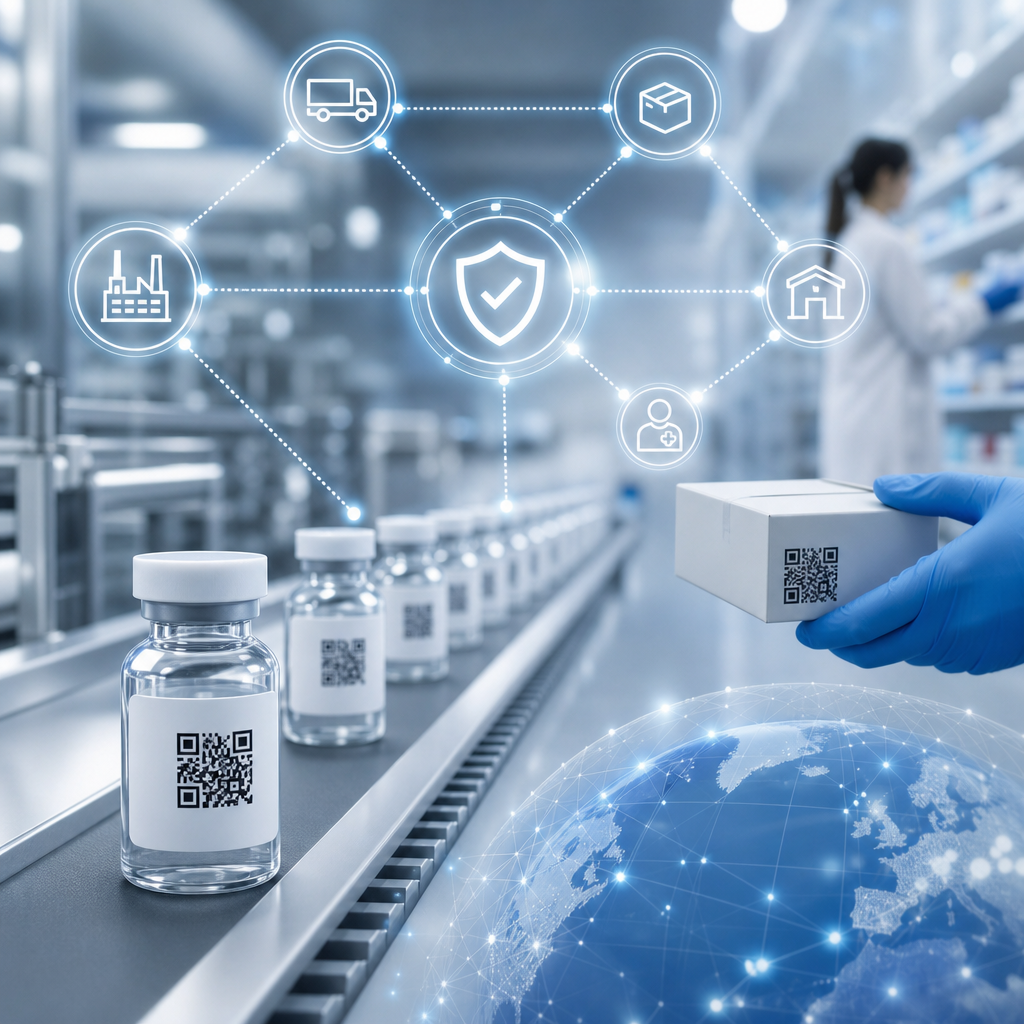
We understand that implementing serialization requires coordination across your manufacturing, quality, logistics, and IT teams. The process involves establishing data standards, updating labeling systems, integrating with trading partners, and ensuring that every system in your ecosystem can read and interpret serial numbers consistently. When executed properly, the return on this investment appears almost immediately through improved recall efficiency and reduced audit findings.
The real advantage of serialization is that it transforms traceability from a compliance checkbox into an operational tool. Your team can now make faster decisions about inventory management, demand planning, and supply chain optimization because you have reliable, granular data at your fingertips.
Automation: Moving Beyond Spreadsheets and Legacy Systems
Legacy systems and manual workflows create operational drag that compounds as your business scales. If you’re managing hundreds of SKUs across multiple distribution channels, manual processes become untenable. Automation allows your team to handle exponentially more complexity without proportional increases in headcount or error rates.
Automated traceability systems eliminate repetitive data entry by integrating directly with your manufacturing equipment, warehouse management systems, and trading partner networks. When a product is manufactured, packed, or shipped, that event is automatically recorded with timestamps and relevant data. There’s no opportunity for transcription errors, and no need for manual verification between systems.
The operational benefits extend beyond accuracy:
- Faster recall response times because affected units are identified instantly through the system rather than manually queried
- Reduced reconciliation cycles by eliminating the need to cross-check manual entries
- Improved cash flow through faster, more accurate invoicing and accounts receivable processes
- Enhanced ability to identify trends in product movement that inform demand planning
Transitioning from legacy systems requires thoughtful change management, but the payoff is significant. Organizations that move beyond spreadsheets typically report 40-60% reductions in time spent on compliance-related tasks within the first year. Your team can redirect those hours toward value-added work like supply chain optimization and customer relationship management.
Real-Time Visibility Across Manufacturing, Distribution, and Dispensing
Real-time visibility means your team can answer critical questions instantly: Where is a specific product right now? Has it moved through the correct distribution channels? Are there any anomalies that warrant investigation?
This visibility extends from your manufacturing facility through wholesale distribution to the pharmacy shelf. When integrated properly, your system knows when a unit is produced, when it ships to a distributor, when the distributor ships it to a pharmacy, and when it’s dispensed to a patient. That complete chain of custody is invaluable both operationally and from a compliance perspective.
For manufacturers, real-time visibility supports better production planning and helps identify quality issues before they reach the market. For distributors and third-party logistics providers, it enables faster response to customer inquiries and reduces the time spent investigating shipment discrepancies. For pharmacies, it provides the confidence that every product has followed a legitimate pathway through the supply chain.
The practical impact shows up in daily operations. When a customer reports a damaged unit or questions product authenticity, your support team can access the complete movement history instantly rather than submitting requests to multiple departments and waiting days for responses. This responsiveness strengthens customer relationships and reduces the operational burden of dispute resolution.
Compliance Made Seamless with Built-In DSCSA Requirements
The Drug Supply Chain Security Act establishes specific requirements for tracking products at the unit level and verifying the legitimacy of trading partners. We’ve designed our platform to embed DSCSA compliance directly into your operational workflows, making adherence automatic rather than something your team must manually manage.
Our system handles the DSCSA serialization requirements by maintaining the transaction information set for each product, conducting trading partner verification, and ensuring that your documentation meets regulatory standards. When a regulatory inspector requests your chain of custody records for a specific product, those records are available immediately in a format that demonstrates full compliance.
This approach eliminates the common scenario where organizations maintain compliance documentation separately from their operational systems. Instead, every transaction that moves through your ERP system automatically generates the compliance documentation you need. The result is reduced audit findings, faster regulatory inspections, and confidence that your compliance posture is current and accurate.
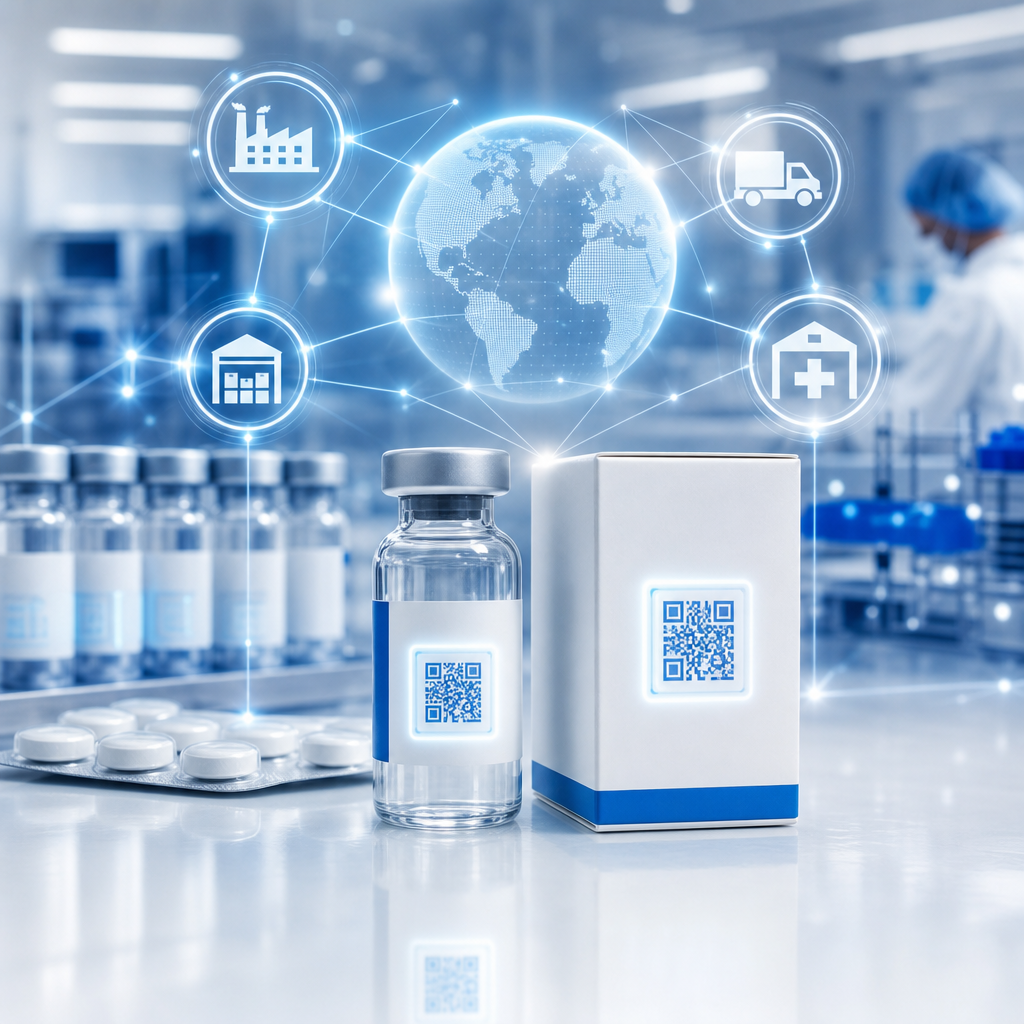
The financial benefit extends beyond avoiding penalties. Organizations with strong compliance automation systems can negotiate better terms with trading partners and customers who value verified reliability. Regulators recognize that automated systems are inherently more reliable than manual ones, which can facilitate smoother inspections and faster approval for facility expansions or new product lines.
Data Insights That Drive Operational Efficiency and Revenue
Traceability data is valuable far beyond compliance. When aggregated and analyzed properly, it reveals insights about how products move through your supply chain, where bottlenecks occur, and which distribution channels are most efficient. These insights directly inform business decisions that improve profitability.
Our business intelligence analytics give you visibility into patterns that manual systems simply can’t reveal. You can identify products with slower turn rates, optimize your warehouse locations based on actual distribution patterns, and forecast demand more accurately by understanding how products flow through different channels. This data-driven approach to supply chain management reduces carrying costs and improves cash conversion cycles.
Consider a practical example: analysis of your shipment data reveals that products destined for rural pharmacies consistently take longer to reach end customers through certain distributors. This insight might prompt you to explore alternative distribution channels or adjust your inventory positioning to reduce delivery times. The operational improvement directly affects customer satisfaction and competitive positioning.
Beyond logistics optimization, traceability data supports better financial management. You have clear visibility into when products are manufactured, when they’re shipped to customers, and when they’re dispensed. This creates accurate revenue recognition and reduces the guesswork that often complicates accounts receivable and inventory accounting.
Protecting Patient Safety Through Complete Chain of Custody
Every link in your supply chain represents a potential vulnerability. Counterfeit products, diverted medications, and products damaged in transit all pose direct risks to patient safety. A complete chain of custody—documented through serialization and automated verification—is your organization’s primary defense against these threats.
When you can verify the identity and legitimacy of every unit, you’re not just protecting patients; you’re protecting your organization’s reputation and license to operate. Patients trust that medications they receive have traveled through legitimate channels and haven’t been subject to tampering or environmental exposure.
The chain of custody also protects your organization from liability. If a patient experiences an adverse event, having complete documentation of how that product was manufactured, stored, transported, and handled provides the evidence you need to demonstrate that your organization met all applicable standards. This documentation protects you in litigation and regulatory proceedings.
Additionally, a strong chain of custody system deters criminal activity in your supply chain. Bad actors prefer targets where traceability is weak and detection is unlikely. When your system makes it clear that every unit is tracked and verified, your operation becomes a less attractive target for diversion or counterfeiting schemes.
Scaling Your Pharma Business Without Scaling Complexity
Many organizations hesitate to expand their product lines or distribution channels because doing so requires proportional increases in operational complexity and headcount. Modern traceability systems eliminate this constraint.
A cloud-based ERP platform can handle increased volume without requiring significant additional infrastructure investment or manual overhead. Whether you’re adding 10 new SKUs or expanding into 5 new distribution channels, your system scales automatically. Your team doesn’t need to hire proportional numbers of new staff to manage the added complexity because the platform automates the repetitive work.
This scalability supports ambitious growth strategies. You can confidently pursue merger and acquisition opportunities because you know your systems can absorb the acquired business’s products and operations. You can expand internationally because your compliance automation adjusts to different regulatory environments. You can onboard new trading partners quickly because your platform validates legitimacy automatically.
The practical benefit is that growth becomes a revenue lever rather than an operational headache. Your existing team can support significantly more business volume, which improves profit margins and allows you to invest more aggressively in customer acquisition and product development.
Why Cloud-Based Traceability Solutions Outperform On-Premise Systems
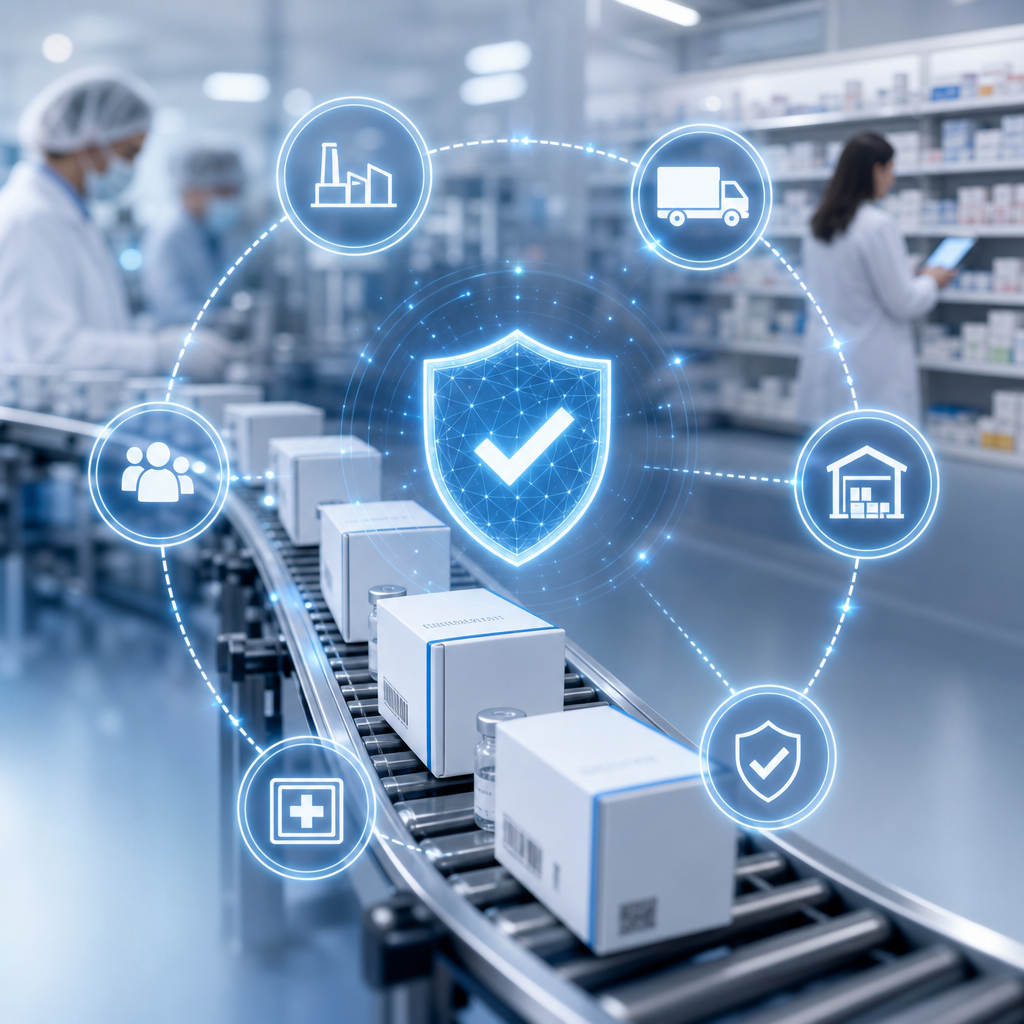
Cloud-based platforms offer advantages that on-premise systems simply cannot match in the pharmaceutical context. Your supply chain operates across multiple locations, involves numerous trading partners, and requires constant access to current data from multiple users simultaneously. These requirements align perfectly with cloud architecture.
Cloud systems provide several operational advantages:
- Automatic updates that ensure all users have access to the latest functionality and security patches without requiring IT maintenance windows
- Seamless integration with trading partner networks because everyone accesses the same cloud platform rather than trying to synchronize incompatible on-premise systems
- Automatic backup and disaster recovery that protects your critical supply chain data without requiring extensive IT infrastructure
- Accessibility from any location with internet connectivity, enabling remote work and distributed team management
- Predictable costs that scale with your business rather than requiring large upfront infrastructure investments
On-premise systems require significant capital expenditure, ongoing maintenance by your IT team, and complex integration efforts to connect with external trading partners. When you need to update functionality or address a security vulnerability, your IT team must schedule downtime and execute the update across your entire infrastructure. In a pharmaceutical context where supply chain continuity is critical, this creates unnecessary risk.
Cloud platforms also facilitate better data governance and compliance management. Your data is replicated across secure data centers, ensuring that you never lose critical traceability records. Regulatory inspectors increasingly expect cloud-based systems because they know these platforms are built with compliance and security as core design principles rather than afterthoughts.
The financial analysis typically shows that cloud systems deliver lower total cost of ownership than on-premise alternatives, even when you factor in subscription costs. You avoid large capital expenditures, reduce the need for dedicated IT staff, and benefit from automatic scaling rather than over-provisioning infrastructure for peak demand.
—
Your pharmaceutical organization operates in a regulatory environment where supply chain visibility and compliance are non-negotiable. The question isn’t whether to implement traceability—it’s whether to do so through manual processes that introduce risk and limit scalability, or through automated systems that make traceability seamless.
At RxERP, we’ve built a cloud-based platform specifically designed for pharmaceutical operators who need end-to-end visibility, regulatory compliance automation, and operational efficiency. Our serialized ERP system integrates all aspects of your supply chain—from manufacturing through distribution to dispensing—into a single source of truth that automatically maintains DSCSA compliance while providing the data insights you need to optimize operations and drive growth.
Start by evaluating your current traceability capabilities. Identify where manual processes create operational drag or compliance risk, then explore how end-to-end traceability in pharma can be integrated into your operations. We’re available to discuss your specific requirements and show you how modern traceability systems can transform your supply chain.
Frequently Asked Questions (FAQ)
How does RxERP help us meet DSCSA compliance requirements?
We’ve built DSCSA compliance automation directly into our platform, so your team doesn’t have to manage regulatory requirements through manual processes or disconnected systems. Our serialized ERP tracks every unit from manufacturing through dispensing, capturing and storing all required transaction information automatically. This means you maintain complete chain of custody documentation and can respond to regulatory requests or product recalls within hours instead of days.
What visibility do we get into our pharmaceutical supply chain with RxERP?
We provide real-time tracking across your entire operation, from manufacturing facilities through distribution centers to final dispensing points. Our business intelligence analytics layer transforms raw serialization data into actionable insights, showing you inventory movement, bottlenecks, expiration risks, and supply chain inefficiencies as they happen. This level of visibility lets you optimize operations, reduce waste, and identify revenue opportunities you couldn’t see before.
Why should we move from spreadsheets and legacy systems to a cloud-based serialized ERP?
We designed our cloud platform specifically to eliminate the manual work, data silos, and compliance gaps that plague spreadsheet-based operations. Our solution scales with your business without requiring expensive infrastructure investments or complex IT deployments, and you get automatic updates to stay current with regulatory changes. Most importantly, you gain the data accuracy and operational speed that manual processes simply cannot deliver, freeing your team to focus on strategic decisions rather than data management.