
Table of Contents
- The Challenge of DSCSA Compliance in Pharmaceutical Inventory Operations
- Why Traditional Inventory Systems Fall Short for Pharma
- How Serialization and Track-and-Trace Requirements Transform Inventory Management
- Our Approach to DSCSA-Ready Inventory Automation
- Key Capabilities for Regulatory Compliance and Operational Efficiency
- Real-World Impact: Cost Reduction and Revenue Optimization Through Better Inventory Control
- Implementing Advanced Inventory Management Without Disruption
- Scaling Your Pharmaceutical Operations with Integrated ERP Solutions
- Frequently Asked Questions (FAQ)
The Challenge of DSCSA Compliance in Pharmaceutical Inventory Operations
The Drug Supply Chain Security Act fundamentally changed how pharmaceutical companies must manage their inventory. Since the November 2023 enforcement deadline, every unit must be tracked at the individual serial level, and each transaction in the supply chain requires detailed documentation and verification. For many organizations, this transition revealed a critical gap: their existing systems couldn’t handle the complexity.
Managing DSCSA compliance isn’t simply adding a new tracking layer. It requires you to capture, store, and exchange serialized product data across your entire operation—from manufacturing or receiving through distribution and dispensing. A single data entry error, missed transaction verification, or incomplete lot history can create compliance violations that trigger FDA warnings, recalls, or operational shutdowns. The stakes are operational continuity and regulatory standing.
We’ve worked with hundreds of pharmaceutical manufacturers, wholesalers, and distributors facing this challenge. Most initially believed their current inventory systems could be modified to meet DSCSA requirements. That assumption has cost many of them time, money, and compliance headaches.
Why Traditional Inventory Systems Fall Short for Pharma
General-purpose inventory systems were designed for retail or manufacturing environments where product traceability is optional. Pharmaceutical supply chain management demands something fundamentally different.
Traditional systems typically lack serialization at the unit level. They track stock quantities and batch numbers, but they don’t maintain individual serial numbers with associated metadata (expiration dates, manufacturing details, chain-of-custody documentation). When you need to respond to an FDA inquiry or execute a targeted recall, you’re working from incomplete data.
Most legacy platforms also separate inventory operations from compliance workflows. Your team manually reconciles serial numbers, verifies transactions with trading partners, and documents exceptions in spreadsheets or disconnected modules. This fragmentation creates bottlenecks, increases human error, and makes real-time visibility impossible.
Additionally, traditional systems don’t integrate with DSCSA transaction information exchanges (TIEs). Your compliance team can’t automatically match incoming shipment serials against your purchase orders or verify trading partner credentials within the inventory management interface itself. You’re forced to toggle between multiple platforms, re-entering data and losing critical context.
The financial impact is measurable. Companies we’ve worked with reported spending 15-25 hours per week on manual DSCSA reconciliation tasks alone. That’s staff time that could be directed toward growth initiatives instead.
How Serialization and Track-and-Trace Requirements Transform Inventory Management
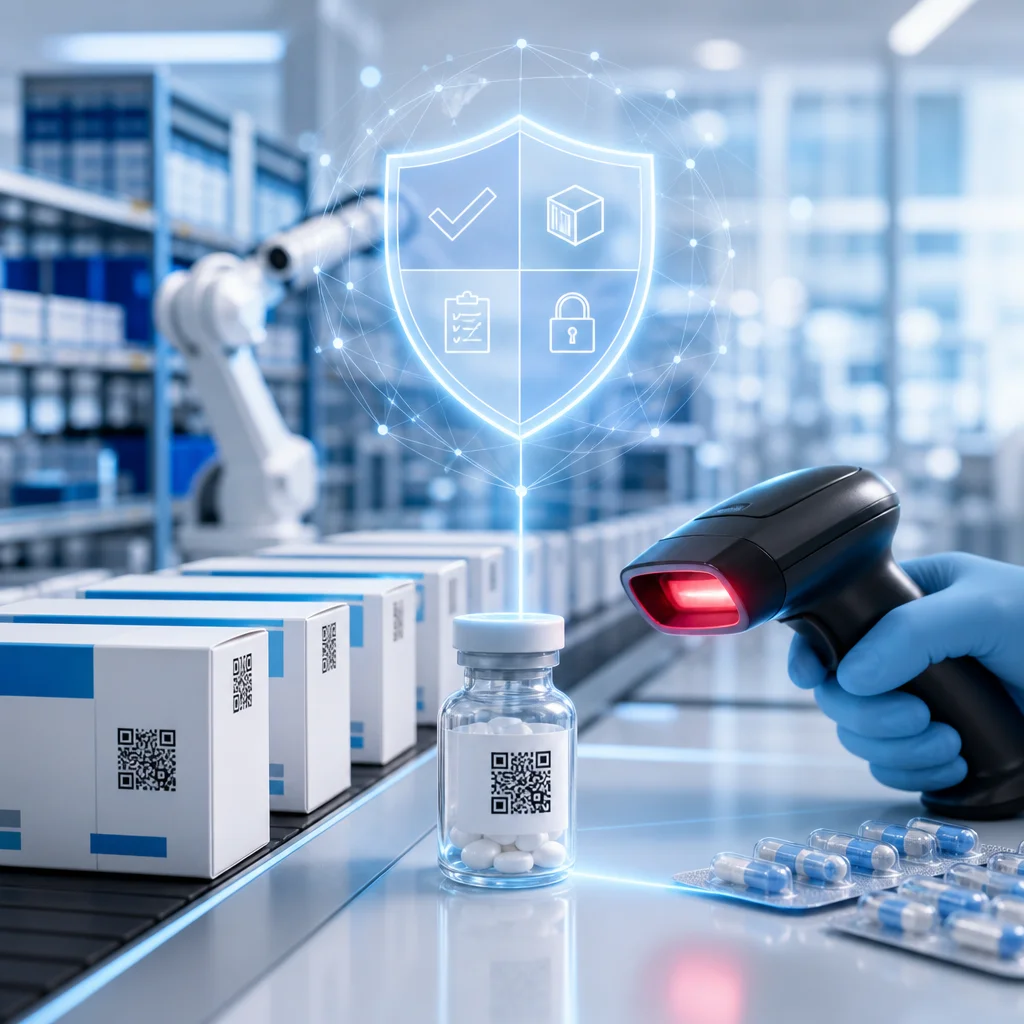
Serialization fundamentally changes how you think about inventory. You’re no longer managing “100 units of Product X.” You’re managing 100 distinct items, each with a unique identifier, expiration date, source documentation, and transaction history.
This shift enables several operational capabilities that traditional systems cannot support. First, you gain granular lot-level recall capability. If you need to identify and quarantine specific serials due to a quality issue, you can execute that action within minutes rather than days. Your inventory system becomes a precision instrument rather than a blunt tool.
Second, serialized tracking creates an immutable chain of custody. Every movement of a product—from your receiving dock to a customer’s warehouse—is documented and verified. This documentation becomes invaluable during regulatory audits or when investigating supply chain irregularities. DSCSA transaction information and product tracing data flow directly into your inventory records, creating a single source of truth.
Third, serialization enables automated exception detection. When an incoming shipment’s serial numbers don’t match your purchase order expectations, or when a trading partner’s credentials fail verification, your system flags these issues immediately. Your compliance team resolves exceptions in real time rather than discovering problems during month-end reconciliation.
The operational rhythm changes as well. Instead of running weekly inventory counts and variance reports, you have continuous, serial-level visibility. This means better decision-making about stock positioning, faster response to supply disruptions, and reduced carrying costs from overstocking or aging inventory.
Our Approach to DSCSA-Ready Inventory Automation
We designed our ERP platform from the ground up for pharmaceutical supply chain complexity. Serialization and DSCSA compliance aren’t added features—they’re foundational to how the system operates.
Our serialization features capture and maintain every required data element at the serial level: unique identifier (SGTIN), expiration date, lot number, manufacturing location, and trading partner information. These data points flow automatically into transaction records, creating a complete audit trail without manual data entry.
The system integrates directly with DSCSA transaction information exchanges. When you receive a shipment, our software automatically matches incoming serials against your purchase orders and verifies trading partner credentials through connected TIE channels. Discrepancies trigger immediate alerts, enabling your team to resolve issues before inventory is distributed downstream.
We also provide lot traceability software that enables rapid product tracing in both directions—forward and backward through your supply chain. This capability is essential for recalls, regulatory inquiries, and supply chain risk assessments. You can trace a specific serial from manufacturer through multiple distribution points to the end customer within seconds.
Our cloud infrastructure ensures your serialized data is secure, backed up continuously, and accessible to authorized team members across multiple locations. This distributed access is critical for organizations with decentralized operations or multi-site manufacturing and distribution.
Key Capabilities for Regulatory Compliance and Operational Efficiency
Beyond serialization, our platform automates compliance workflows that traditionally consumed significant staff resources.
Inventory visibility is complete and real-time. You can view serialized stock by location, expiration date, trading partner source, and product family. This granular visibility enables better inventory positioning decisions and reduces waste from expired product sitting in warehouses. Financial teams also gain immediate insight into inventory value, which improves working capital management and cash flow forecasting.

Automated exception management identifies compliance risks before they become violations. When serials are missing, illegible, or inconsistent with documentation, the system flags them. Your team receives prioritized task lists showing which exceptions to address first, reducing the reactive scramble that typically characterizes compliance operations.
Business intelligence analytics transform raw serialized data into actionable insights. You can see which trading partners have the highest exception rates, which products have the slowest turnover, or which warehouse locations have the most aging inventory. These insights drive operational improvements that reduce costs and strengthen compliance posture simultaneously.
Financial automation connects inventory movements directly to accounts payable, accounts receivable, and general ledger postings. When you receive a serialized shipment and verify trading partner credentials, the system automatically generates the corresponding accounts payable invoice. This integration reduces billing disputes and accelerates cash conversion cycles.
Real-World Impact: Cost Reduction and Revenue Optimization Through Better Inventory Control
The operational improvements deliver measurable financial results.
A mid-sized pharmaceutical wholesaler we worked with reduced DSCSA compliance staff overhead by 60% within six months of implementation. Tasks that previously required manual verification across multiple systems now execute automatically. Their compliance team shifted from reconciliation and exception handling to strategic activities like supply chain risk assessment and trading partner relationship management.
Inventory carrying costs declined because serialized data enabled more accurate demand forecasting and faster identification of slow-moving stock. The same wholesaler reduced inventory aging by 18%, translating to approximately 2 million dollars in freed working capital. That capital could be redeployed toward growth initiatives or used to negotiate better payment terms with suppliers.
Recall execution speed improved dramatically. When responding to a product quality issue, companies using our platform identified affected serials within minutes and isolated inventory within hours. This speed minimizes disruption to customer relationships and reduces regulatory scrutiny. In contrast, organizations using manual processes typically spent 2-3 days identifying and quarantining affected product.
Revenue optimization occurs through better supply positioning and reduced write-offs. With real-time visibility into expiration dates and inventory age, your sales team can prioritize fast-moving inventory and negotiate volume sales for slow-moving stock before expiration approaches. This prevents waste and improves inventory turns.
Implementing Advanced Inventory Management Without Disruption
Many pharmaceutical operations hesitate to adopt new ERP platforms because they fear disruption to ongoing operations and compliance activities. This concern is valid—inventory systems are mission-critical. However, cloud-based deployment and phased implementation approaches minimize risk.
We recommend starting with a focused implementation scope: one location or one product line. This approach lets your team learn the platform, identify data quality issues, and develop new workflows without putting your entire operation at risk. Once that initial scope runs smoothly for 30-60 days, you expand to additional locations or product lines.
Data migration requires careful planning. Your team will work with our implementation specialists to map legacy inventory data to our platform’s data structure, identify and resolve data quality issues, and validate that serial numbers and lot information transfer accurately. This process typically takes 4-8 weeks depending on data complexity and volume.
Training focuses on the specific workflows your team uses daily. Your warehouse and compliance staff learn how to receive and verify serialized shipments. Your sales and supply chain teams learn how to use inventory visibility and analytics features. Your finance team learns how financial automation connects inventory movements to accounting records.

Scaling Your Pharmaceutical Operations with Integrated ERP Solutions
As your organization grows, your inventory management system must scale without adding proportional operational complexity.
Our integrated ERP platform extends beyond inventory. Financial automation, CRM, eCommerce capabilities, and business intelligence all operate within the same system, using the same underlying serialized data. When you need to expand into direct-to-pharmacy sales channels, launch a customer portal, or add additional distribution locations, those capabilities integrate seamlessly with your existing inventory and compliance infrastructure.
This integrated approach eliminates data silos. A sales representative can see real-time inventory availability while discussing customer orders. Your finance team can reconcile shipments through accounts payable without manual intervention. Your compliance team accesses the same serial-level data that your operations team uses for daily inventory management. Everyone operates from a single source of truth.
Scaling also becomes more efficient. Adding a new warehouse location or trading partner doesn’t require new software licenses or system modifications. New users access the same platform, use the same workflows, and contribute to the same data quality standards.
The foundation we’ve built ensures that your inventory management system supports your growth strategy rather than constraining it. As your organization expands geographically, adds new product lines, or enters new customer segments, your ERP system adapts without forcing you to replace or supplement it with additional tools.
For pharmaceutical companies serious about DSCSA compliance, operational efficiency, and sustainable growth, the starting point is a platform purpose-built for your industry’s unique requirements. Let’s discuss how we can help you simplify serialized inventory management and strengthen your supply chain resilience. Visit us at rxerp.com to explore how our platform works for organizations like yours.
Frequently Asked Questions (FAQ)
How does our DSCSA inventory management software automate compliance without disrupting our current operations?
We built our system to integrate seamlessly with your existing workflows, automating the serialization tracking and unit-level traceability requirements mandated by DSCSA without requiring a complete operational overhaul. Our cloud-hosted platform handles the complex data requirements for product authentication, chain-of-custody documentation, and exception reporting in the background, freeing your team from manual compliance tasks. We’ve designed the implementation process to be phased, so you can begin with your highest-risk areas while we gradually extend coverage across your supply chain.
What specific inventory challenges does our platform solve for pharmaceutical distributors and wholesalers?
We address the unique pressures you face: managing serialized product data across multiple locations, preventing inventory discrepancies that trigger compliance violations, and reducing the time spent on manual track-and-trace documentation. Our system provides real-time visibility into your stock levels by serial number, lot code, and expiration date, which directly prevents costly write-offs and recall expenses. We also automate the financial reconciliation between physical inventory and accounting records, eliminating the manual audits that consume resources without adding strategic value.
How does our business intelligence component help us optimize inventory beyond compliance?
We capture granular supply chain data and transform it into actionable insights that reveal patterns in product movement, demand fluctuations, and cost drivers across your operations. Our AI-powered reporting identifies opportunities to reduce carrying costs, optimize warehouse allocation, and accelerate inventory turnover without sacrificing compliance posture. These insights enable you to make data-backed decisions about product sourcing and distribution strategy rather than relying on historical assumptions.