
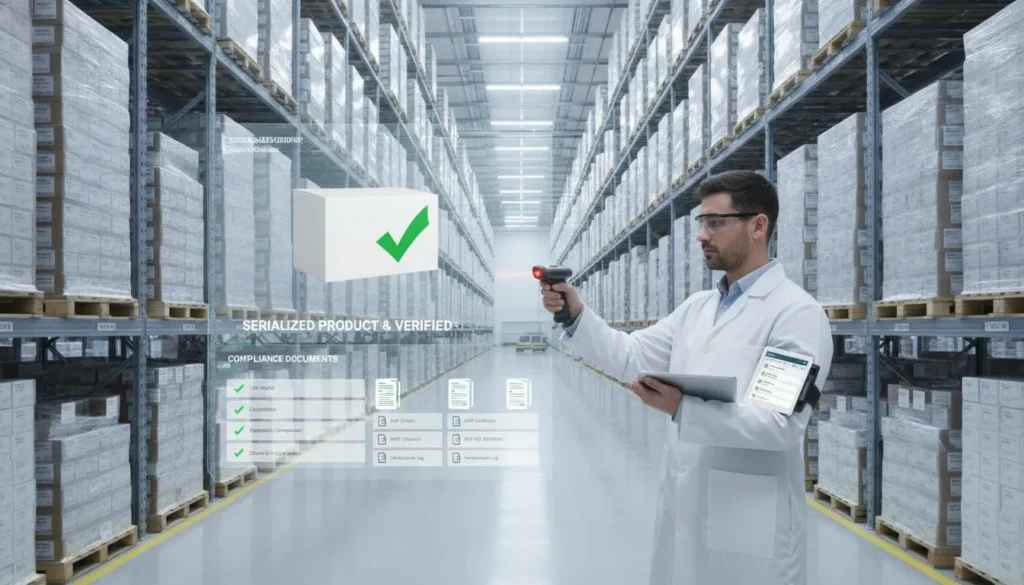
Operating without a package-level tracking system can cost a drug wholesaler $500,000 in federal fines. Using a complete compliance checklist is the best way to secure your daily supply chain and maintain audit readiness.
A complete DSCSA compliance checklist must address four core federal rules to ensure safe, interoperable drug distribution throughout the pharmaceutical supply chain. Wholesalers must check that all trading partners are authorized, manage quick notifications for suspect products, and report their licenses annually. According to the FDA, distributors must also set up secure, package-level electronic systems to trace transaction data, history, and statements for every unit. This checklist ensures that your team can spot illegitimate drugs within twenty-four hours, quarantine bad product, and show tracing records during an audit. Following these clear steps helps drug distributors stop supply chain delays, protect patient safety, and avoid big federal fines of up to $500,000 for non-compliance.
How can your business meet these strict FDA guidelines without slow manual tasks or high overhead costs? Our guide to Understanding the DSCSA Compliance Landscape for Pharmaceutical Wholesalers will show you how to build an efficient, secure tracking system. The path begins with
Dscsa Compliance Checklist: Understanding the DSCSA Compliance Landscape for Pharmaceutical Wholesalers
The Drug Supply Chain Security Act protects patients from unsafe prescription drugs. It sets up a strong system to find fake, stolen, or bad products. To remain safe from fines, every distributor needs a clear DSCSA compliance checklist. This list helps companies trace each box of medicine as it moves from the plant to the health clinic.
The core purpose of the DSCSA
Wholesalers play a key role in keeping the drug supply safe. Under the federal law, these firms must verify that all partners have the right state licenses. Meeting these fundamental DSCSA requirements helps companies avoid audits and big fines. It also builds trust with drug makers and health sites, keeping the business safe from disruptions.
Critical compliance dates and deadlines
The federal government has set strict dates for this law. For many years, companies shared paper files when they shipped products, but that old way of working is gone. Companies must now use secure digital tools to pass along critical drug tracking files. This shift is a big change for small and mid-size firms that still rely on old computer software.
The FDA gave firms extra time to build and test their digital systems because setting up secure platforms takes effort. But those extra months have now ended. Wholesalers must have active digital networks in place today. Firms that fail to connect risk business delays and the loss of key partners.
Unique supply chain duties for wholesalers
Wholesalers face more pressure than other firms in the drug market. Factories make the drugs and clinics hand them to patients, but wholesalers sit right in the center of the trade. They must handle products from hundreds of plants and send them to thousands of clinics. This middle-man role makes product tracing much harder to manage than it is for other firms.
To meet these rules, distributors must trace every single package. The FDA mandates that wholesalers set up interoperable electronic product tracing for each sale. If a distributor finds a bad batch, they must quarantine the suspect boxes immediately. Then, they must tell the FDA and trading partners within twenty-four hours to keep the public safe.
Authorized Trading Partner Verification: Your First Line of Defense
Wholesale distributors must only buy from or sell to authorized trading partners. These partners include drug manufacturers, repackagers, and other licensed wholesalers. Keeping track of who you work with is a key part of your DSCSA serialization requirements.
It forms the first line of defense for a safe supply chain. If you work with an unlicensed partner, you risk heavy fines and lose compliance. This is why checking licenses is a main item on your DSCSA compliance checklist.
Checking FDA registration and state licenses
To start, you must check the status of each partner. Drug manufacturers and repackagers must register with the FDA. Wholesalers and third-party logistics firms must report their licenses as well.
You can find this data on the main FDA web tools. State boards of pharmacy also publish lists of active licenses. You must check these details before you make any trades. Checking these tools protects you from bad actors who try to sell unsafe goods.
Documenting checks for compliance and audit readiness
You must keep a full record of each partner check you perform. Your DSCSA compliance checklist should include a step to log the license numbers and dates. A proper log proves you did your work during an audit. Storing these files in other systems creates big risks, but one tool makes it simple to track these checks.
Handling unlicensed partners and suspect goods
You must also set up clear rules to re-check partners. License status can change, so you should check your partners on a set schedule. If a partner loses their license, you must stop all trades at once. This step protects your business when a suspect product is found.
When you find an illegitimate drug, you must quarantine the stock. Under the law, trading partners must notify the FDA within 24 hours of finding an illegitimate product. This quick response keeps bad drugs from moving through the supply chain.
Checking each partner by hand can take too much time. Using a tool like RxERP runs the checks for you, keeping license details and check logs in one safe place. This reduces the risk of human error when checking state and federal lists. System alerts can warn you when a license is about to expire, so you never miss a check.
Product Tracing and Transaction Documentation: The Three T Requirements
Every wholesale distributor must follow a strict DSCSA compliance checklist to keep the supply chain safe. The law says you must trace each prescription drug package as it moves from the maker to the pharmacy.
To do this, trading partners must capture and share three key pieces of data with each transaction. These are known as the three Ts: Transaction Information, Transaction History, and Transaction Statement. Failing to track this data can lead to huge fines and stop your business from moving goods.
| Requirement | What It Covers | Key Data Included |
|---|---|---|
| Transaction Information (TI) | Drug identity and transaction details | Drug name, strength, dosage form, container size, date of transaction, trading partner names |
| Transaction History (TH) | Complete chain of custody | Every prior sale or transfer, from manufacturer through each wholesaler to dispenser |
| Transaction Statement (TS) | Seller authorization and product integrity | Confirms seller is authorized, product not altered, and received from an authorized source |
The components of the three T rules
The first T is Transaction Information (TI). This block of data shows the name of the drug, its strength, its dose form, and the container size. It also lists the date of the transaction and the names of the trading partners.
The second T is Transaction History (TH). This is a paper or electronic trail that shows every stop the drug made in the supply chain. You must store these transaction history requirements to show where the drug came from.
The third T is Transaction Statement (TS). This is a formal statement from the seller. It states that the seller is authorized, did not alter the packaging, and received the product from an authorized source.
Electronic records and package tracing
Under the law, wholesalers must use digital systems to track medicine. The Drug Supply Chain Security Act (DSCSA) requires electronic tracing at the package level to keep harmful drugs out of the supply chain. Under this rule, you cannot just track a batch or lot.
You must track each separate box or bottle by its unique code. This serial code, along with the lot number and expiration date, must be linked to the digital T data. When you ship a drug, you must send this data to the next buyer in a standard electronic form. This package-level tracing helps you find fake or stolen items before they reach people.
Compliance policies for tracing systems
Building a system for electronic tracing is a complex task. To help trading partners, the FDA provided compliance policies for electronic systems. This choice gave wholesalers and other stakeholders more time to build and test their digital tracking setups.
Wholesalers should use this extra time to put a solid system in place. A good platform will tie your inventory to compliance data so you can trade safely without any system gaps.
Suspect Product and Illegitimate Product Handling: A Step-by-Step Protocol
Defining suspect and illegitimate drugs
Wholesalers must know how to tell these two classes of products apart. A suspect drug is one that you have reason to believe may be counterfeit, stolen, or altered. It might have a bad label, look wrong, or miss transaction data.
An illegitimate drug is one where you have clear, credible proof of these same issues. Finding these items and knowing the difference is a key step on your DSCSA compliance checklist to meet fundamental DSCSA requirements.
The five steps to handle suspect drugs
When you find a suspect item in your warehouse, you must act fast. You must follow a strict path to secure the supply chain and protect patient safety. Setting up a clear process helps your team handle these events without delay. Use these five steps to manage suspect products.
- Quarantine the product. Move the suspect drug to a secure, locked area right away. This physical quarantine prevents the drug from being sold or moved by mistake.
- Start an investigation. Review the packing, the label, and the transaction history requirements to see if the drug is valid. Validate the 2D barcode and lot number against the manufacturer data.
- Notify trading partners. Alert any immediate partners who may have received or sent the suspect lot. Keeping them informed helps stop the spread of unsafe drugs.
- Make a formal decision. Determine if the drug is safe or if it is illegitimate. If you prove the product is safe, you can release it back into active inventory.
- Alert the authorities. If you find the drug is illegitimate, you must take immediate action. The FDA guidelines state that you must notify the FDA within 24 hours after determining a product is illegitimate.
Simplifying compliance through serialization
Managing these steps by hand or with old systems is slow, hard, and risky. If your team makes a mistake, you face big fines and lose your license to sell. A unified, serialized ERP can track each drug at the package level on its own to make audits easy. You can run checks in seconds rather than spending days on paperwork.
A smart system links your physical inventory directly to your digital tracing data. When a suspect code is scanned, the system can lock the item in the warehouse instantly. This stops accidental shipping before the drug can leave your facility. Having these rules built into your daily workflow keeps your warehouse safe, your partners happy, and your business ready for any unexpected audit.
Meeting Enhanced Drug Distribution Security Standards
Interoperable Electronic Tracing Requirements
The federal Drug Supply Chain Security Act outlines the next major step for pharmaceutical security. Under this law, trading partners must trace prescription drugs at the package level using secure tools. These electronic tools must be interoperable so that all businesses can share data without any issues. For drug wholesalers, this means sharing secure electronic tracing data for each unit that moves through the warehouse.
This deep tracking ensures that any drug can be verified from the manufacturer to the dispenser. If a suspect product enters the system, partners can spot and isolate it quickly. Using a unified DSCSA compliance platform makes this data exchange simple and easy. This single hub links sales, inventory, and tracing files to save time and reduce errors during busy workdays.
FDA Compliance Policies and Timelines
Setting up these interoperable systems is a complex task for the drug supply chain. To help, the agency set up compliance policies that gave trading partners more time to build and test their systems. Wholesalers can read the FDA compliance policies to learn about these rules. Following these official updates helps businesses plan their tech upgrades without extra stress or worry.
The extra time from the FDA is not a reason for businesses to delay. Wholesalers must use this period to run active tests with their supply chain partners. If a system fails, drug shipments will stop, but starting early prevents these issues and ensures that shipments stay on time. It also protects your business from sudden fines and problems when official inspections occur.
System Integration and Checklist Tasks
Every distributor should add system testing to their DSCSA compliance checklist. First, check if your current warehouse software can track single packages and share electronic files with other partners. If your tools are too old, you may need a system update to handle the new secure data rules. Upgrading your tools now will make your daily warehouse workflow much smoother and faster.
Finally, train your staff to handle errors in electronic tracing data. If a file does not match a package, the product must be put in quarantine. Having a strong process in place keeps your business safe from fines while ensuring that you can serve pharmacies with safe drugs. Clean data keeps your partnerships strong, your brand trusted, and your operations running well.
Building a Sustainable DSCSA Compliance Program for Your Wholesale Operation
A strong compliance program moves beyond checking boxes once a year. It must live in your daily work. A complete DSCSA compliance checklist is a great start, but it only works if your team uses it every day. Because the law is so strict, even one small mistake in drug tracing can halt your business. You must design workflows that prevent errors before they happen.
Annual reporting and licensing rules
Under the Drug Supply Chain Security Act, wholesalers must report their license status and other key data every year. You must send these details to the agency to follow the FDA rules. Keeping track of these dates is simple when you use a modern DSCSA compliance platform. System alerts help you avoid late filings so you can keep your license in good standing without extra stress. This ongoing reporting must be a core part of your plan.
Daily operations and audit readiness
To stay compliant, you must train your warehouse staff and build clear standard rules. A strong program makes sure you are ready for a sudden audit at any time. Your team must know how to trace a drug package in seconds and flag any suspect item. This daily focus keeps your supply chain safe and keeps vital drug products moving. It also builds trust with your partners.
A sustainable workflow should include these four daily practices:
- Train team members to scan and check 2D barcodes on every incoming box.
- Set up clear, written steps to hold and handle any suspect product.
- Keep all digital transaction files secure and easy to search.
- Check trading partner licenses often to make sure they are valid.
Unified technology versus fragmented systems
Do not treat compliance as a cheap afterthought. If you fail to meet these rules, the costs are high. Non-compliance penalties can reach up to $500,000 per violation, which can quickly ruin a growing business. Many wholesalers try to stitch together a basic ERP with small point solutions. This setup often fails because systems do not talk to each other. That gap leads to bad records and lost data. It also wastes warehouse hours.
Instead, you can use a unified serialized ERP for pharma to automate your compliance. This native software builds tracing, transaction records, and inventory tracking into one system. By removing extra data steps, you cut out the risk of human error. This approach keeps your work safe, smooth, and always ready for an audit. You can focus on growing your business while the software handles the rules.
Frequently Asked Questions
What are the financial penalties for a wholesaler failing a DSCSA audit?
A drug wholesaler who fails to follow DSCSA rules faces heavy fines. Compliance breaches can cost up to $500,000 for each offense. Wholesalers can also lose their license, have goods seized, or face legal action. Using a secure system helps you avoid these high-risk errors.
How quickly must a wholesaler notify the FDA about a suspect drug product?
Wholesalers must act fast when they find a suspect or bad product. Under federal rules, you must notify the FDA and all trading partners within 24 hours of finding an illegitimate drug. You must also quarantine the product right away to keep it from moving through the supply chain.
How often do drug wholesalers need to report their licensing status to the FDA?
Pharmaceutical wholesalers must report their licensure status and other business details to the FDA once every year. This annual report helps ensure that all trading partners in the supply chain are authorized. If a wholesaler fails to report, they may lose their active status and face heavy penalties.
Can a wholesaler use multiple separate systems to meet DSCSA rules?
Yes, but using multiple systems makes compliance much harder. Stitching together separate tools for inventory, shipping, and tracing often leads to data errors. A unified DSCSA compliance platform combines these tasks into one system. This helps you track drugs safely, reduce mistakes, and prepare for audits with ease.
Ready to Secure Your DSCSA Compliance Program Today?
Waiting to set up unit-level tracking leaves your wholesale drug company open to huge federal fines, audit failures, and frozen stock that stops daily work. Struggling with paper logs or bad software can lead to serious errors that force your team to quarantine vital products and lose your customer trust. Setting up a safe platform today ensures you meet every single FDA rule on time, simplifies future audits, and keeps your shipments moving without delays.
Ready to secure your drug supply chain and protect your business revenue? Schedule a personalized demo of RxERP’s DSCSA-ready platform to simplify your regulatory compliance today. Our pharma-native software will help your team stay fully audit-ready for years to come.