
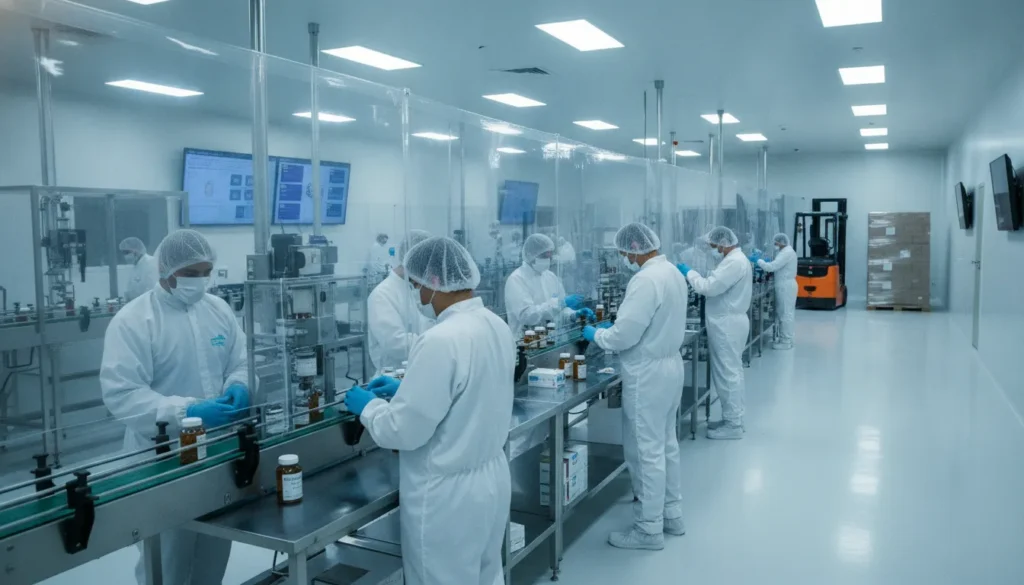
Pharmaceutical repackagers transform bulk drug shipments into patient-ready quantities for clinics, hospitals, and pharmacies. These critical supply chain partners manage FDA compliance, DSCSA serialization, and lot-level traceability for every unit they handle. Schedule a demo of RxERP to see how serialized ERP streamlines repackaging compliance.
Pharmaceutical repackagers take finished drugs from manufacturers and repackage them into smaller saleable units for dispensers. As authorized trading partners under the DSCSA, they assign serial numbers, maintain lot traceability, and ensure every unit meets FDA product tracing requirements.
What Is a Pharmaceutical Repackager?
Pharmaceutical repackagers sit at a critical juncture in the drug supply chain. They receive finished drugs from manufacturers and transfer them into smaller, patient-ready containers — bottles, blister packs, or unit-dose packages — without altering the drug itself. This process enables hospitals and clinics to order precisely the quantities they need while maintaining full regulatory compliance.
A Legal Definition Under the FD&C Act
Under the Federal Food, Drug, and Cosmetic Act, a repackager is an entity that prepares drugs for sale to a dispenser, often creating what the law calls a saleable unit — the smallest package of a drug intended for sale to a pharmacy or clinic. Because repackagers handle finished drugs, the FDA maintains close oversight of their operations, requiring them to register as drug establishment sites and operate as authorized trading partners within the pharmaceutical supply chain.
Repackagers must meet rigorous standards to maintain their licenses. They register each facility as a drug establishment with the FDA, participate in electronic product tracing under the DSCSA, and adhere to Current Good Manufacturing Practice (cGMP) regulations found in 21 CFR parts 210 and 211. These requirements ensure that every drug moving through a repackaging facility remains safe, potent, and fully traceable.
Repackagers and the DSCSA
The Drug Supply Chain Security Act transformed how repackagers operate. Today, they must serialize every saleable unit with a product identifier that includes a Global Trade Item Number (GTIN), unique serial number, lot number, and expiration date. The FDA mandates that repackagers maintain DSCSA compliance obligations for product tracing. This unit-level serialization enables the industry to track individual packages as they move from repackager to wholesaler to dispenser, creating an electronic pedigree for every product.
Repackagers must maintain detailed records for every drug they process and share transaction data with downstream trading partners. This electronic data exchange, typically through EPCIS standards, helps prevent counterfeit or contaminated drugs from reaching patients. Without robust systems to manage this data, repackagers risk non-compliance and supply chain disruptions.
How Repackagers Differ from Relabelers
The distinction between repackagers and relabelers matters under federal law. A relabeler changes the label on a drug container without opening the original package. A repackager, by contrast, opens the manufacturer’s primary container and transfers the drug into a new one, which requires an FDA license to repackage existing products. Many repackagers also hold quality certifications such as ISO 13485 to demonstrate their commitment to safety and process control.
What Do Pharmaceutical Repackagers Do in the Supply Chain?
Pharmaceutical repackagers perform several distinct operational functions, each governed by strict regulatory requirements. The following workflow illustrates how a typical repackaging operation moves drugs from bulk receipt to final distribution.

Receiving and Inspecting Bulk Shipments
The process begins when the facility receives bulk pharmaceutical shipments, often in large drums of pills, vials, or pre-filled syringes. Every incoming lot must be inspected for damage, tampering, and label accuracy. The receiving team verifies lot numbers and expiration dates against the manufacturer’s shipping documentation before clearing product for entry into the clean room.
The Core Repackaging Process
Inside the clean room, staff or automated systems divide bulk drugs into smaller saleable units. Each new unit receives a unique serial number as required by the DSCSA. The typical repackaging workflow follows these steps:
- Receive bulk drugs and verify documentation against physical product.
- Move products to a temperature-controlled clean room environment.
- Split bulk drugs into unit-dose or patient-ready packaging sizes.
- Assign a unique serial number and GTIN to each new saleable unit.
- Apply labels showing drug name, strength, NDC, lot number, and expiration date.
- Store finished units in a secure, climate-controlled area.
- Ship to authorized dispensers with electronic transaction documentation.
Labeling, Compliance, and Distribution
Labeling represents one of the most compliance-critical steps in repackaging. Each label must include the National Drug Code (NDC), lot number, expiration date, and a machine-readable product identifier. Clear, accurate labeling enables rapid recalls — if a quality issue emerges, the serialized data allows repackagers to locate every affected unit within minutes. Serialized ERP platforms help repackagers manage these labeling requirements while maintaining full audit trails.
Storage and distribution complete the cycle. Many pharmaceuticals require strict temperature control throughout storage and transit. Repackagers use monitored cold storage and validated shipping protocols to ensure drugs arrive at their destination in the same condition they left the facility.
Compliance and Regulatory Obligations for Pharmaceutical Repackagers
Because repackagers physically handle finished drug products, they operate under some of the most stringent regulations in the pharmaceutical supply chain. Failure to meet these obligations can result in FDA warning letters, fines, or license revocation.
FDA Registration and cGMP Standards
Every repackaging facility must register with the FDA as a drug establishment and comply with cGMP regulations. These standards govern facility cleanliness, equipment calibration, personnel training, and documentation practices. Repackagers must also maintain quality management systems, often aligned with ISO 13485 or similar frameworks, to demonstrate continuous compliance. Compliance management tools help firms track their regulatory obligations and maintain inspection-ready records.
Controlled Substance Handling and Licensing
Repackagers handling controlled substances (Schedule CII through CV) require additional DEA licensing and must maintain separate storage, detailed logs, and enhanced security measures. Every unit must be accounted for at all times to prevent diversion. The DEA conducts regular inspections to verify that controlled substance repackagers maintain appropriate physical security and record-keeping systems.
DSCSA Trading Partner Requirements
Under the DSCSA, repackagers are classified as authorized trading partners with the same product tracing obligations as manufacturers and wholesale distributors. They must verify the product identifier on every incoming shipment and provide transaction information, transaction history, and transaction statements (collectively known as T3 data) to downstream partners. Pharmaceutical supply chain compliance requires repackagers to maintain these electronic records for at least six years and make them available to the FDA upon request.
DSCSA Serialization and Product Tracing Requirements for Repackagers
The DSCSA’s serialization requirements create specific obligations for repackagers that differ from those of manufacturers or dispensers. When a repackager changes a drug’s packaging, they effectively become the product’s new point of origin for tracing purposes and must assign fresh serialization data.
Unit-Level Marking and Identifiers
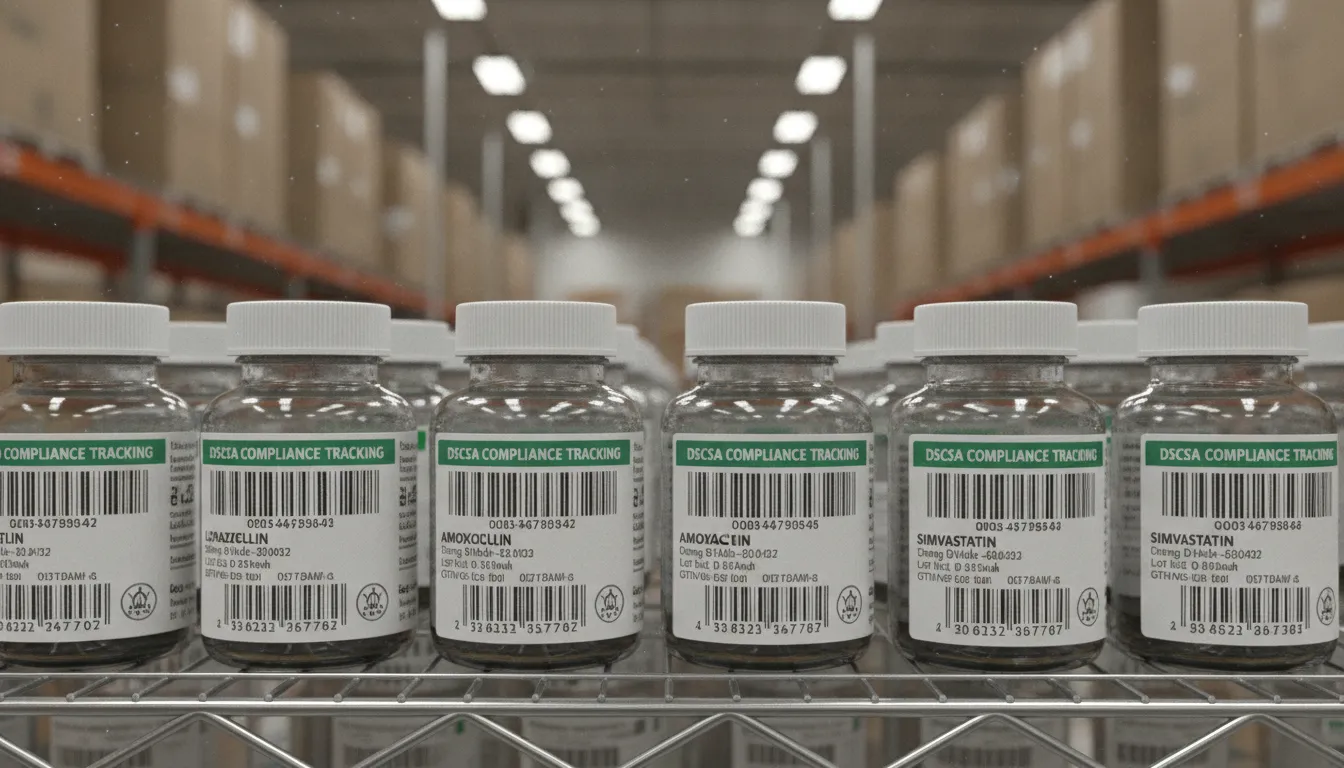
Every saleable unit leaving a repackaging facility must bear a product identifier with four data elements:
- Global Trade Item Number (GTIN)
- Unique serial number
- Lot or batch number
- Expiration date
The serial number must be unique within the GTIN and lot combination. No two units produced by the same repackager can share a serial number. This identifier is encoded in a two-dimensional data matrix barcode that downstream trading partners can scan to verify product authenticity. DSCSA product tracking requirements mandate that this data be exchangeable across all trading partners through interoperable electronic systems.
Electronic Tracing and Data Exchange
The DSCSA mandates a fully electronic system for tracing prescription drugs. Repackagers can no longer rely on paper records — they must exchange data using standardized formats, primarily EPCIS (Electronic Product Code Information Services). This electronic data tells the complete story of where a product came from, who handled it, and where it is going. A robust EPCIS implementation enables repackagers to send and receive transaction data without errors or delays.
When a repackager ships a product without the required electronic data, the recipient may be unable to legally accept the shipment. This makes the data exchange component just as operationally critical as the physical repackaging process itself.
Verification and Suspect Product Rules
Repackagers must maintain systems to verify product identifiers upon request from the FDA or trading partners. If a repackager identifies a suspect product — one that may be counterfeit, diverted, or intentionally adulterated — they must quarantine it immediately, investigate the issue, and if the product is confirmed illegitimate, notify the FDA within 24 hours. These verification and notification protocols are essential for maintaining the integrity of the pharmaceutical supply chain.
The Growing Pharmaceutical Repackaging Market
The pharmaceutical repackaging market continues to expand as healthcare systems demand more flexible, patient-ready drug formats. Understanding market dynamics helps repackagers plan investments in capacity and compliance infrastructure.
Market Value and Growth Rates
In 2024, the global pharmaceutical repackaging systems market was valued at approximately $1.7 billion. Industry analysts project it will reach $3.19 billion by 2034, a compound annual growth rate of 6.65%. North America leads this growth as hospitals and clinics increasingly adopt unit-dose packaging to reduce medication errors and waste. An aging population and rising specialty drug utilization are the primary demand drivers.
Market Drivers and Operational Challenges
Several factors sustain this growth trajectory. The rise in chronic disease management means more patients require long-term medication therapy, while regulatory pressure for safety drives demand for serialized unit-dose packaging with barcodes at the point of administration. Hospitals face increasing cost pressures and prefer unit-dose formats to minimize waste and improve inventory accuracy.
However, growth brings significant operational challenges. Repackagers must navigate complex regulations and thin profit margins while investing in serialization technology, electronic data exchange infrastructure, and compliance personnel. Without integrated systems to manage these demands, the cost of regulatory compliance can constrain growth. ERP solutions designed for pharmaceutical repackaging help firms balance operational efficiency with regulatory requirements.
How ERP Technology Supports Pharmaceutical Repackaging Operations
Modern repackaging operations depend on technology to manage the complexity of serialization, compliance, and supply chain coordination. Enterprise resource planning (ERP) systems purpose-built for pharmaceutical supply chains provide the infrastructure needed to operate efficiently while maintaining full regulatory compliance.
Unit-Level Tracking and Inventory Control
ERP systems designed for pharmaceutical operations track products at the individual unit level, assigning and managing serial numbers throughout the repackaging lifecycle. This granular visibility allows repackagers to locate any specific unit instantly, whether for a customer verification request or a product recall. A serialized ERP platform integrates lot number management, expiration date tracking, and inventory control into a single system, eliminating the manual processes that introduce errors.
Automated Compliance and Data Exchange
Compliance automation is perhaps the most valuable capability an ERP system brings to a repackaging operation. By generating labels with correct GTINs and serial numbers automatically, the system reduces human error and ensures every package meets FDA standards. These platforms also handle EPCIS data exchange, generating transaction documents in the correct format and transmitting them to trading partners automatically.
| Operation Task | Manual Process | ERP-Enabled Process |
|---|---|---|
| Product Tracing | Paper logs and spreadsheets | Real-time unit-level tracking |
| Label Creation | Manual data entry per unit | Automated GTIN and serial generation |
| Data Exchange | Emailing PDF documents | Automated EPCIS event transmission |
| Inventory Audit | Physical counting and reconciliation | Digital search by serial, lot, or GTIN |
| Compliance Reporting | Days of manual data compilation | One-click FDA-ready report generation |
Financial and Order Flow Integration
Beyond compliance, ERP systems connect the repackaging floor to business operations. When a repackaging job completes, the system automatically updates inventory, generates invoices, and reconciles order quantities — all without manual intervention. This integration gives leadership real-time visibility into costs, margins, and operational bottlenecks, enabling data-driven decisions about capacity and investment.
Scale Your Repackaging Compliance with the Right Technology
Pharmaceutical repackagers face mounting regulatory pressure as DSCSA enforcement continues to tighten. The cost of non-compliance can reach hundreds of thousands of dollars in fines per violation, not including the reputational damage and potential loss of trading partner relationships. Modern ERP technology eliminates the guesswork from serialization, product tracing, and data exchange, allowing repackagers to focus on their core mission: getting safe, compliant medications to the patients who need them. Schedule a demo of RxERP to see how a purpose-built pharmaceutical ERP can transform your repackaging compliance and operations.
Frequently Asked Questions
What is the FDA definition of a pharmaceutical repackager?
The FDA defines a repackager as an entity that takes a finished drug from its original container and places it into a different container for sale to a dispenser. Under the Drug Supply Chain Security Act, repackagers must register as drug establishments and follow strict rules for product tracing and unit-level serialization.
Are pharmaceutical repackagers required to use serialization?
Yes. Repackagers are authorized trading partners and must maintain unit-level serialization records for all prescription drugs they handle. They must provide transaction data including transaction information, history, and statements to downstream partners to prove product authenticity.
Is drug repackaging legal in the United States?
Drug repackaging is legal when performed by a firm that meets federal standards, including FDA registration and cGMP compliance. Repackagers play an essential role by making medication sizes practical for hospitals and clinics. They must report illegitimate products to the FDA within 24 hours of discovery.
How does a repackager ensure DSCSA compliance?
Repackagers maintain compliance by using electronic systems to track and trace drugs at the package level. They verify product identifiers on each unit, maintain records for at least six years, and use serialized ERP systems to automate data exchange and stay audit-ready.