
Third-party logistics providers face intense pressure to authenticate serialized products, maintain complete custody records, and prepare for regulatory inspections without slowing down daily warehouse operations. Learn how a serialized ERP automates DSCSA compliance across receiving, picking, and shipping so your 3PL can eliminate manual reconciliation errors and scale with confidence.
Table of Contents
- The DSCSA Compliance Challenge for 3PL Operations
- Why Manual Compliance Processes Create Operational Risk
- How Serialized ERP Automates DSCSA Requirements
- Our Approach to Supply Chain Visibility and Authentication
- Integrating Pedigree Tracking into Daily Operations
- Reducing Audit Time and Compliance Costs
- Scaling Your 3PL Business with Automated Compliance
- Real-World Impact of ERP-Based Compliance Solutions
- Getting Started with Your DSCSA Compliance Strategy
- Frequently Asked Questions (FAQ)
The DSCSA Compliance Challenge for 3PL Operations
The Drug Supply Chain Security Act has reshaped how third-party logistics providers operate. Since its full implementation, the DSCSA requires 3PLs to authenticate products, maintain detailed pedigree records, handle suspect and counterfeit drug notifications, and report serialization data across the supply chain. For operators managing thousands of SKUs, multiple warehouses, and complex customer relationships, this regulatory landscape creates significant operational demands.
The challenge intensifies because DSCSA requirements don’t exist in isolation. Your 3PL business must track serialized products through receiving, warehousing, picking, and shipping while maintaining audit trails that regulators can review. A single compliance gap can result in warning letters, operational shutdowns, or loss of customer contracts. Yet many 3PLs still rely on fragmented systems, manual data entry, and disconnected processes that struggle to keep pace with regulatory expectations.
What distinguishes successful 3PLs today is their ability to embed compliance into daily operations rather than treating it as a separate function. This requires visibility across inventory, serialization records, and supply chain movements in real time.
Why Manual Compliance Processes Create Operational Risk
Manual compliance workflows introduce three critical vulnerabilities: human error, audit burden, and delayed response times. When your team manually reconciles serialization data between systems, verifies lot numbers across spreadsheets, or tracks pedigree information through email threads, the margin for mistakes grows exponentially.
Consider this scenario: A warehouse associate receives a shipment and manually enters serial numbers into a legacy system. Data doesn’t sync with your accounting software, creating a discrepancy. Days later, a compliance officer discovers the mismatch during an internal review. By then, the product has already been distributed, and you’re scrambling to trace its movement and notify customers. The investigation could take weeks, and regulatory reporting deadlines may be missed.
Beyond error rates, manual processes drain resources. Compliance teams spend disproportionate time on data compilation rather than strategic oversight. When regulators request documentation for an inspection or investigation, gathering manually maintained records takes weeks instead of minutes. This delays your response and signals operational immaturity to the agencies evaluating your systems.
The financial impact compounds. Regulatory citations resulting from manual errors can cost hundreds of thousands of dollars in remediation, potential fines, and customer confidence erosion. Delayed compliance responses extend audit timelines, consuming staff hours and delaying business growth initiatives.
How Serialized ERP Automates DSCSA Requirements
A purpose-built serialized ERP for 3PLs fundamentally changes how compliance operates within your business. Rather than treating serialization as a back-office function, automation embeds compliance checks into every warehouse transaction, financial process, and customer interaction.
When your team receives a shipment, the system automatically validates serial numbers against manufacturer databases and your pedigree records in a single workflow. The product is immediately flagged if it fails authentication or if gaps exist in its supply chain history. Inventory movements trigger real-time serialization updates, so your warehouse management and compliance records stay synchronized. This eliminates manual reconciliation and the delays that come with it.

Our ERP system handles key DSCSA workflows without human intervention:
- Product authentication at receiving, with automatic linkage to pedigree data
- Serialization updates that sync across inventory, financial, and compliance modules
- Pedigree documentation that records and timestamps each custody transfer
- Suspect and counterfeit drug reporting that channels notifications directly to regulatory systems
- Audit trail generation that captures every serialization event with user, timestamp, and transaction details
The practical benefit is operational speed. Instead of your compliance team manually verifying 500 serial numbers per day, the system processes thousands automatically and flags only true exceptions for human review. This shifts your team from transaction processing to exception management and strategic compliance planning.
Our Approach to Supply Chain Visibility and Authentication
Visibility is the foundation of effective DSCSA compliance. We designed our ERP to give you complete sight lines across your supply chain, from inbound product authentication through final customer delivery.
Every product entering your warehouse is immediately matched against its serialization records and pedigree history. If a serial number doesn’t align with expected data, the system halts the transaction and alerts your compliance team with specific context about the discrepancy. This real-time validation prevents suspect or counterfeit products from entering your inventory.
As products move through your warehouse and distribution network, the system maintains a continuous audit trail. Your picking and packing operations automatically capture serialization data, so customers receive complete documentation of product authenticity and custody history. This transparency builds customer confidence and simplifies their own compliance obligations.
Authentication doesn’t stop at your facility. Our system integrates with industry databases and manufacturer verification services, so you’re validating against authoritative sources rather than relying on internal records alone. This architecture reduces the risk that counterfeit products slip through due to incomplete data.
For a 3PL managing products from multiple manufacturers serving diverse customers, this visibility prevents the operational confusion that typically results from fragmented information. You gain a single source of truth for product status, location, and compliance standing.
Integrating Pedigree Tracking into Daily Operations
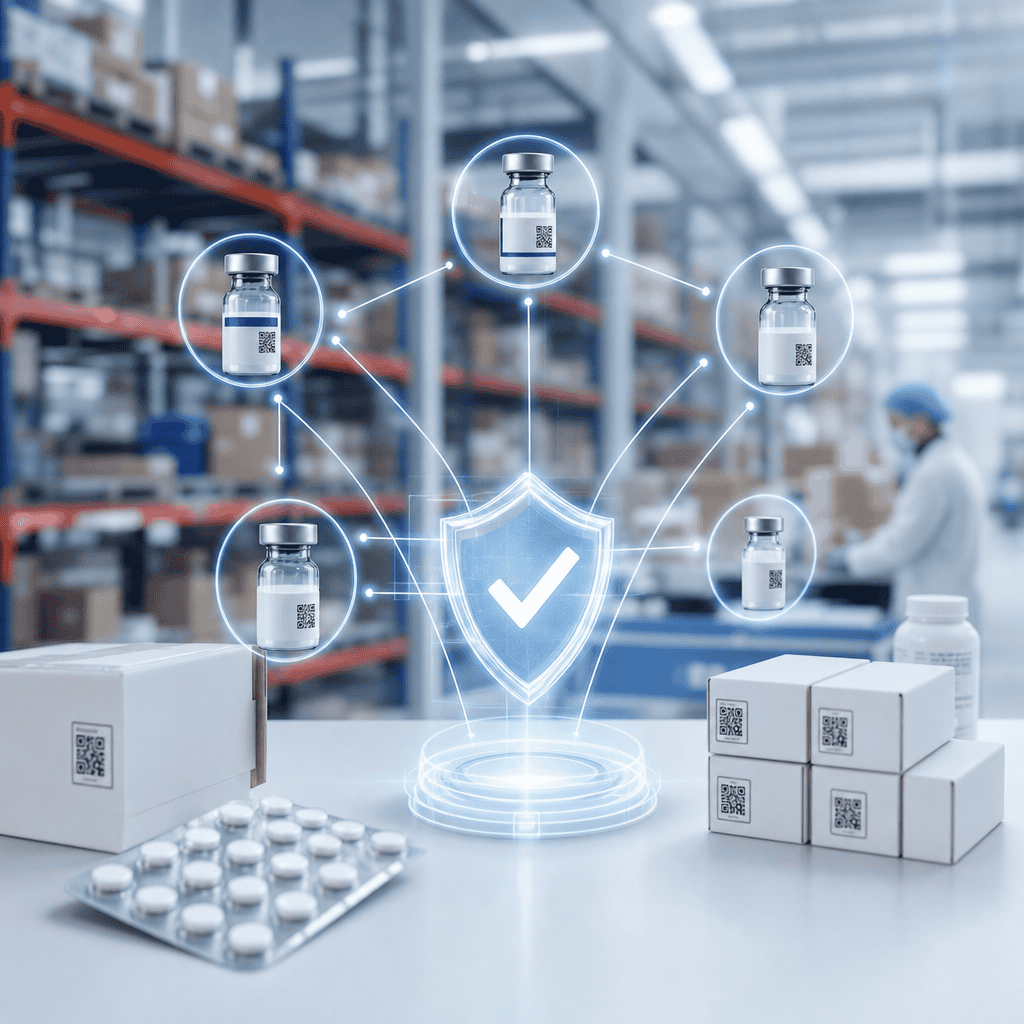
Pedigree tracking is often viewed as a compliance burden rather than an operational tool. We’ve integrated it directly into your warehouse workflows so it becomes invisible to your team while remaining transparent to regulators.
When your warehouse receives inventory, the system documents the receiving transaction with complete pedigree data automatically. As products are picked, packed, and shipped, each movement updates the pedigree record in real time. Your customer receives a complete custody chain showing every entity that handled the product and when those transfers occurred. This creates accountability throughout the supply chain while eliminating the tedious manual documentation process.
The integration extends to your shipping operations. Rather than manually preparing pedigree documents for each shipment, your ERP generates complete documentation automatically, formatted to match customer requirements and regulatory standards. Your shipping team simply confirms the automated records, and compliance data flows directly to your customers’ systems.
This approach also simplifies customer inquiries. When a client asks about the supply chain history of a specific lot, your team retrieves the complete pedigree with a few clicks rather than manually reconstructing custody transfers from disparate sources.
Reducing Audit Time and Compliance Costs
Regulatory audits consume significant resources for 3PLs. Inspectors request documentation spanning months or years, requiring staff to compile records from multiple systems and locations. A typical DSCSA audit can occupy 10-15 full-time equivalent hours of effort across your organization.
Our ERP dramatically compresses this timeline. When regulators request pedigree documentation, serialization records, or suspect drug notifications for a specific date range, the system generates comprehensive reports in minutes rather than days. Auditors receive data organized, timestamped, and complete, reducing back-and-forth clarifications and demonstrating operational sophistication.
The cost savings extend beyond audit response. By automating compliance processes, you reduce the full-time staff dedicated to manual data management and compliance documentation. Those resources shift toward higher-value activities like customer relationship management, supply chain optimization, and business development.
Additionally, automation reduces compliance-related errors that trigger warning letters or enforcement actions. Each avoided citation protects your business reputation and eliminates the legal and remediation costs associated with regulatory findings.
Scaling Your 3PL Business with Automated Compliance
Growth challenges compliance in 3PL operations. As your business expands to new customers, larger volumes, or additional warehouse locations, your manual compliance processes break down. Hiring additional compliance staff becomes necessary just to handle the administrative burden of serialization tracking and pedigree documentation.
Our serialized ERP removes this constraint. Compliance automation scales with your business. Whether you’re processing 10,000 units monthly or 1 million, the system maintains the same validation standards and audit rigor without proportional increases in staffing or operational overhead.
This efficiency unlocks growth opportunities. You can confidently pursue larger customers knowing your compliance infrastructure will support increased transaction volume. You can expand geographically to new warehouse locations without establishing separate compliance teams at each facility. The centralized system enforces consistent standards across your entire operation.
Moreover, automated compliance becomes a competitive advantage in customer negotiations. When pharmaceutical manufacturers and wholesalers evaluate 3PLs, they prioritize partners with robust compliance infrastructure. Our ERP allows you to demonstrate serialization capability, rapid audit response, and compliance maturity that differentiates you from competitors relying on manual processes.
Real-World Impact of ERP-Based Compliance Solutions
The operational impact of implementing a serialized ERP extends beyond compliance metrics. We’ve observed that 3PLs using our system achieve 40-60% reduction in time spent on manual compliance tasks, faster audit cycles (typically 3-5 days compared to 2-3 weeks), and measurable improvement in customer satisfaction due to transparent, accurate pedigree documentation.
One tangible benefit emerges in suspect drug investigations. When regulators notify your 3PL of a suspect product in your supply chain, you must quickly identify where that product is located, who received it, and how it moved through your facility. With manual records, this investigation takes days and involves extensive staff coordination. Our system traces the product’s movement through your warehouse in minutes, identifies all affected customers, and generates notification documentation automatically. This rapid response demonstrates compliance sophistication and protects your business from reputational damage.
Another impact appears in financial operations. Serialization automation reduces inventory write-offs caused by unreconciled discrepancies between your warehouse and financial records. Products that would typically require manual investigation and potential loss are instead matched to accurate serialization data, improving inventory accuracy and financial reporting.

Customer retention also improves. When clients request detailed supply chain documentation for products they’ve sourced through your 3PL, you deliver comprehensive pedigree records that exceed expectations. This reliability builds long-term partnerships and increases customer lifetime value.
Getting Started with Your DSCSA Compliance Strategy
The transition to automated compliance begins with assessing your current state. Evaluate where serialization data currently lives, how pedigree information is documented, and what manual processes consume the most staff time. This baseline helps you prioritize implementation phases and measure improvement.
Next, ensure you understand the DSCSA serialization requirements specific to your operation. Different roles in the supply chain have distinct obligations, and your solution must address your specific regulatory scope.
When selecting an ERP partner, prioritize solutions specifically designed for pharmaceutical 3PLs rather than generic logistics systems adapted for healthcare. Pharmaceutical-focused platforms like ours embed DSCSA compliance into core workflows and maintain alignment with evolving regulatory standards.
Start with your highest-volume processes. Automating receiving and inventory management first delivers immediate compliance gains and provides foundational data that supports pedigree tracking and audit processes. Expand systematically to customer shipments, return handling, and regulatory reporting.
The investment in automated compliance infrastructure pays dividends immediately through reduced audit burden and expanded growth capacity, positioning your 3PL business as a trusted, compliant partner within the pharmaceutical supply chain.
Frequently Asked Questions (FAQ)
How does RxERP help 3PL providers meet DSCSA requirements without manual processes?
We automate the core DSCSA obligations through our serialized ERP system, eliminating the need for spreadsheets and disconnected tools. Our platform captures serialization data at every transaction point, maintains complete pedigree records, and generates the documentation required for audits and regulatory submissions automatically. This reduces your compliance team’s workload significantly while ensuring accuracy and traceability across your entire operation.
What compliance risks do 3PL providers face when relying on manual tracking systems?
Manual processes create multiple failure points that expose your business to serious consequences. We’ve seen organizations struggle with incomplete pedigree records, missed transaction history requirements, and delays during regulatory inspections because data lives in separate systems. Our customers tell us that moving to automated compliance eliminated these vulnerabilities and reduced their audit preparation time from weeks to days.
Can RxERP integrate with our existing 3PL operations and warehouse systems?
We designed our cloud-based platform to connect with your current workflows and infrastructure without requiring a complete operational overhaul. Our serialized ERP works alongside your warehouse management systems, inventory controls, and distribution processes, pulling in serialization and transaction data automatically. We’ve successfully implemented this with manufacturers, wholesalers, and logistics providers of all sizes, so we understand the integration challenges specific to 3PL environments.