
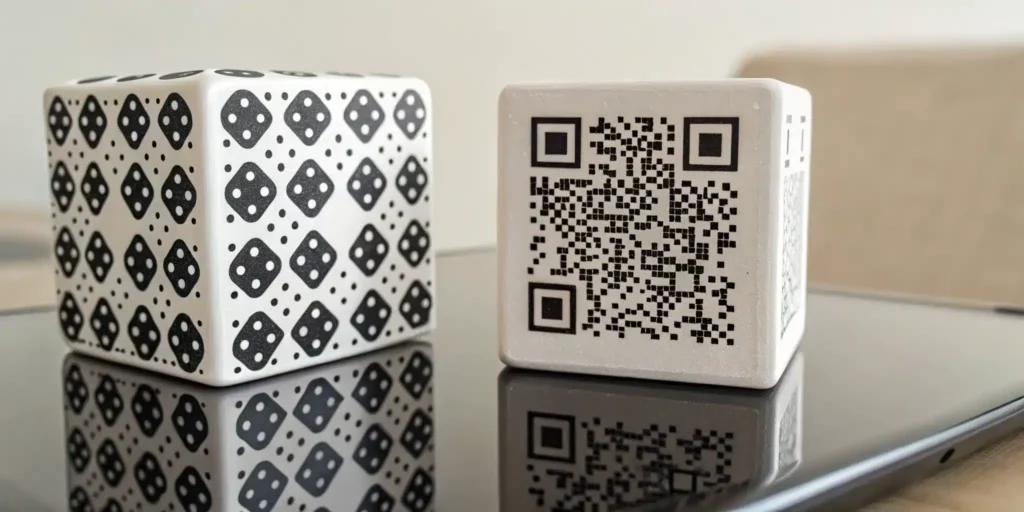
You wouldn’t use a screwdriver to hammer a nail. While both are essential tools, they’re designed for completely different jobs. The same logic applies to 2D barcodes. Both Data Matrix and QR codes store information in a scannable square, but they are built for vastly different purposes. One is a rugged workhorse for industrial tracking, while the other is a versatile bridge to the digital world for consumers. For businesses in highly regulated fields like pharmaceuticals, knowing the difference between data matrix and qr code is critical. This choice affects your operational efficiency, your ability to meet compliance standards like DSCSA, and the integrity of your entire supply chain.
Key Takeaways
- Choose based on your audience: Use Data Matrix codes for internal, machine-to-machine communication within your supply chain. Opt for QR codes when you need to connect directly with customers using their smartphones for marketing or information.
- Data Matrix excels in tough conditions: Its ability to hold more data in a smaller, more durable format makes it the superior choice for marking individual products that must withstand the rigors of manufacturing and logistics.
- For pharma, compliance is the deciding factor: The Drug Supply Chain Security Act (DSCSA) mandates the use of Data Matrix codes for product serialization, making it the only option for ensuring regulatory compliance and supply chain integrity.
Data Matrix vs. QR Code: What’s the Difference?
At a glance, Data Matrix codes and QR codes look similar. They’re both two-dimensional (2D) barcodes, which means they store information both horizontally and vertically, allowing them to hold significantly more data than a traditional one-dimensional barcode. But for the pharmaceutical supply chain, the differences between them are critical. Choosing the right code is essential for everything from tracking inventory to maintaining regulatory compliance. Understanding their unique structures, capacities, and ideal use cases will help you see why one has become the standard for ensuring product safety and traceability.
What Is a Data Matrix Code?
A Data Matrix code is a 2D barcode that packs a large amount of information into a very small space. These codes are typically square or rectangular and are made up of tiny black and white cells. They can store up to 2,335 alphanumeric characters, making them perfect for encoding detailed product information like serial numbers, batch numbers, and expiration dates directly onto small items like vials and cartons. Their compact size and high data density are why they are the required standard for product identifiers under the Drug Supply Chain Security Act (DSCSA). You can identify a Data Matrix code by its L-shaped border, known as a “finder pattern,” which helps scanners locate and read the code.
What Is a QR Code?
A QR (Quick Response) code is also a 2D barcode, but it’s designed for different applications. While it can hold even more information than a Data Matrix—up to 4,296 alphanumeric characters—it also requires more physical space. QR codes are most often used in marketing and consumer engagement. You’ve likely scanned one with your phone to visit a website, view a menu, or download an app. You can easily spot a QR code by the three distinct squares in its corners. These squares act as position markers, allowing the code to be read quickly from any angle. While excellent for commercial use, their larger size makes them less suitable for the space-constrained packaging common in the pharmaceutical industry’s serialized operations.
Comparing Data Storage and Capacity
At a glance, Data Matrix and QR codes seem to do the same job: store information in a scannable square. But how much information they can hold, and what kind, is a major point of difference. For any business, and especially for those in the pharmaceutical supply chain, choosing a code with the right capacity is essential for everything from internal tracking to regulatory compliance. The amount of data you need to embed—whether it’s a simple product identifier or a complex set of tracking details—will guide your decision.
How Much Information Can They Hold?
When it comes to pure data storage, QR codes have the edge. A single QR code can store up to 4,296 alphanumeric characters, while a Data Matrix code tops out at 2,335. This larger capacity makes QR codes a great fit for consumer-facing applications where you might want to embed a long URL, detailed product information, or contact details. For the pharmaceutical supply chain, however, the Data Matrix code’s capacity is more than enough. It’s perfectly suited for holding the essential data points required for a serialized ERP system, like a product identifier, serial number, lot number, and expiration date, without any wasted space.
A Look at Supported Character Sets
Beyond just the amount of data, the type of data matters, too. QR codes are incredibly versatile and can store various languages and complex character sets, including Kanji. This makes them ideal for global marketing campaigns that need to reach a multilingual audience. Data Matrix codes, on the other hand, are primarily limited to numeric and alphanumeric characters. While this might seem restrictive, it’s actually a strength in industrial settings. It ensures the data remains standardized and easily readable by scanners across the supply chain, which is a critical component of maintaining DSCSA compliance and ensuring product traceability from end to end.
Spotting the Physical Differences
At first glance, Data Matrix and QR codes can look like simple black-and-white pixelated squares. But once you know what to look for, telling them apart is straightforward. The physical differences aren’t just cosmetic; they directly impact how and where each code is used, especially within a regulated environment like the pharmaceutical supply chain. Let’s break down the key visual distinctions you can spot immediately.
Size, Shape, and Scalability
One of the most practical differences is their size. Data Matrix codes can be incredibly compact, starting as small as 10×10 cells, making them ideal for marking tiny items like individual vials or surgical instruments. This ability to hold a lot of information in a small footprint is essential for the detailed tracking required in a serialized ERP system. QR codes, on the other hand, start at 21×21 cells and can scale up to a much larger size. This makes them a better fit for consumer-facing applications like marketing posters or retail packaging, where you have more space to work with and high-speed industrial scanning isn’t the primary concern.
Key Visual Cues: Borders vs. Corner Squares
The quickest way to tell these codes apart is by looking at their corners. A QR code has three distinct, large squares in its corners, which act as finder patterns to help scanners orient the image. They’re hard to miss. A Data Matrix code looks more uniform and dense. Instead of corner squares, it uses an L-shaped solid border along two of its adjacent sides. This “L” pattern serves the same purpose, helping the scanner locate and read the code correctly. This design is a common sight on pharmaceutical packaging, as it aligns with the standards set by the Drug Supply Chain Security Act (DSCSA).
How Do They Handle Wear and Tear?
Packages in a supply chain go through a lot. They get bumped, scuffed, and exposed to dust and moisture. If the code on a package becomes unreadable, it can cause major disruptions, from tracking failures to compliance issues. That’s why the durability of a barcode is so important. Both Data Matrix and QR codes are designed with built-in redundancy to withstand a surprising amount of damage, but they achieve this resilience in different ways.
A Data Matrix code is inherently tough due to its structure, making it a workhorse in demanding industrial settings. It can lose a significant portion of its data and still provide a perfect scan. QR codes, on the other hand, offer a more flexible approach. They have a built-in error correction system that you can adjust based on your needs. This choice has real consequences for your operations. A code that fails to scan can create bottlenecks, delay shipments, and put your compliance at risk. Understanding how each code handles wear and tear will help you choose the right one to keep your products moving smoothly and your data intact, no matter what happens on the journey.
Data Matrix: Built for Durability
Think of Data Matrix codes as the heavy-duty option. They are incredibly tough and can often be read even if up to 50% of the code is damaged or missing. This impressive resilience comes from their advanced error correction algorithms, which are built right into their design. For the pharmaceutical supply chain, where a single unreadable code can halt a shipment, this level of durability is essential. Whether a package is rattling on a conveyor belt or being handled in a busy warehouse, the Data Matrix code is designed to hold up, ensuring your inventory management system always has accurate data.
QR Code: Flexible Error Correction
QR codes handle potential damage with a customizable error correction system. You can choose from four different levels, depending on how much protection you need. The levels are: Low (L), which can recover about 7% of damaged data; Medium (M), for 15%; Quartile (Q), for 25%; and High (H), which can recover up to 30%. This flexibility is great for marketing campaigns where you might want to place a logo in the middle of the code. However, there’s a trade-off: the higher the error correction level, the larger and more dense the QR code becomes, which can affect scanning speed and printing requirements.
Performance When Damaged
So, which one holds up better? Both codes are impressively resilient, but they’re suited for different environments. Data Matrix codes are built for the unavoidable scuffs and scrapes of industrial life. Their inherent toughness makes them a reliable choice for meeting strict regulations like the Drug Supply Chain Security Act (DSCSA), where scan success is non-negotiable. QR codes can also be very durable, but you have to intentionally choose a high error correction level, which increases the code’s size. For the tight spaces on pharmaceutical packaging, the compact and rugged nature of a Data Matrix code often makes it the more practical and dependable option.
What Do You Need to Scan Them?
Choosing between a Data Matrix and a QR code isn’t just about the code itself—it’s also about the tools you have to read it. The right scanner can make all the difference in your workflow, whether you’re tracking a single package in a warehouse or connecting with a customer through a marketing campaign. The hardware requirements for each code type are quite different, and understanding them is key to picking the right one for your operations. Let’s look at what you’ll need to scan each type of code effectively.
The Right Scanner for the Job
The biggest difference in scanning comes down to specialized versus general-purpose hardware. QR codes are designed for broad accessibility, meaning most modern smartphones can scan them right out of the box using the native camera app. This makes them perfect for consumer-facing applications where you can’t expect your audience to have special equipment.
Data Matrix codes, on the other hand, are built for industrial and commercial environments. They often require a dedicated 2D imager or a specialized scanner to be read accurately and quickly. These scanners are a standard tool in warehouses and manufacturing facilities, where they are integrated into a larger serialized ERP system to track products at every stage of the supply chain.
Compatibility with Mobile Devices
When it comes to mobile phones, QR codes have a clear advantage. Their widespread use in marketing and retail has pushed phone manufacturers to include native scanning capabilities in their camera apps. You just point your phone at a QR code, and it’s instantly recognized. This seamless experience is why they’ve become so popular for everything from restaurant menus to product registration.
Data Matrix codes aren’t as mobile-friendly. While some third-party apps can read them, your standard phone camera won’t recognize them on its own. This extra step makes them impractical for engaging with the general public. For internal operations, however, employees can be equipped with company-provided devices or rugged handhelds that have the right software and hardware for reliable inventory management.
Performance with Industrial Scanners
In the demanding environment of a pharmaceutical supply chain, performance is everything. This is where Data Matrix codes and industrial scanners truly shine. These specialized scanners are built to read small, dense codes with incredible speed and accuracy, even on a fast-moving production line.
More importantly, Data Matrix codes are incredibly resilient. Thanks to their robust error correction, they can often be read even if a significant portion of the code is damaged, scratched, or poorly printed. This durability is essential in environments where packages are handled frequently. Industrial scanners are optimized to handle this wear and tear, ensuring you can maintain data integrity and compliance even when conditions aren’t perfect.
Where Are These Codes Used?
The choice between a Data Matrix and a QR code really comes down to the job at hand. While they might look similar, their designs are optimized for very different environments and purposes. Data Matrix codes are the workhorses of industrial settings, built for tracking and tracing items with precision. You’ll find them etched onto tiny electronic components or printed on pharmaceutical packaging, where reliability and data density are critical.
QR codes, on the other hand, are designed for public interaction. They act as a bridge between a physical object and a digital experience, making them a favorite for marketing campaigns, restaurant menus, and product packaging that links to a website. Think of it this way: Data Matrix codes are for communicating machine-to-machine, while QR codes are for communicating product-to-person. Understanding this fundamental difference is key to seeing why each code dominates its respective field.
Data Matrix: The Standard for Manufacturing and Healthcare
Data Matrix codes are the go-to for industrial applications because they can pack a huge amount of information into a tiny physical space. This makes them perfect for tracking individual assets throughout their lifecycle, from the factory floor to the end user. Because they can be printed as small as 2.5mm squared, they are used for everything from internal product identification to anti-counterfeiting measures on high-value goods.
In sectors where every single item must be accounted for, these codes provide the granular detail needed for a robust serialized ERP system. Their ability to be directly marked onto a component—a process known as Direct Part Marking (DPM)—means the code lasts as long as the part itself, ensuring traceability for years to come.
QR Codes: Connecting with Consumers in Marketing and Retail
You’ve probably scanned a dozen QR codes without a second thought, and that’s exactly what they’re designed for. QR codes excel in consumer-facing roles where quick, easy scans with a smartphone are the goal. Marketers love them because they can instantly direct a customer to a landing page, a social media profile, or a contest entry form.
On product packaging, a QR code can offer value beyond the physical item, linking to recipes, instruction manuals, or warranty information. For businesses, this creates a direct line of communication with the end user, enriching the customer experience and providing valuable engagement data. It’s a simple yet powerful tool for any company with an eCommerce web store looking to connect with its audience.
Why the Pharma Supply Chain Relies on Data Matrix
The pharmaceutical supply chain operates under the highest standards of safety and traceability, which is why it overwhelmingly relies on Data Matrix codes. These codes are trusted in other highly regulated industries, like aerospace and the U.S. Department of Defense, for marking critical parts. Their durability and data capacity are essential for ensuring product integrity from manufacturer to patient.
Most importantly, Data Matrix is the only 2D code approved by GS1 for regulated healthcare items. This makes it fundamental to meeting regulatory mandates like the Drug Supply Chain Security Act (DSCSA). For pharmaceutical companies, using Data Matrix isn’t just a choice; it’s a core component of their compliance strategy, ensuring every single package is tracked, authenticated, and secure.
How Do They Perform in Real-World Conditions?
Choosing the right code goes beyond technical specs on a datasheet. What really matters is how these codes hold up in your actual work environment—on a fast-moving production line, in a temperature-controlled warehouse, or on a product that will be handled dozens of times before it reaches its destination. The performance of a code in real-world conditions can directly impact your operational efficiency, data accuracy, and ability to maintain a compliant supply chain.
When you’re dealing with pharmaceuticals, there’s no room for error. A code that can’t be scanned due to damage, poor printing, or size constraints can cause significant delays and compliance headaches. Let’s break down how Data Matrix and QR codes perform when faced with the everyday challenges of durability, printing, and space limitations. Understanding these practical differences will help you see why one is the clear choice for industrial applications while the other has found its home in consumer-facing roles. We’ll look at how they handle harsh environments, the nuances of getting a perfect print, and the critical balance between size and readability.
Durability in Harsh Environments
Your products move through a lot of hands and machinery. Packaging can get scuffed, exposed to moisture, or subjected to friction during transit. This is where the built-in toughness of a Data Matrix code really shines. Thanks to its advanced error correction, a Data Matrix code can remain readable even if up to 50% of it is damaged or obscured. This resilience is essential in manufacturing and logistics, ensuring that a product’s traceability isn’t lost due to normal wear and tear.
This level of durability is a cornerstone of a reliable serialized ERP system. While QR codes also have error correction, they are typically used in less physically demanding settings, like on a retail display or a restaurant menu. For the rigorous journey of a pharmaceutical product, the robustness of a Data Matrix code provides an extra layer of security.
Printing for a Perfect Scan
A code is only useful if your scanners can read it quickly and accurately, and that starts with a high-quality print. Both code types require clear printing, but Data Matrix offers far more versatility in its application. You can print it on a standard label, but you can also etch it directly onto parts using lasers or dot peening. This allows you to permanently mark items made of metal, glass, or plastic, which is invaluable for tracking individual components or surgical instruments.
This flexibility ensures that every item in your inventory can be tracked from its origin. QR codes, on the other hand, are almost always printed on paper or digital screens and don’t lend themselves well to direct part marking. Ensuring your codes are perfectly printed and verified is a critical step in maintaining DSCSA compliance and preventing costly disruptions from unscannable products.
Balancing Size and Readability
When you’re labeling small items like vials, syringes, or individual cartons, every millimeter of space counts. Data Matrix codes have a higher data density, meaning they can store a significant amount of information in a very small physical footprint. This makes them the ideal choice for products where you have limited surface area but still need to include a unique serial number, batch code, and expiration date.
QR codes require more space to hold the same amount of data, making them less practical for tiny items. Their larger size is actually an advantage in marketing, as it makes them easy for any smartphone camera to spot and scan from a distance. For the precise, space-constrained world of pharmaceutical packaging, however, the compact and efficient nature of the Data Matrix code is essential.
How to Choose the Right Code for Your Business
Picking between a Data Matrix and a QR code isn’t just a technical detail—it’s a strategic decision that impacts your operations, compliance, and even how you connect with customers. The right choice depends entirely on what you need the code to do. Are you tracking a product through a complex supply chain, or are you trying to direct a patient to a helpful video? Each code is built for a different job.
Think of it like choosing a vehicle. You wouldn’t use a sports car to haul lumber, and you wouldn’t take a semi-truck on a scenic Sunday drive. Similarly, Data Matrix codes are the reliable workhorses of industry, designed for durability and data-heavy tasks within a closed system. QR codes, on the other hand, are the versatile sedans of the code world, built to connect the physical world to the digital one with a quick scan from a smartphone. To make the best choice for your business, you need to look at your specific needs, starting with industry regulations, physical space constraints, and your ultimate goal: internal tracking or public engagement.
Meeting DSCSA Compliance Requirements
If you work in the pharmaceutical industry, this decision is pretty straightforward. The Drug Supply Chain Security Act (DSCSA) sets clear standards for tracking and tracing prescription drugs, and the 2D Data Matrix code is the required format. This is because these codes are excellent for product identification and anti-counterfeiting, which are central to the DSCSA’s mission. They securely encode essential information—like the product identifier, serial number, lot number, and expiration date—into a compact symbol that can be scanned at every point in the supply chain. For pharmaceutical companies, using Data Matrix isn’t just a best practice; it’s a matter of compliance.
Working with Limited Space
Take a look at your product packaging. Whether it’s a small vial, a blister pack, or a tiny medical device component, physical real estate is often at a premium. This is where the Data Matrix code truly shines. It has a much higher data density than a QR code, meaning it can store more information in a smaller physical space. When you need to include a full set of DSCSA-required data on an item that’s only a few centimeters wide, the compact and efficient structure of a Data Matrix code is the only practical option. This allows you to meet tracking requirements without having to redesign your entire packaging layout.
Deciding Between Industrial Tracking and Consumer Engagement
The final piece of the puzzle is understanding who will be scanning the code and why. Data Matrix codes are built for industrial environments. They are meant to be read by high-speed, specialized scanners on a production line or in a warehouse to manage inventory management and ensure traceability. They are the backbone of internal logistics.
QR codes, however, are designed for public interaction. Their structure is easily read by any modern smartphone camera, making them the perfect tool for marketing campaigns, linking to patient resources, or verifying a product’s authenticity with an app. If your goal is to connect directly with the end-user, a QR code is your best bet. If your focus is on internal, industrial-grade tracking, the Data Matrix is the clear winner.
Related Articles
- How End-to-End Drug Tracing Secures Your Supply Chain – RxERP
- Pharmaceutical Track & Trace Solutions: A Complete Guide – RxERP
- What is an NDC in Inventory Control? A Pharma Guide – RxERP
Frequently Asked Questions
Why is Data Matrix the standard for pharmaceuticals instead of the more common QR code? The choice comes down to three key factors: regulation, size, and durability. The Drug Supply Chain Security Act (DSCSA) specifically requires the Data Matrix format for tracking prescription drugs. Beyond compliance, these codes can hold a large amount of data in a very small space, making them perfect for tiny vials and cartons. They are also incredibly resilient and can be read even when partially damaged, which is a common risk in a busy supply chain.
Can I use my smartphone to scan a Data Matrix code? Your phone’s native camera app won’t recognize a Data Matrix code the way it does a QR code. While some third-party apps can read them, these codes are designed for industrial settings. In a pharmaceutical warehouse or production line, you would use a specialized 2D scanner that can read them quickly and accurately, ensuring your operational workflow and data collection remain seamless.
What happens if a Data Matrix code on a package gets scratched or smudged? Data Matrix codes are built to withstand the normal wear and tear of the supply chain. They have a powerful error correction system built in, which means a significant part of the code can be damaged or unreadable, and a proper industrial scanner can still capture the data perfectly. This built-in toughness is essential for maintaining product traceability from the manufacturer to the pharmacy.
Does using a Data Matrix code cost more than using a QR code? Generating the code itself doesn’t have a significant cost difference. The real investment comes from the hardware needed to support your operations. Since QR codes are meant for consumers, they can be read by any smartphone. Data Matrix codes, however, require industrial-grade scanners and verification equipment to ensure they are printed correctly and can be read at high speeds, which is a necessary part of a compliant pharmaceutical operation.
Can I use both a Data Matrix and a QR code on my product packaging? Absolutely, and it’s often a smart strategy. You can use the required Data Matrix code to handle all the internal tracking and DSCSA compliance data for your supply chain partners. Then, you can add a separate QR code that patients can scan with their phones to access helpful information, like dosage instructions, educational videos, or a link to your company website. This allows you to meet regulatory needs while also engaging directly with the end-user.